India vs world markets: India is in a better space
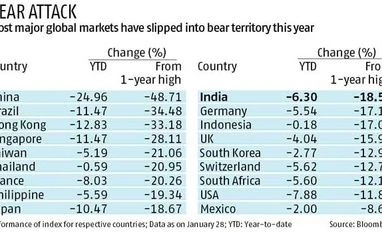
China, Brazil and Singapore markets have fallen over 28% from their peaks while Sensex has came off 20% from its peak and is currently down 18.5%
Samie Modak Mumbai Main benchmark indices of several countries have entered bear territory following sharp sell-off in stocks this year, which has wiped of over $7 trillion from world market capitalisation.
Concerns over China and global economic growth along with the slide in commodity prices, more importantly oil, have driven away investors from equities. China, Brazil and Singapore are some of the markets that have fallen more than 28 per cent from their recent peaks.
Among major European markets, Germany, UK and France too have declined substantially, however, the former two have rebounded slightly over the past week. India's benchmark S&P BSE Sensex too came off 20 per cent from its peak and is currently down 18.5 per cent. The US, however, is among the few major markets , which is holding relatively better.
If markets drop by 20 per cent or more from the peak and stay at these levels for over two months, it is considered to be a bear market. Stock prices tend to fall or remain soft during bear markets.
Experts believe there is more pain as the factors that have dragged markets down will persist. Fears of further fund outflows from emerging markets and currency depreciation will keep investors unnerved. Investors across the world remain worried about central banks' ability and willingness to support their respective economies/markets during current times of anaemic growth.
Countries heavily dependent on commodities and with links to China have been hit the hardest in the recent sell-off and remain more vulnerable. But, India remains better placed.
"We have been of the view that in a world mired in the "3D" problem of debt, demographics and disinflation, India remains one of the more attractive growth stories. Notably, in the Asia (ex-Japan) region's 10 economies, nine have producer prices in deflation, six have a rising age dependency, and six have debt to GDP at or above 200 per cent," says Chetan Ahya, co-head of global economics and chief Asia economist, Morgan Stanley.
The fall in the Indian market this year and also from the highs is largely in line with global markets, but analysts believe that once global markets stabilise India will be looked at more favourably by investors.
"The year started out quite volatile. Don't think this is going to end in a hurry. But, India, relatively speaking, is in a better space," says Mihir Doshi, MD & CEO India, Credit Suisse. He says after some point, investors will start looking at India on a standalone basis and not get coupled with other markets like China.
The immediate concerns for India and other emerging markets, however, is continued foreign outflows. Foreign investors have pulled out over $7 billion from Asian equities so far this year, says HSBC, the highest monthly outflow from Asian equities since the 2008 global crisis. HSBC says markets geared to China demand are seeing the largest outflows. Though India isn't immune from China, its direct linkage isn't worrying.

 "India vs world markets: India is in a better space")


 Connect with us on WhatsApp