Shares of logistics companies have been gaining on the bourses after the government granted infrastructure status to the industry. The move is expected to help companies in the multimodal logistics space, which includes warehouses and inland container depots.
Analysts expect companies to be able to reduce their cost of funding, access infrastructure lending at easier terms with enhanced limits from commercial banks, access to longer duration funds, tap the external commercial borrowing route and refinance existing loans at competitive rates.
Says Amit Agarwal, deputy vice-president (research) at Kotak Securities, “The infrastructure status will ensure easier access to institutional credit and help in reducing cost of borrowing (estimated by 100 basis points) of logistics companies, including Allcargo, Concor (Container Corporation), Gateway, VRL, Aegis Logistics, Gati, Snowman and TCI.”
Compiled by BS Research Bureau
This is positive for a sector that has struggled to grow, given muted economic growth and sluggish trade which have impacted volumes and revenues. Container freight station operators and multimodal players such as Concor, Gateway Distriparks and Navkar Corporation, for example, were forced to give more discounts, given stiff competition amid poor volumes.
Stocks in the sector had run-up significantly on hope the goods and services tax (GST) would be a significant factor, boosting their growth and profitability. Even now, while benefits are expected, they may not accrue soon. For instance, in the fast-moving consumer sector, analysts at Deutsche Bank say given the disruption to the trade, both at the distributor and wholesale channel, which was seen after July, most companies have yet to implement any material changes to their supply chain architecture.
In addition, the delay in implementation of the e-way bill (postponed to April 1 next year) is another reason why the Street expectations have moderated as far as the logistics sector is concerned. In addition to accelerated warehouse consolidation, transport efficiencies due to uniform and automated documentation across states, the e-way bill mechanism among other GST provisions was expected to help the market shift from unorganised to organised players in the logistics space, said analysts at HSBC.
However, Shamsher Dewan, vice-president and sector head of corporate ratings at ICRA, believes companies have started rationalising the logistics network and a shift to the organised space is taking place but the pace of shift will be gradual and could take two to three years.
Among the companies, HSBC is positive on prospects of VRL Logistics, given provision of the GST such as a reverse charge mechanism, and a compulsory registration for traders dealing in interstate supplies. This, according to the brokerage, will accelerate the market’s shift from unorganised to organised players, a significant positive for organised trucking companies such as VRL Logistics.
Analysts at ICICI Securities, in a report this week, say large integrated logistics solution providers (such as Gati) will benefit as companies make their storage and transportation decision on the basis of logistical efficiencies, instead of tax efficiency. While volumes for Concor continue to improve with double-digit growth seen in the September quarter, on the back of double stacking, resulting in operating leverage and improving operating profit margins, the biggest trigger for the stock is the rollout of the dedicated freight corridor, which given its infrastructure would translate to jump in volumes.
Going ahead, Agarwal of Kotak Securities believes triggers for the sector include full implementation of the GST Act, healthy growth of the e-commerce segment and an uptick in the trade volume, both export and import, as well as movement within the country.

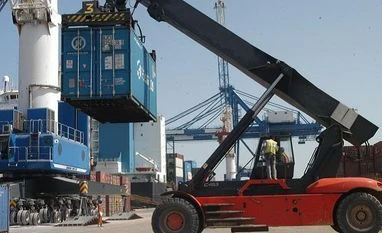 "Infra status: Near-term triggers for logistics sector")












 Connect with us on WhatsApp