No broad-based earnings recovery for another four quarters: Anish Damania
Interview with Head, Institutional Equities, IDFC Securities
Vishal Chhabria Mumbai Export-led and import-substituting companies are expected to grow at a faster clip, while stocks in the BSE 200/500 (ex-Nifty) could report an earnings decline for FY14, says
Anish Damania, head, institutional equities, IDFC Securities, in an interview to Vishal Chhabria. Edited excerpts:
What impact do you expect from the US Fed’s QE taper plans on Indian markets? What’s more important is the kind of stocks one should be in. We prefer export-oriented and import substitute (petrochem and oil & gas- upstream) sectors. We like companies with free cashflow and strong RoE/RoCE (return on equity/return on capital employed) and asset- light business models, like consumer (goods) and some automobiles (stocks). We are underweight on capital goods, infrastructure, real estate and financials.
As for th QE (the US Federal reserve’s bond buying programme) taper, the only buyers in Indian markets are the funds which allocate a portion to India, depending on their expected weightages. Hence, these fund flows could shrink immensely, impacting the market significantly on the downside. On the other hand, its impact on the economy might be limited, as the country is a bit more prepared than a few months earlier. The trade deficit has almost halved and the recent inflow of $35 billion in the dollar-rupee swap window has improved the foreign exchange reserves by about $20 billion over three months. Hence, at least in the short term, the taper might not have a significant impact on the economy.
Going into the 2014 elections, how do you see the markets behave? The market has already run up about 20 per cent in the past few months, first boosted by the steps taken by the new RBI governor and later followed by the appointment of Narendra Modi as the Bharatiya Janata Party’s prime ministerial candidate. We believe the market is already discounting the fact that the BJP will be in a strong position to form the government, with Modi as the PM candidate. There are six more months between now and the election results and the market is not leaving any scope for disappointment. The ride will remain choppy, as unpredicted events can happen during this time frame.
What events can result in a choppy market? It has largely to do with expectations on the election results. If things become less bullish for the BJP, of less than 200 seats for them in the polls, it could hurt market sentiment. Second, we need to see the impact of the halting of the rupee-dollar swap window and oil companies beginning to buy dollars from the open market on the currency. We continue to expect subdued earnings growth over the next two quarters, which could mean question marks on corporate earnings’ recovery.
Do you see more legs to this rally or are valuations high? We believe the market is trading near the upper end of its range. Rather than taking a call on the Sensex or Nifty, whose movements have been governed by many factors beyond our assessments, we prefer a stock-specific approach. In our conversations with most investors, we understand that they have brought their underweight positions in capital goods and infra to neutral. Hence, that part of the rally has played itself out.
Have earnings and GDP growth bottomed out? These might have but how long the trough will last is the key question. Till such time as investments revive, we do not see any significant change in GDP growth. We expect earnings growth to be 13 per cent for FY14, as we expect the contribution of export-led or import- substituting companies to increase faster. However, if we go beyond the Sensex and Nifty stocks, the picture is different. The BSE 200 and BSE 500 stocks ex-Nifty are expected to show a decline in earnings in FY14. This means we are not yet in the phase of broad-based recovery in earnings and we do not expect that for another four quarters, at least.
Our initial forecasts on FY15 earnings show growth of 16 per cent. However, at this point, I believe there are too many uncertainties to believe this growth number.
Any particular themes investors should consider? Investors will do well to continue to focus on export-led sectors like information technology, pharmaceuticals and textiles. Other themes which might dominate would be a list of multinational corporations which hold close to 50 per cent (of equity in the Indian arm) and are, hence, ripe for (making) an open offer (to buy more).
Is it time to shift some money from defensive to cyclicals and rate sensitives, and why? We expect the interest rate cycle to remain elevated as inflation is expected to remain high and financial savings rate is not expected to recover in a hurry. Hence, we will continue to avoid cyclicals and rate sensitives.

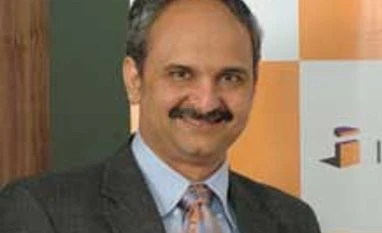 "No broad-based earnings recovery for another four quarters: Anish Damania")


 Connect with us on WhatsApp