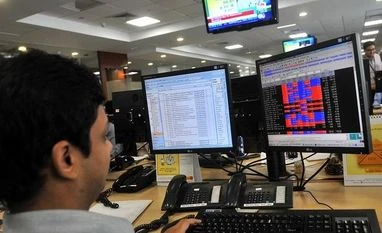
Number of illiquid stocks down 20% since lockdown as pandemic squeeze eases

Investors looking to a quick buck in these stocks are unlikely to, as most companies' fundamentals are rarely tracked, says market expert. Think twice before investing here without adequate research

markets, investor, stocks, bse, nse, trader, trading, sensex, nifty
The rise in activity in stocks which were illiquid earlier comes even as a number of new investors have entered into the stock market.
Sachin P Mampatta Mumbai
3 min read Last Updated : Feb 17 2021 | 12:43 AM IST
The list of stocks which have so few trades that exchanges create a special session for them to change hands has shrunk in the last six months.

The number of such illiquid stocks had risen to between 420-440 between March and June 2020. This roughly coincided with the lockdown to control the Covid-19 pandemic. It has now fallen by around a fifth, to 342 shows December quarter data from the BSE.

Retail investors looking to make money in illiquid stocks are unlikely to make an easy buck, with most companies’ fundamentals being rarely tracked, according to independent market expert S P Tulsian. An investor should think twice before investing in such companies without adequate research, according to Tulsian, suggesting that the chances of losses are high.

“He is digging his own grave,” he said.
Alok C Churiwala, managing director at Churiwala Securities said that investors who feel they missed the bus during the recent run-up in the stock market should be careful about the kind of companies they invest in, to avoid burning their fingers.

“When markets are in this kind of frenzy there are many investors especially first-time investors who are taken in by the lure of penny stocks,” he said.

Stocks are declared illiquid when certain conditions that the regulator sets aren’t met. This includes criteria such as the daily average value of shares changing hands falling below Rs 2 lakh for the previous six months. It excludes companies who are valued at more than Rs 10 crore.  Other factors for exclusion from the list may be the payment of dividends or having been profitable in two out of the last three years, a promoter who hasn’t pledged more than 20 per cent of his or her shares and meeting minimum criteria on assets that the company owns.

The exchanges hold a special session for stocks which are declared illiquid. This periodic call auction mechanism allows buyers and sellers to provide orders for a set period of time. These are then matched and executed separately. There are also limits on how much the price of such a stock can move in a single day.
The rise in activity in stocks which were illiquid earlier comes even as a number of new investors have entered into the stock market. The number of investor accounts rose to 4.98 crore as of December 2020. There were 4.32 crore accounts as of June 2020. A total of 66 lakh accounts were added over a six month period as the stock market rose from its pandemic low, shows data from the Securities and Exchange Board of India.

The S&P BSE Sensex hit a low of 25638.9 on March 24th, 2020. The index whose movements are seen to be broadly representative of how the market is doing has since been on a rising spree. It touched an all-time high of 52516.76 on Tuesday. 

Churiwala suggested avoiding leverage and only investing capital that can be put to work over the long-term. Valuations in the secondary market are already very high, he said. 

One subscription. Two world-class reads.

Already subscribed? Log in

Subscribe to read the full story →
*Subscribe to Business Standard digital and get complimentary access to The New York Times

Smart Quarterly

₹900

3 Months

₹300/Month

SAVE 25%

Smart Essential

₹2,700

1 Year

₹225/Month

SAVE 46%
*Complimentary New York Times access for the 2nd year will be given after 12 months

Super Saver

₹3,900

2 Years

₹162/Month

Subscribe

Renews automatically, cancel anytime

Here’s what’s included in our digital subscription plans

Exclusive premium stories online

  • Over 30 premium stories daily, handpicked by our editors

Complimentary Access to The New York Times

  • News, Games, Cooking, Audio, Wirecutter & The Athletic

Business Standard Epaper

  • Digital replica of our daily newspaper — with options to read, save, and share

Curated Newsletters

  • Insights on markets, finance, politics, tech, and more delivered to your inbox

Market Analysis & Investment Insights

  • In-depth market analysis & insights with access to The Smart Investor

Archives

  • Repository of articles and publications dating back to 1997

Ad-free Reading

  • Uninterrupted reading experience with no advertisements

Seamless Access Across All Devices

  • Access Business Standard across devices — mobile, tablet, or PC, via web or app

Topics :CoronavirusSEBIstocksstock market tradingBSE SensexRetail investors

Next Story