Investors disappointed as 'open market' share buybacks lack punch

Actual acquisition cost 20% below max buyback price under open market route
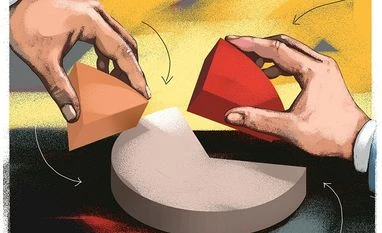
shares, buyback, invest, mutual fund, income, dividend
The company buys back shares only at the maximum price set by it. Moreover, it also absorbs the entire amount set aside
Samie ModakSundar Sethuraman Mumbai
4 min read Last Updated : Dec 15 2022 | 10:50 AM IST
Shares of One97 Communications (Paytm) fell nearly 2 per cent on the BSE on Wednesday, even as the company announced a Rs 850-crore share buyback. Investors were disappointed by the open market route opted by the company as opposed to the tender route.

Market players said the buyback size and the maximum buyback price under the open market route are just optics as companies tend to buy back shares at a much lower rate. Also, rarely is the entire buyback amount ever harnessed.

By comparison, the tender route is definitive. The company buys back shares only at the maximum price set by it. Moreover, it also absorbs the entire amount set aside.

A study of 178 buybacks done through the open market route since 2010 by PRIME Database throws up interesting trends. The actual buyback price was on average 20 per cent lower than the maximum buyback price set by the company. Further, the amount utilised was 25 per cent lower than the maximum buyback size fixed by these companies.

Paytm has set the maximum buyback size of Rs 850 crore and has said it will utilise at least 50 per cent of the amount reserved. The maximum buyback price is set at Rs 810, 53 per cent higher than its last close. This means the digital payments major can buy back shares at a much lower rate if the stock price languishes at present-day levels.

“Companies always want to keep a safe cushion. Stocks typically don’t run up to the maximum repurchase price. Therefore, it is more tactical. Usually, companies announce buybacks because they think the current market price is cheap. They also think it’s better use of money. At the same time, they want to give some signal to investors that the buyback adds value. That’s the reason they offer a much higher price,” says Ajay Garg, managing director, Equirus.

A recent discussion paper floated by the Securities and Exchange Board of India (Sebi) highlighted key “drawbacks” of the open market route.

“The buyback regulations currently provide a period of six months from the date of opening of the offer for the buyback offer to be closed. This may result in artificial demand being created for the relevant company’s shares during such an extended period and trading of shares occurring at an exaggerated price. Allowing for an extended buyback period thus prevents efficient price discovery,” Sebi said in the paper.

An analysis of the top 10 open market or stock exchange route buybacks shows the average buying price in some cases was 27 per cent lower than the maximum buyback price. Also, the actual amount spent on the buyback was only a fraction of what was proposed by companies at the time of announcement.

“It is also noted that since shares are bought back at the prevailing market price, acceptance of shares under buyback is a matter of chance for most shareholders. There is no clarity on whether shares are accepted under buyback or sold in the open market, as a result of which shareholders are unable to claim the benefits arising out of buybacks,” the Sebi paper
further stated.

The capital markets regulator has proposed phasing out open market buybacks by 2025. It has presented a glide path to reduce the use of this route. It has proposed to shorten the current period of six months, allowing for the completion of open market buybacks to 66 days by 2023 and
22 days by 2024.

Also, the maximum buyback size currently can be up to 15 per cent of paid-up capital and free reserves. Next year, it plans to lower the cap to 10 per cent and subsequently to 5 per cent by 2024.

One subscription. Two world-class reads.

Already subscribed? Log in

Subscribe to read the full story →
*Subscribe to Business Standard digital and get complimentary access to The New York Times

Smart Quarterly

₹900

3 Months

₹300/Month

SAVE 25%

Smart Essential

₹2,700

1 Year

₹225/Month

SAVE 46%
*Complimentary New York Times access for the 2nd year will be given after 12 months

Super Saver

₹3,900

2 Years

₹162/Month

Subscribe

Renews automatically, cancel anytime

Here’s what’s included in our digital subscription plans

Exclusive premium stories online

  • Over 30 premium stories daily, handpicked by our editors

Complimentary Access to The New York Times

  • News, Games, Cooking, Audio, Wirecutter & The Athletic

Business Standard Epaper

  • Digital replica of our daily newspaper — with options to read, save, and share

Curated Newsletters

  • Insights on markets, finance, politics, tech, and more delivered to your inbox

Market Analysis & Investment Insights

  • In-depth market analysis & insights with access to The Smart Investor

Archives

  • Repository of articles and publications dating back to 1997

Ad-free Reading

  • Uninterrupted reading experience with no advertisements

Seamless Access Across All Devices

  • Access Business Standard across devices — mobile, tablet, or PC, via web or app

Topics :SEBIPaytmBuybacks

Next Story



