India appears more attractive than other emerging markets: Christopher Wood
Interview with Managing Director & Chief Strategist, CLSA
Ujjval Jauhari Mumbai Christopher Wood, managing director and chief strategist at CLSA, speaks to Ujjval Jauhari on the changing landscape of the Indian economy, market expectations and the changing perception of investors. The economic cycle has already reversed and new triggers for the markets are in place, he says. Edited excerpts:
What are the key issues the new government should address on a priority basis? The election results and the clear mandate have given immense confidence to investors. In my view, the government’s key agenda should be to kick-start the investment cycle. From a macroeconomic standpoint, it is hard to exaggerate the pent-up demand, given the investment slowdown in recent years.
The growth in the value of investment projects under implementation has fallen from 54 per cent year-on-year (y-o-y) in the March 2007 quarter to 3.5 per cent in the March 2014 quarter, while new projects, as percentage of nominal GDP (gross domestic product), have plunged from 42 per cent in FY08 to 3.5 per cent in FY14. This collapse in investment growth was mainly ‘upstream’, in terms of infrastructure and heavy industry. These are the areas that will rebound strongly, with all the beneficial multiplier consequences.
How do you see the India growth story panning out? Growth seems to have bottomed at four-five per cent. In the next two-three years, it should touch seven-eight per cent, and accelerate in the next five years.
Do you think the markets can sustain their current levels? The market is factoring in a lot of expectations from the new government. (Prime Minister Narendra) Modi’s policies are being seen as market-friendly. I feel the rally is rational and expect the consolidation phase to continue for some time. Though near-term valuations look stretched, the bull run has definitely started.
Domestic investors had shunned the equity market and now, they are expected to return, which is positive for the Indian equity market. I would advise increasing allocation to equities. The economic cycle has already reversed and new triggers are in place. India is a simple story.
How do you rate India against other emerging markets? Will India continue to attract funds at a time when there are talks of a revival in growth in Europe and the US? From a five-year view, India is much more attractive compared to many other emerging markets. I say five years because that is the term of the government. The US is not seeing much growth. European growth, too, remains sluggish. However, India’s growth has bottomed out and should rebound now. So, fund flows will continue to be directed towards India.
What is your view on the rupee? I don’t see the US Federal Reserve increasing interest rates this year or the next. The rupee will remain under pressure and will continue to pose challenges for the Reserve Bank of India.
What are the sectors or stock plays in the market? Modi’s election success and prospects of a new and extended investment cycle have clearly created the potential for massive outperformance of more investment-orientated cyclical stocks. The rotation out of rural consumption plays into investment plays commenced in September 2013, when Modi was announced as the Bharatiya Janata Party’s prime ministerial candidate. This gained momentum when it became increasingly clear he would win convincingly.
I suggest one look at opportunities in all domestic-oriented sectors. If one wants to invest in just one sector, I suggest the banking sector. We expect a number of (reform) measures to be undertaken in this space. There is a legacy problem in the banking system, in terms of not only Rs 2.5 lakh crore of non-performing loans but also Rs 3.2 lakh crore of so-called ‘restructured’ loans, most in the case of state-owned banks.
What is your view on public sector undertakings (PSUs), which have appreciated sharply, and sectors such as information technology (IT) and pharmaceuticals, which have corrected? PSUs have seen an adequate run-up and now, reforms are necessary. However, we will see good traction in the case of private sector banks. The total stressed loans are much lower for private banks; also, they have a lower proportion of restructured loans.
As far as public sector banks are concerned, it is likely the new prime minister will support reorganisation of these entities by creating incentives for managements to turn these enterprises into more entrepreneurial organisations. For IT and pharmaceuticals, the business environment is good. However, I suggest a ‘bottoms-up’ approach for companies in these sectors.

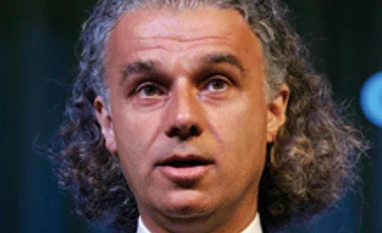 "India appears more attractive than other emerging markets: Christopher Wood")


 Connect with us on WhatsApp