
Rabi oilseeds sowing at five-year low as on mid-November
The fall in rabi oilseed sowing is also an impact of better price expectation among farmers who shifted to pulses this year
 "Rabi oilseeds sowing at five-year low as on mid-November")
WebinarsNew
Deep DiveNew
Explore Business Standard
The fall in rabi oilseed sowing is also an impact of better price expectation among farmers who shifted to pulses this year
Erratic rainfall and dry weather has led to rabi oilseed sowing in India stand at five-year low for the period between September and mid-November.
As per the latest data released by the department of agriculture, Government of India (GoI), the sowing of rabi oilseed so far stood at 5.05 million hectares from September till November 19, 2015, down by 16.52 per cent as compared to last year. Rabi oilseed sowing for the said period stood at 6.05 million hectares in 2014, 6.24 million hectares in 2013, 6.15 million hectares in 2012. and 5.85 million hectares in 2011, respectively.
The fall in rabi oilseed sowing is also an impact of better price expectation among farmers who shifted to pulses this year. Rabi sowing usually starts in late September and early October and harvested from January onwards.
"Weather should be ideally cold during this time of the year to be suitable for rabi sowing. Lack of such conditions has translated into fall in the rabi oilseed sowing. Moreover, moisture in farms in many places has also not been enough to sow oilseed this year because of dull monsoon," said Sanjiv Sawla, chairman of Indian Oilseeds and Produce Export Promotion Council (IOPEPC).
Among the oilseed, the biggest impact has been seen in mustard seed with almost 21.29 per cent less sowing this year so far. As per the government data, sowing of mustard seed stood at 4.25 million hectares this year as against 5.40 million hectares last year.
The dry weather in north India has also pulled down water levels in major reservoirs, vital for irrigation. Last year, the area under mustard crop was 6.5 million hectares. Given the slow progress in sowing, area under mustard seed is anticipated to witness a decrease of 15-20 per cent due to shift of acreage to chana and other pulses.
"Many farmers have shifted to pulses this year on expectation of better price returns as against oilseed. Add to that, dry weather since last two months has also affected the rabi oilseed sowing mainly in mustard. In the current scenario area of mustard alone may reduce by 15-20 per cent," said B V Mehta, executive director of Solvent Extractors' Association of India (SEA).
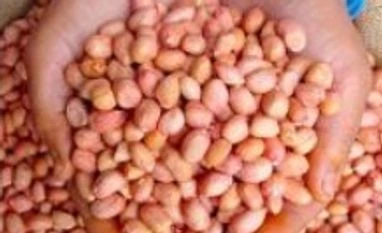
Agriculture department data shows that groundnut area coverage is also lower by 19,000 hectares to 178,000 hectares, whereas linseed sowing has gone up by 123,000 hectares to 284,000 hectares. Meanwhile, acreage of sunflower has gained 28,000 hectares to stand at 211,000 hectares this year so far.
First Published: Nov 24 2015 | 6:28 PM IST


 Connect with us on WhatsApp