Rupee pain causes JP Morgan whip
Indian shares downgraded to neutral; report says too much of current account deficit pain; more rating cuts likely
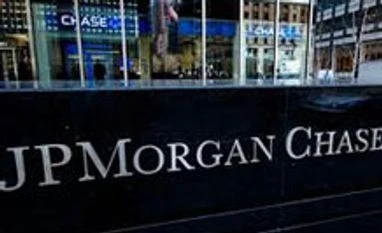
Chandan Kishore Kant Mumbai The list of foreign brokers downgrading India continues to lengthen. On a day when Indian stock markets remained highly volatile, amid the rupee hitting 64 against the dollar, the country got another 'cut' rating. This time from global financial firm JP Morgan, which downgraded India’s rating to ‘neutral’.
India's economy has attracted the wrath of CLSA, Goldman Sachs, Deutsche Bank and Morgan Stanley. All these had cut their ratings even when the currency was well below 62 against the dollar and the equity markets were trading higher.
The past three days’ trading sessions have sent shock waves among investors and further downgrades loom.
| WHIPPING-BOY INDIA |
- India’s economy has attracted the wrath of CLSA, Goldman Sachs, Deutsche Bank and Morgan Stanley
- All these had cut their ratings even when the currency was well below 62 against the dollar and the equity markets were trading higher
|
JP Morgan's report, authored by Adrian Mowat, says it's "too much (of) CAD (current account deficit) pain". "We know this is reactive rather than proactive. If the rupee continues to slide, then India will continue to underperform," said Mowat in his Global Equity Research report.
Currencies are driving equity markets. Investors are asking who will fund the CAD (India's CAD is estimated at 5.1 per cent of gross domestic product), added the report. The note has also raised questions on whether JP Morgan is too late to take the downgrade call on India.
Mowat said, "We are certainly late in downgrading India. Our overweight (OW) case was less fiscal drag and a monetary stimulus leading to a modest cyclical acceleration in the second half of 2013. The move in the rupee has overwhelmed this. Policy options are limited. They (Indian government) have announced reform plus technical measures to support the currency. These have not worked."
According to the report, the International Monetary Fund would typically prescribe higher interest rates to suppress domestic demand and lower imports to address the CAD. "This option is politically unpalatable with next year’s general election. Arguably more important, equity flows are important in funding the CAD," the note added.
Higher interest rates and lower growth would likely result in foreign selling. A possible option is to completely open India's bond markets. This would have two positive impacts: inflows from passive funds into Indian bonds and a signal of economic liberalisation. If this stabilises the rupee, then Indian equities are likely to rally, led by the banks which are cheap relative to their valuation history, it said.
Earlier, CLSA's Christopher Wood, one of Asia's better-known equity strategists, trimmed the rating on India by one per cent in favour of Vietnam. “Growth continues to slow and currency risks grow as investors respond nervously to the mixed signals sent by the central bank and the finance ministry, even if confirmation this week that Raghuram Rajan has become RBI Governor will be a positive for sentiment, at least temporarily,” said Wood in his report ‘Greed and Fear’.
Last week, Nomura had warned of downside risks to its Sensex target of 21,700 by March 2014 as Indian markets’ ‘macro ecosystem’ had worsened in the near term. Strategists at foreign brokerages have turned more pessimistic about India’s prospects in recent weeks, as worries about the economy’s slowdown have heightened amid the weakness in the rupee.
Early this month, Goldman Sachs downgraded its rating on India, citing increased risk of foreign institutional “flow reversal” from equities and sluggish growth outlook as the key reasons. The investment bank cut its 12-month Nifty target to 6,200 and did not rule out further downgrades if the rupee weakened further.
In July, Deutsche Bank and Morgan Stanley had lowered their ratings on India. While Deutsche trimmed its Sensex target to 21,000 from 22,500, citing rising global risk aversion, Morgan Stanley had cut India’s rating among Asia-Pacific markets.

 "Rupee pain causes JP Morgan whip")


 Connect with us on WhatsApp