After a recovery year in 2015 when planters managed to make up for the crop losses they had suffered in the previous year, the tea sector in Assam and West Bengal began on a low note in 2016.
Following a good March crop in Assam, which contributes 51 per cent to Indian’s total tea production, rains have been playing spoilsport. While excessive rains have caused production to dip by 30 per cent in the upper and lower valley in Assam, lack of rains hit production by about 40 per cent in the Darjeeling hills in northern West Bengal.
After suffering a crop loss in the first flush season in March, Assam as well as Darjeeling planters are now concerned about the second flush season starting three weeks from now.
“If the rains don’t stop, the Assam tea sector will be in deep trouble,” said C S Bedi, managing director, Rosell India.According to industry estimates, production in the Assam valley during March-April (first flush) is likely to be at 34 million kg against the 44 million kg produced in the corresponding period in 2015.
For the past week, Assam’s tea producing areas have received 8-9 inches of rainfall daily, while the temperature has dipped by five degree Celsius than optimal for tea plantation.
The situation in the Darjeeling hills is just the opposite. “A drought-like situation was going on. With a rainfall scarcity in February, the first flush has already been affected while concerns have risen for the second flush,” said S S Bagaria, president, Darjeeling Tea Association.
However, things have improved in the sub-Himalayan West Bengal and Sikkim area that have received 135 mm of rainfall (30 per cent above normal for this period).
For Darjeeling, irrigation is not an option as there are no rivers in the vicinity.
The first and second flush, from early March to mid-April and mid-May to late-June, respectively, in Darjeeling fetch the planters the highest revenue as they are of far superior quality compared to the autumn and winter flushes. The first and second flushes make up for about 40 per cent of the annual yield in the area.Planters here expect the production to be below one million kg during March-April 2016 compared to 1.5 million kg in the year-ago period.
“A sudden gush of rainfall is not good for the crop. What’s needed is even distribution of the same throughout the year. 2.5 inches of average daily rainfall in the non-plucking season will do, but during the flushes, we need steady rains,” said Bedi, adding that gardens in upper Assam valley face waterlogging problems while the gardens in Darjeeling have run out of water.
Despite the doubtful situation, the sector is optimist about the volumes which may be recovered in the July-November months. “As far as production is concerned, the outlook for the sector is positive for the year. In case the weather improves to our benefit during the later part of the harvest season, we can make up for the volume,” said Kamal Baheti, one of the directors at McLeod Russel, the world's largest estate tea producer.
The Indian Tea Association is also keeping its outlook positive on production and prices.
“Domestic demand has been growing three per cent annually and the international one by 1.8 per cent; this will help keep the prices stable,” Sanjay Bansal, chairman of the Ambootia Tea Group.
According to Bagaria, domestic tea consumption will pick up with the push from the projected “good monsoon”.
“Eighty per cent of the tea is consumed in rural markets and a good monsoon will give rural demand a push,” he said.

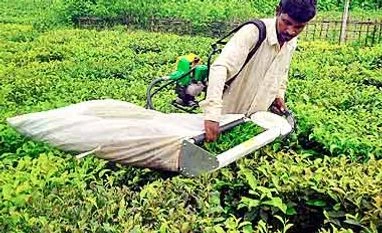 "Slow start to tea harvest in Assam, Bengal")


 Connect with us on WhatsApp