SpiceJet, IndiGo stocks have run up too fast, too soon: Analysts

SpiceJet and Interglobe Aviation (IndiGo's parent company) have outperformed the benchmark index thus far in tcalendar year 2019 (CY19) with a gain of nearly 36 per cent and 49 per cent respectively.

SpiceJet
Puneet Wadhwa New Delhi
4 min read Last Updated : Apr 18 2019 | 4:34 PM IST
The gradual descent of Jet Airways’ operations over the past few months has proved to be a boon for the other players who are not only looking to capture the temporarily out of service airlines’ market-share, but also benefit from the soaring ticket prices.

ALSO READ: Over 10,000 retail shareholders bought Jet Airways stock in last 6 months

The markets have been quick to respond to the development. SpiceJet and Interglobe Aviation (IndiGo’s parent company) have outperformed the benchmark index thus far in calendar year 2019 (CY19) with a gain of nearly 36 per cent and 49 per cent respectively, as compared to 9 per cent up move in the S&P BSE Sensex, ACE Equity data show. Jet Airways, on the other hand, lost 13 per cent during this period.

“Aviation is an oligopolistic industry where small number of firms compete. Barriers to entry are significant. Jet’s (temporary) closure will benefit the other players over the medium-to-long term and that is what the markets also expect,” says G Chokkalingam, founder and managing director, Equinomics Research. 

But, have the stocks run up too fast, too soon? Analysts do think so and suggest investors now book partial profit.

ALSO READ: NCLT option back on table for beleagured Jet Airways

“In the short-term, SpiceJet has added too many aircraft. Air Asia and Vistara are also in the line to grab this available opportunity to improve their market share. Vistara has started to cut prices and be more competitive. In true sense, Jet Airways competed with Vistara and not SpiceJet and IndiGo, which are low-cost carriers. Also, crude oil prices are nearing $71 a barrel, which is not a comforting sign for the airlines. IndiGo and SpiceJet have run up too fast, too soon at the bourses,” says A K Prabhakar, head of research at IDBI Capital.

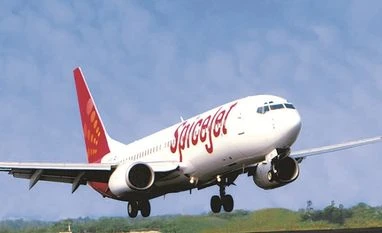
On Thursday, SpiceJet rallied 7 per cent in intra-day trade to hit its 52-week high on the BSE, while Indigo also reached its 52-week high level of Rs 1,650 during the day after Jet Airways ceased operations in post market hours on Wednesday. In the past one month alone, both these stocks have rallied over 70 per cent and 22 per cent respectively, outperforming the S&P BSE Sensex that has gained 3.3 per cent during this period, ACE Equity data show.

ALSO READ: Jet Airways crisis: Foreign trips set to get at least 10% costlier

Disruption of Jet Airways’ capacity can lead to temporary demand – supply mismatch, particularly going into peak summer demand, analysts say. Post Kingfisher’s capacity disruption in FY2013, IndiGo was the only airline which added meaningful capacity over FY2014-15. Overall industry capacity grew at a compounded annual growth rate (CAGR) of 6 per cent over FY2013-15, reports indicate.

“The extent of yield increase is dependent on the quantum of capacity that the industry can collectively add to ease the supply-demand mismatch. This yield benefit may, however, be lower, and sustain for a shorter duration of time compared to FY2013 (Kingfisher’s capacity loss) as all airlines including IndiGo, SpiceJet, GoAir, Vistara and AirAsia India are looking to increase capacities,” says Garima Mishra, an analyst tracking the sector with Kotak Institutional Equities.

ALSO READ: Jet shares sink 34% but lenders hopeful of successful bids for airline

Between SpiceJet and Indigo, analysts say the former is better placed to make most of the available opportunity, as both carriers are flying similar Boeing-737 aircrafts in domestic routes. 

“In FY20, we estimate that SpiceJet's capacity may go up 35 per cent year-on-year (y-o-y) on the back of its announced fleet induction plans. We have revised upwards our yield assumptions for H1FY20 from 3 per cent to 5 per cent. Consequently, FY20e earnings per share (EPS) has been revised up 45 per cent. We reiterate ‘buy’ with target price of Rs 175/share at 8x FY21 EV/EBITDAR,” wrote Santosh Hiredesai and Chalasani Teja of SBI Cap Securities in a recent report.

ALSO READ: SpiceJet spreads wings, will add five more 90-seater Bombardier Q400s

For the quarter ended March 2019 (Q4FY19), analysts at Elara Capital expect SpiceJet to report a profit of Rs 28.7 crore (excluding forex impact), as compared to a profit of Rs 55.1 crore in Q3FY19 and Rs 62.1 crore in Q4FY18. IndiGo, on the other hand they say, is likely to report profit of Rs 67.3 crore (excluding forex impact) in Q4FY19E versus a profit of Rs 87.4 crore in Q3FY19.

One subscription. Two world-class reads.

Already subscribed? Log in

Subscribe to read the full story →
*Subscribe to Business Standard digital and get complimentary access to The New York Times

Smart Quarterly

₹900

3 Months

₹300/Month

SAVE 25%

Smart Essential

₹2,700

1 Year

₹225/Month

SAVE 46%
*Complimentary New York Times access for the 2nd year will be given after 12 months

Super Saver

₹3,900

2 Years

₹162/Month

Subscribe

Renews automatically, cancel anytime

Here’s what’s included in our digital subscription plans

Exclusive premium stories online

  • Over 30 premium stories daily, handpicked by our editors

Complimentary Access to The New York Times

  • News, Games, Cooking, Audio, Wirecutter & The Athletic

Business Standard Epaper

  • Digital replica of our daily newspaper — with options to read, save, and share

Curated Newsletters

  • Insights on markets, finance, politics, tech, and more delivered to your inbox

Market Analysis & Investment Insights

  • In-depth market analysis & insights with access to The Smart Investor

Archives

  • Repository of articles and publications dating back to 1997

Ad-free Reading

  • Uninterrupted reading experience with no advertisements

Seamless Access Across All Devices

  • Access Business Standard across devices — mobile, tablet, or PC, via web or app

Next Story




