With the markets consolidating ahead of goods and services tax (GST) implementation, Samir Arora, founder and fund manager of Helios Capital, speaks with Puneet Wadhwa on the changes ahead and related issues. Edited excerpts:
Given the run-up so far in 2017, do you think the markets could see a time correction? What is your view on the mid and small-cap segments?
The Indian market (Nifty) has gained around 16 per cent year-to-date (ytd), while the mid-cap index is up nearly 22 per cent. We believe part of this rally is because the market had performed badly in November/December 2016. So, the choice of start date makes a big difference. If you look at the market from October 31, 2016, it is up a more sedate 10 per cent in eight months.
Also, note that it has not outperformed the peer market group. For example, MSCI India is up approximately 19.5 per cent ytd, while the MSCI Asia ex-Japan is up 22.5 per cent and even MSCI Emerging Markets is up 17.9 per cent. Still, I agree a time-wise correction is possible and will be healthy for the markets.
What are the biggest risks which can derail the rally? What probability do you assign to these events materialising over the next one year?
The biggest risk globally can be disappointment with lack of progress on (US) President Trump’s agenda, including tax reforms. Domestically, the biggest risk can be any issues with goods and service tax (GST) implementation, which makes the market defer estimates for corporate earnings growth by one more year.
In which sectors and stocks would you advise investors to place their bets for the next 12 months? Any contra picks?
We are currently overweight on private sector banks, non-banking finance companies and the automobile and consumer goods sectors. We don’t change our stance easily and have had these overweight positions for three to five years. We do not choose sectors only to prove we are contrarian. We currently do not believe there is much to be excited in the information technology, pharmaceutical or telecom sectors. There might be a stock or two to look at in these but I am referring to the whole sector in general.
Your interpretation of the GST rates? Are the markets being over-optimistic on likely growth in earnings over the next one to two years?
GST is a mega reform and will be hugely positive for the economy in the medium to long term. In the very short term, there can be issues related to preparation or understanding or readiness of suppliers, of distributors or wholesalers and the like of even the largest corporates.
Over the next year, should investors look at domestic/economy-related themes or will they be better off investing in export-related companies?
We are very clear that we need to focus on the domestic themes for the next few years.
Have the measures to resolve the high debt issue with some corporate groups come in too late?
Since the debt and non-performing asset (NPA) issue was serious and large, it was but natural that it would take time to find a solution and a path forward. The steps now announced by the Reserve Bank of India to force 12 companies to bankruptcy/sale and change of management to strategic investors is a welcome and desirable step. Over time, the markets will be comfortable with the process and banks will be able to take their own decisions. Plus, the defaulting companies will also have an idea of what they can lose if they default on loan payments.

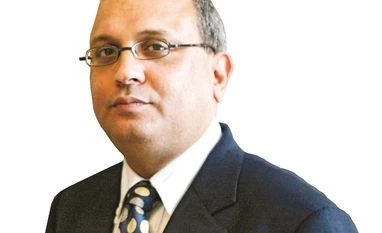 "Time-wise correction likely and will be healthy for markets: Samir Arora")












 Connect with us on WhatsApp