Cyrus P Mistry penned his chairman's statement for Tata Steel a few months before Beijing let yuan go through a three-day fall, which proved to be the sharpest since it became an economic powerhouse. In his statement, Mistry said slowdown in the Chinese economy was a "key" global macro risk with potential to have a "deep impact on the world economy". The world's second largest economy growing at its slowest in 24 years in 2014 at 7.4 per cent and thereafter is negatively influencing "commodity cycle, commodity economies and currencies".
China is such a predominant user of minerals and metals that its growth story will continue to be the single major determinant of commodity prices. Endorsement of this comes from Goldman Sachs, which says yuan devaluation "has been important for commodity market... it signals that global macro conditions have changed". China, according to Goldman, is in a "negative feedback loop" adversely impacting commodity prices as its growth falters. Already down, steel lost further ground following China's abandonment of the exchange rate regime. Chinese economy still losing momentum and Beijing not able to shore up economic activity are intensifying concern of steelmakers everywhere, including India. Yuan devaluation is rightly seen as an attempt to improve export price competitiveness of Chinese producers of steel to aluminium at the expense of manufacturers in the rest of the world.
Look at China's profile in steel. It has nearly half the share of global steel production and consumption. To support the country's massive infrastructure development and also to become the "world's factory" based on domestically produced metals, China created condition for rapid-fire growth in steel capacity building over a-decade-and-a-half.
According to China Iron and Steel Association, the country now has a capacity of around 1,250 million tonnes (mt) against which production last year was 823 mt, leaving enormous excess capacity. Beijing, however, recognised it early the need for restructuring the steel industry through capacity consolidation and shuttering of uneconomic and environment damaging mills. Sadly, however, China missed capacity elimination targets by some margins, thanks largely to covert opposition from local governments, which feared job losses in large numbers. Not surprisingly, Beijing has pushed back restructuring target date by 10 years to 2025.
This and also for the first time since 1995 year-on-year steel demand contraction of 3.3 per cent in 2014 are reasons for Chinese steelmakers to get intensely focussed on exports to rid themselves of surplus production. The World Steel Association has forecast Chinese steel demand will shrink 0.5 per cent both in the current year and 2016. In the drive to push more and more steel in the world market, the Chinese industry in which the government has big ownership receives handouts of many kinds, including bank funding at 0 to 1 per cent interest with highly liberal repayment facility. State backing helped the country's steel exports to grow 51 per cent year-on-year to 93.78 mt in 2014, nearly 10.5 mt higher than Indian output. Chinese export juggernaut continues to gather momentum and in the process generating anger among steel producers in targeted markets, including the US, European Union and India. According to customs data, Chinese steel exports reached 62.13 mt in the first seven months up to July. These are already two-thirds of last year's total shipments.
At least for once, New Delhi has shown alacrity in raising import duty on flat steel from 7.5 to 10 per and on long products from 5 to 7.5 per cent to counter Chinese onslaught. But will this duty revision be enough to put a brake on imports? Industry officials remain sceptical since on top of yuan devaluation, Chinese steelmakers have cut product prices to make full use of a chance created by yuan devaluation. JSW Steel joint managing director Seshagiri Rao says as arrivals of foreign origin steel continues to gain in momentum, "our imports this financial year would be 15 mt against 12 mt forecast earlier". What is unacceptable to him is that imports to have a share of 20 per cent of the country's annual demand of about 80 mt "will be deciding domestic steel pricing". In the meantime, upset by new Chinese export push and grim prospect of losing domestic market share to imports, steelmakers in the US and EU are lobbying for further trade action against arrivals of cheap subsidised steel. New Delhi must not lose sight of the reality that domestic steel groups have borrowings in excess of $50 billion and they are all losing money. NPAs are staring in the face of banks.

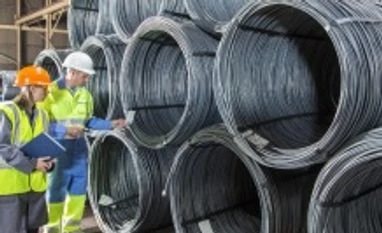 "Yuan fall sharpens export edge of Chinese steel to global concern")


 Connect with us on WhatsApp