
Israel, Turkey reconcile; Netanyahu says Gaza blockade to remain
He said his strategy is to create points of stability in ties with some Arab states in the region, Greece, Cyprus, and with Russia
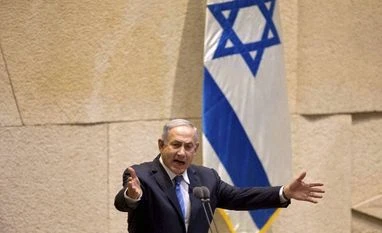 "Israel, Turkey reconcile; Netanyahu says Gaza blockade to remain")
Explore Business Standard
He said his strategy is to create points of stability in ties with some Arab states in the region, Greece, Cyprus, and with Russia
The rapprochement between Jerusalem and Ankara will strengthen Israel's position in the region, Prime Minister Benjamin Netanyahu said in Rome on Monday announcing the reaching of a deal to end a six-year diplomatic standoff that started when Israeli naval commandos shot dead nine Turkish activists travelling on an aid flotilla making for the Gaza coast.
Netanyahu said that with both the world and the region going through enormous changes, it is important to create islands of stability, and this accord does that with Turkey. He said his strategy is to create these points of stability in ties with some Arab states in the region, with Greece and Cyprus, and with Russia.
Netanyahu said he kept Greece, Cyprus, Egypt and Russia — all countries who have a fraught relationship with Turkey — in the loop regarding the negotiations leading up to the accord. Every move was also coordinated with the US, he said.
At the time Netanyahu was announcing the accord in Rome, stressing the elements favourable to Israel, Turkey's Prime Minister Binali Yildirim was doing the same in Ankara, stressing other elements in the agreement more to Turkey's liking.
Yildirim stressed that the first shipment of 10,000 tonnes of Turkish humanitarian aid will set sail next Friday.
Under the accord, Turkey will also help build both a power and a desalination plant, as well as a hospital in the area. Netanyahu said that while Israel will enable ships to dock at Ashdod and transfer humanitarian and civilian aid to Gaza, the naval blockade of Gaza will not be lifted.
The prime minister said humanitarian aid to Gaza was in Israel's interest as well, since — beyond the humanitarian aspect — Israel did not want to see Gaza's water aquifer contaminated, as that would also impact Israel's water supply.
Netanyahu stressed that in the agreement Turkey obligated itself not to allow any preparation for terrorist attacks against Israel from its territory, including the raising of funds for Hamas.
Yildirim made no mention of this in his prepared comments, presenting the agreement instead as a document that provides relief to the Palestinians. "Turkey is the protector of the justified aspirations of the Palestinians," he said, including their right to declare a state.
Both prime ministers said that the relations between the two countries will now be normalized Netanyahu said the agreement opens the door to very lucrative energy deals with Turkey that will be of extreme importance to the Israeli economy.
Responding to criticism of the agreement heard in Israel, from both the left and the right, including that paying $20 million to a funds for the families of the victims was a "humiliation", Netanyahu said that this accord promotes Israel's "vital interests", and that he would not be deterred by the criticism.
First Published: Jun 27 2016 | 6:46 PM IST


