
GST will make consumers the king, end tax terrorism: Council officials
The official said that so far 16 states have passed the State Goods and Services Tax (SGST) bill.
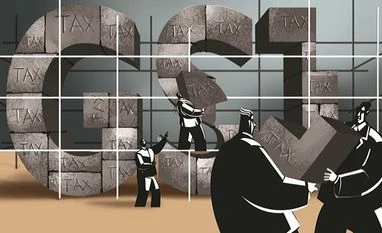 "GST will make consumers the king, end tax terrorism: Council officials")
Explore Business Standard
The official said that so far 16 states have passed the State Goods and Services Tax (SGST) bill.
The number of tax slabs should be reduced to one to two over a period of time, a top Goods and Services Tax (GST) Council official said on Monday.
"Over a period of time, our aim should be to reduce the number of tax slabs to 1-2," Arun Goyal, Additional Secretary, GST Council said here at a lecture at India International Centre.
The GST currently has 5 per cent, 12 per cent, 18 per cent and 28 per cent tax slabs.
There has been debate on the multiplicity of tax slabs under GST with experts and analysts suggesting their reduction but Goyal said that currently the reduction of tax slabs under GST was not feasible because of the wide variety of goods and sevices under the tax net.
He said that the whole system of GST is "self-regulating and it will become increasingly difficult to evade taxes" under the new indirect tax regime that was heading for a July 1 roll-out.
GST will go a long way in helping states, support small entrepreneurs and also curb the menace of corruption, he added.
The new tax law will be an important step towards getting the country rid of "tax terrorism" and also make "consumers the king".
The official said that so far 16 states have passed the State Goods and Services Tax (SGST) bill.
Maharashtra, Odisha, Assam, Bihar, Uttar Pradesh, Haryana, Telangana, Rajasthan, Jharkhand, Chattisgarh, Uttarakhand, Madhya Pradesh are among the states that have passed SGST.
"16 states have passed SGST. Within next 15-20 days, it is expected that the remaining 15 states and union territories will pass the bills," Goyal said.
"The quick passage of the State GST Act by different assemblies in a time-bound manner shows the state governments' keenness to ensure there is no further delay in GST implementation in letter and spirit from July 1," he said.
The remaining states/UTs (having legislative assembly) are likely to pass the State GST Bills in their respective latest by early next month.
The officers of the Department of Revenue and officials concerned of state governments have already started an outreach programme to create general awareness among the people at large and stakeholders in particular.
GST is being considered a major step towards a unified goods and services tax regime across the country in what is seen as the most radical indirect tax reform in over six decades.
The new regime -- the idea for which was mooted some 13 years ago -- seeks to subsume all central indirect levies like excise duty, countervailing duty and service tax, as also state taxes such as value added tax, entry tax and luxury tax, to create a single, pan-India market.
Some items, notably potable alcohol and petroleum products, will be outside its purview for now.
--IANS
mm/vd
First Published: May 23 2017 | 10:00 AM IST

