
Govt to build new rail bridge over Yamuna river in Delhi to ease congestion
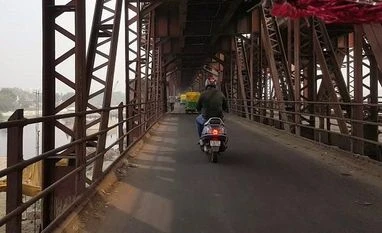
Popularly known as Loha Pul, the old bridge gets affected during floods as train movement slows down
 "Govt to build new rail bridge over Yamuna river in Delhi to ease congestion")
WebinarsNew
Deep DiveNew
Explore Business Standard
Popularly known as Loha Pul, the old bridge gets affected during floods as train movement slows down
Aiming to speed up train movement over the Yamuna and also decongest the Ghaziabad-New Delhi rail corridor - one of the busiest in the country -- Indian Railways has proposed an additional rail bridge over the river in the capital.
While the old Yamuna rail bridge -- also known as Loha Pul - will give way to a new double-line rail bridge by March next year, another bridge is set to come up near the existing Nizamuddin rail bridge to ensure faster and seamless movement of about 150 outbound and inbound passenger and freight services.
Currently, train movement between Ghaziabad and New Delhi station takes more than an hour -- and sometimes even two hours -- due to over-congestion on the route, causing much inconvenience to passengers. There has been demand to ensure an additional path for Delhi-bound trains to improve punctuality.
The proposed 600-metre bridge near the existing Nizamuddin rail bridge, to be constructed at an estimated cost of Rs 4.25 billion, will provide an additional path for Delhi-bound services and ensure that trains negotiate the bridge at above 100 km per hour.
"The hydraulic study for the proposed new rail bridge is underway and we are expecting the construction to start by year-end," a senior Railway Ministry official told IANS.
The construction of this new bridge along the Nizamuddin bridge is expected to claim about 2,000 kikar trees on the dry riverbed.
As far as the replacement of the old Yamuna bridge is concerned, the 800-metre-long new double-line rail bridge -- being built at an estimated cost of Rs 2 billion -- is expected to be operational by March next year, as the work is on full steam.
Though the more-than-a-century-old Yamuna bridge would be discarded and replaced by a new one along the existing site, the road bridge which is part of the old bridge will continue to be in use and its maintenance will now be handed over to the Delhi government by Northern Railway.
Popularly known as Loha Pul, the old bridge gets affected during floods as train movement slows down and if the Yamuna water level touches the danger mark then the traffic is barred on the bridge.
The upcoming new rail bridge will, however, be an all-weather bridge where "train movement would not be affected even in a flood situation", said the official.
Unlike the old Yamuna bridge where trains are allowed only at 20/30 kmph, there will be no speed restriction on the new one.
First Published: Jun 20 2018 | 2:22 PM IST


