Bangladesh: A cautionary tale

Economic difficulties are exposing political flaws
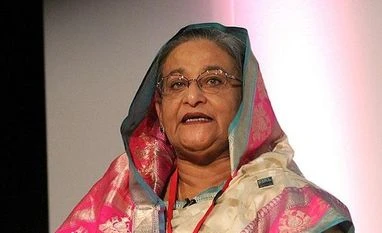
Bangladesh PM Sheikh Hasina | Wikimedia Commons
Business Standard Editorial Comment Mumbai
3 min read Last Updated : Dec 15 2022 | 10:20 PM IST
The massive rally held by the Bangladesh Nationalist Party (BNP) in Dhaka last week marked a return of the principal opposition to the ruling Awami League after almost a decade in the wilderness. The huge popular support at this and similar recent mobilisations in other towns across the country offers leaders of emerging economies a cautionary tale in the limits of authoritarian democracy. For the past decade and a half, Bangladesh has been the poster child, powering economic growth by linking its democratic dividend to global supply chains, especially for readymade garments. On almost every parameter, Bangladesh has stood out. From being one of the world’s poorest nations at independence in 1971, the country has reached middle-income status and is headed to exit the United Nations’ Least Developed Countries list by 2026. Poverty has declined from 43.5 per cent in 1991 to 14.3 per cent and its human development indicators outstrip most of its peers, especially in terms of women’s workforce participation and empowerment.

From this steady trajectory of export prosperity till just two years ago, the country faced a balance of payments crisis, forcing it to approach the International Monetary Fund for a $4.5-billion bailout package, the third South Asian nation to do so in the recent past. Prime Minister Sheikh Hasina’s government has blamed the pandemic and the Russian invasion of Ukraine for the sharp economic downturn that has crimped global demand and seen a surge in inflation, adding to the woes of ordinary Bangladeshis. Though this explanation is valid, the country’s precipitate decline is also a compelling indication of the shaky foundations on which its success has been built, a fact that the resurgence of the BNP ahead of elections next year has underlined. The basis of the country’s export success story has been pinned to the advantages of low-cost labour rather than a meaningful move up the value-addition chain. Ready-made garments account for over 80 per cent of its exports. The risks of this overwhelming reliance on a single item were underlined during the pandemic; when global demand slumped, Bangladesh had no buffers. Indeed, in the absence of a dynamic domestic economy built on a wider economic base, skilled labour, and efficient infrastructure, Bangladesh is likely to struggle to attain its ambition of reaching upper-middle income status by 2031.

A significant reason for the country’s inability to grow beyond its structural limitations is the authoritarian nature of the ruling regime, which is intolerant of criticism. Ms Hasina has held power since 2009, no mean feat in a country that was once dominated by the military. But over the years, she squandered the country’s export surpluses on vanity projects and her rule was increasingly marked by accusations of electoral fraud, extra-judicial killings of critics, a rigged judiciary, and arbitrary arrests. Recent revelations of corruption against a business house founded by a relative of an Awami League leader have not helped the ruling regime’s case. The absence of stable institutions, a social security system, the rule of law, and general good governance have all meant that Bangladesh can scarcely be considered an environment conducive to the kind of business investment that can stabilise the economy in the long run even as the country’s geography puts it on the frontline of the climate change crisis.
 

One subscription. Two world-class reads.

Already subscribed? Log in

Subscribe to read the full story →
*Subscribe to Business Standard digital and get complimentary access to The New York Times

Smart Quarterly

₹900

3 Months

₹300/Month

SAVE 25%

Smart Essential

₹2,700

1 Year

₹225/Month

SAVE 46%
*Complimentary New York Times access for the 2nd year will be given after 12 months

Super Saver

₹3,900

2 Years

₹162/Month

Subscribe

Renews automatically, cancel anytime

Here’s what’s included in our digital subscription plans

Exclusive premium stories online

  • Over 30 premium stories daily, handpicked by our editors

Complimentary Access to The New York Times

  • News, Games, Cooking, Audio, Wirecutter & The Athletic

Business Standard Epaper

  • Digital replica of our daily newspaper — with options to read, save, and share

Curated Newsletters

  • Insights on markets, finance, politics, tech, and more delivered to your inbox

Market Analysis & Investment Insights

  • In-depth market analysis & insights with access to The Smart Investor

Archives

  • Repository of articles and publications dating back to 1997

Ad-free Reading

  • Uninterrupted reading experience with no advertisements

Seamless Access Across All Devices

  • Access Business Standard across devices — mobile, tablet, or PC, via web or app

Topics :BangladeshBusiness Standard Editorial CommentDhaka

Next Story



