The average taxi in Bengaluru now travels at 7 km/h; most people can walk that fast (so much for the productivity upside of the internal combustion engine). Every Indian household could get half an acre and they would fit into Rajasthan and half of Maharashtra; if we had Singapore’s population density we could fit everybody in Kerala (so much for a land shortage explaining our massive overpricing of land). India’s real estate market has a toxic 5 per cent difference between rental yields and bank loan rates; in most countries these rates are equal (so much for the relentless discipline of financial arbitrage that keeps capital values in check). Two- fifty million Indian farmers produce less food than 2.5 million American farmers (so much for the argument to keep people on farms for food security).
These four points are connected via labour markets and we’d like to make the case that a) the only way to help farmers is to have less of them, b) our farm to non-farm transition is being murdered by the lack of good urbanisation, c) bad urbanisation is a child of city leadership that is either impotent or unelected. Let’s look at the each point in more detail.
India has too many farmers (250 million) and too many poor farmers (they are about 50 per cent of the labour force but only produce 12 per cent of gross domestic product). The recent farm loans waivers represent what doctors call triage: Highly invasive treatment done under pressure with unknown but inevitable side effects. Farmers have a productivity problem just like India does not have a jobs problem but a wages problem. India’s wages will only rise sustainably when we cross the “Lewisian” turning point that is named after Jamaican economist Arthur Lewis’s theory. It states that wages rise only after critical mass is reached in the farm to non-farm transition (China has crossed the Lewisian turning point with Foxconn announcing that they will set up a factory 2,000 km inland to pay the same wages as outside Hong Kong and buy a million robots). The only sustainable way to help farmers is to have less of them.
Political imagination always wants to take jobs to people but creating jobs in our 600,000 villages is hard; 200,000 of them have less than 200 people. So we have to take people to jobs. But does this mean more people in Delhi, Mumbai or Bengaluru or creating 200 new cities? The unstoppable migration of people to our 50 cities, with more than a million people, is being retarded by bad urbanisation that has created a divergence between real wages (what employees care about) and nominal wages (what employers care about). We have hired 1.6 millon people over the past 15 years largely by moving people from small cities to big ones but this has become difficult because kids are becoming reluctant to move (a kid in Kanpur said moving to Mumbai was impossible at Rs 12,000 because khana, rehna aur office jaana nahin banta). Urbanisation is inevitable but the mispricing of land, patchy public transport, and poor suburb connectivity mean that India is not realising the true upside of cities by making them magnets for evacuating farmers seeking decent wages.
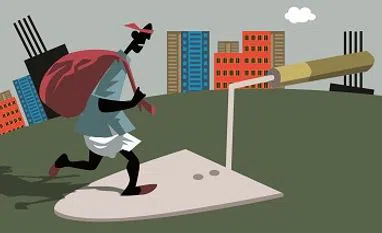
Illustration by Binay Sinha
Cities are complicated organisations all over the world but Indian cities suffer the friendly fire of being policy orphans for three reasons. Firstly, state chief ministers are unwilling to cut the tree they are sitting on (Bengaluru contributes may be 60 per cent to Karnataka’s GDP). Secondly, cities don’t have the plumbing or mandate to generate their own resources e.g. reasonable property taxes. Finally, and probably most importantly, city leadership is either unelected (bureaucrats serving as development authority or municipality heads) or impotent (city politicians who win elections but don’t wield power). The argument of bureaucrats protecting cities against venal politicians playing a one innings game has some but limited validity and the only sustainable solution in a democracy is “real” mayors. It has taken us 70 years to get power from Delhi to state governments — there has been huge devolution of funds, functions and functionaries in the past three years — but hopefully getting power from state governments to cities won’t take that long.
This needs state politicians to sacrifice self-interest; a big ask for any human but a particularly big ask for ambitious politicians. Politicians in states and the Centre face two important human capital decisions over the next decade: Civil service reform and the creation of elected and empowered city leadership. In the latter they will be giving up power with all the costs that it entails in return for the undying duas (blessings) of our youth and farmers who are ready for the millions of higher-wage jobs that good urbanisation will create.
India’s farm to non-farm and rural to urban transitions are not happening as fast as they can because of bad urbanisation, which, in turn, is the result of the 299 remarkable people who wrote our wonderful Constitution missing city governance in their design. We are confident that if the constituent Assembly was given a chance to review their design, with the hindsight that their miss is sabotaging their own directive principles of education and employment, they would change the laws and structures that make cities policy orphans. Why don’t we?
Disclaimer: These are personal views of the writer. They do not necessarily reflect the opinion of www.business-standard.com or the Business Standard newspaper