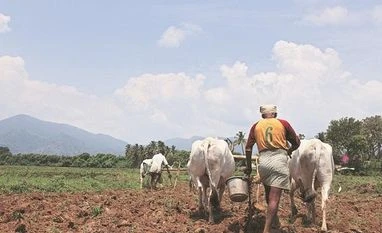
- India needs an influential agriculture minister, as strong as the finance or home minister. The constitutional accountability for agriculture is with the states. Yet the farmers and public look to the centre for action, which is why it becomes so important in national politics, whether it is farmers’ livelihood or an onion crisis. That is presumably why India has a union agriculture minister. Usually that job is assigned to an unknown and uninfluential political person. That needs to change.
- India needs a formal framework and a national agricultural development policy (NADP). Believe it or not, India has no politically approved NADP, whereas it does have a national industrial development policy, a national SME policy and an entrepreneurship/startup India initiative. Whenever a coordinated, systems approach to transformation/change is required, management folks advise having a common framework. One such approach has been mooted in (http://wwww.rallis.co.in/sarthakkrishiyojana.html).
- India needs a council of ministers for agriculture. Doing anything for the farmers requires active and deep cooperation between the states and the centre. The state-centre relations are at a new low currently. Such collaboration needs to be revived. Farming is not like telecom, roads, electricity and other reform-seeking sectors because it has vectors of economic, social, political and power dimensions. It needs a mechanism like the National Development Council or the GST Council.
- Marketing must be freed up from the tangled web of controls and hindrances in which it is mired. In the past, farming initiatives were focused on increasing production. This was important to feed a growing population. To conserve the output, which increased gradually, frictional restrictions were placed in the marketing chain: regulations on where farmers can sell, restrictions on exports, taxation at the mandi level and compulsory government procurement. Arbitrary restrictions on farmers’ marketing options cannot continue, looking to the future.
- Farmer-producer companies must be accelerated with the same zeal and energy as initiatives like Jan Dhan Yojana or Swachh Bharat. Farmers must be actively trained to organise themselves into FPCs (farmer producer company). We will be better off with one crore FPCs (like SMEs in the industrial sector) instead of 170 million individual farmers. A national drive on FPCs is crucial as a vehicle to implement ideas and modernisation. NABARD could be tasked to drive this single-mindedly.
- A national technology policy must be developed and executed with urgency. A modern and futuristic approach must be implemented with regard to adoption of modern technologies. India cannot afford to debate old-fashioned technology ideas concerning land, soil, water, seeds and nutrients.
One subscription. Two world-class reads.
Already subscribed? Log in
Subscribe to read the full story →
Smart Quarterly
₹900
3 Months
₹300/Month
Smart Essential
₹2,700
1 Year
₹225/Month
Super Saver
₹3,900
2 Years
₹162/Month
Renews automatically, cancel anytime
Here’s what’s included in our digital subscription plans
Exclusive premium stories online
Over 30 premium stories daily, handpicked by our editors


Complimentary Access to The New York Times
News, Games, Cooking, Audio, Wirecutter & The Athletic
Business Standard Epaper
Digital replica of our daily newspaper — with options to read, save, and share


Curated Newsletters
Insights on markets, finance, politics, tech, and more delivered to your inbox
Market Analysis & Investment Insights
In-depth market analysis & insights with access to The Smart Investor


Archives
Repository of articles and publications dating back to 1997
Ad-free Reading
Uninterrupted reading experience with no advertisements


Seamless Access Across All Devices
Access Business Standard across devices — mobile, tablet, or PC, via web or app
)