A newly identified virus, 2019-nCoV, has killed over 800 people worldwide. We do not know whether this will now subside, or whether it will become more important. If there is an outbreak in India, this could have a significant adverse impact on the country and test the public health system. Public health functions on communicable disease are critical functions in a society, which only a state can provide. Such tasks are more important than curative health care, in the agenda for public policy.
The new coronavirus, 2019-nCoV, is similar to the SARS-CoV, which originated in China in 2002. In that episode, which roiled the world economy, 8,096 persons were affected and 774 died, with a case fatality ratio of about 10 per cent. While the new 2019-nCoV appears to be less virulent than SARS-CoV, we have crossed 813 deaths. Of these, 811 were in China, and one each was in Hong Kong and the Philippines. 2019-nCoV is more important for the world economy, than SARS-CoV was, for two reasons: The death toll has exceeded that of SARS-CoV, and the Chinese economy in 2020 is more important for the world than it was in 2002.
In the field of public health, dealing with communicable diseases and epidemics is of primal importance. Governments add value by doing things that are not done by private persons. Fighting communicable disease and responding to epidemics is clearly an area where private responses do not suffice, but where governments are required.
The toolkit of fighting communicable disease in the 21st century has not changed much compared with the 19th century. It involves detective work in watching disease all over the country and obtaining early warnings about epidemics. It involves administrative interventions to contain the spread of an epidemic. Intellectual leadership is required for understanding each new problem, and extension functions are required to communicate this to the health care industry, most notably inside the hot zone.
There is a great deal of humdrum work, which has to be done every day, in the process of obtaining information and analysing it. A large number of false alarms have to be diligently tracked down and ruled out. And then there are occasional crises, like the plague outbreak in Surat in 1994, which require mobilising a full-blown response.
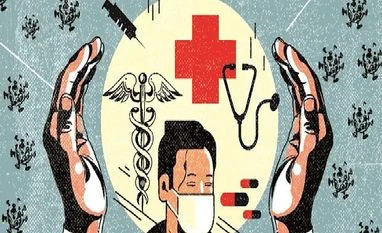
Illustration by Ajay Mohanty
It takes great political and organisational capability to commit resourcing to this problem and to obtain success. In the Indian environment, with low state capacity, we tend to underinvest in this work and we tend to obtain low organisational capability. It is very difficult to organise Indian state structures to do prosaic work every day at high levels of quality. As an example, the difficulties of running the official statistical system in India, about economic and demographic statistics, give us insights into the difficulties of running the health statistical system, which is a critical component of public health. As a consequence, public health authorities have low knowledge about the disease burden present in the population every day.
If an epidemic of 2019-nCoV or ebola or lassa fever got going in India, the Indian state would find it difficult to set up a statistical system, with maps that show every case which is correct and updated. As an example, there is no data in India showing each case of dengue, which generally has a case fatality ratio higher than 2019-nCoV.
We have a government organisation, the National Centre for Disease Control (NCDC), which works on these questions. Its peers abroad include the Centers for Disease Control (CDC) in the United States and the European Centre for Disease Prevention of Control in the European Union. There is a lot to do in building the NCDC. As an example, the US CDC has about 11,000 employees (of whom half have an advanced degree) while the NCDC has about 400. It must be emphasised, however, that the problem of communicable disease goes well beyond a single organisation like the NCDC. Every part of the public and private health system has to play a role in the overall problem of controlling communicable disease.
Some pathogens are able to rapidly mutate. In this case, the public health system has a remarkable consequence: It influences virulence. When the public health system reduces the probability of person-to-person transmission, the strains that succeed are those that keep victims alive for a longer period. Conversely, when it is easy for a pathogen to jump from one person to another, the most successful strains will evolve in favour of high virulence. As an example, many decades ago, when the quality of drinking water in West Bengal improved, the virulence of cholera declined, while this did not happen in East Bengal, where drinking water was inferior (at that time).
We were lucky in the past, and problems like SARS-CoV or ebola did not erupt here. In the case of 2019-nCoV, every day of delay works in our favour, as 2019-nCoV is likely to spread less when temperatures are higher. If February goes by without major problems, then we have a fair chance of faring well. But we cannot indefinitely count on such good fortune. While we do wrong to engage in teleology and in anthropomorphism, a community of 1.33 billion people with low state capacity is an attractive target for an ambitious pathogen.
The prime focus of health policy in India at present is upon running or providing health care. The market failure in public health (externalities and public goods) is, however, different from the market failure in health care (monopolies and asymmetric information). The institutional apparatus for controlling communicable disease is a critical pillar of public health. Prevention is better than cure, and we can do much better on prevention by refocusing upon public health. It would make sense to shift resourcing and prioritisation, away from health care, towards public health. When the government is willing to spend money on health care, there is a direct link between improvements on prevention and reduced government expenditure.
The writer is a professor at National Institute of Public Finance and Policy, New Delhi

 "Dodging a bullet?")












 Connect with us on WhatsApp