Don't search for meaning

Why alphabet soup corporate names will continue to grow
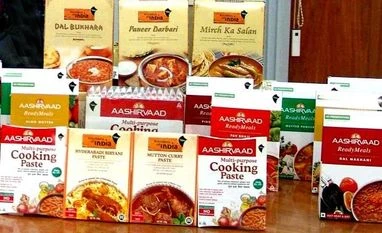
ITC products
ITC products
Ambi Parameswaran
Last Updated : Dec 30 2018 | 10:13 PM IST
A brand name is an ultimate asset a corporation owns. But sometimes the very same brand name can outlive its utility, or can become a millstone for the business. This is sometimes true for corporations and sometimes for products/services. 

ITC is a great example of a corporate brand that has undergone many such changes. From Imperial Tobacco Company in the British era [British American Tobacco Company (BAT) is the parent], to India Tobacco Company to the simple acronym ITC today. The brand ITC is so well established across so many businesses that I was not surprised to see an ITC Master Chef range of food products on retail shelves. If you ask a millennial they may not know the origin of the brand name ITC. 

Or take ICICI which at one time stood for Industrial Credit and Investment Corporation of India. Today it is just known as ICICI. I bet that very few of their many million customers will know the expansion of the name. 

In the packaged products business, it is difficult to change the name. But one brand did it and did it well. I am referring to Parle Gluco biscuit, the most often imitated brand in the country. But two decades or so ago, the company took a bold decision that if they don’t fix the plagiarism problem they will never be able to grow the business. They switched to the shorter brand name Parle-G. This was accompanied with some excellent advertising playing on the word ‘G’: ‘Hum ko pata hai ji, sab ko pataa hai ji’ (we know, everyone knows). In some measure, this bold change probably helped Parle-G become an even stronger number one biscuit brand in the country and the world, now. 
 

There have been several simple brand name switches. From Tinopal to Ranipal, executed then through some memorable jingle-based radio advertising. Or from Binaca to Cibaca when Ciba Geigy of India had to give up the licence for the global Binaca brand. Interestingly, the brand Cibaca was sold and sold again only to find its final resting place with Colgate. I wonder if anyone can even recall the origin of the brand name Cibaca. 

In an editorial the Financial Times (September 29, 2018) pointed out that consumers may actually like ‘ambiguous’ brand names. The popular US fast food chain, Dunkin’ Donuts is undergoing a brand name change. It started out as Open Kettle to become Dunkin' Donuts, and in January 2019 will become simply Dunkin’. The corporation name will stay Dunkin’ Brands (the company also owns Baskin Robbins). Why drop Donuts? The simple answer is the operation has outgrown donuts. The logical reason given: “Our new name is simpler, shorter and more modern”. Many international business publications juxtaposed this change to that being done by yet another big US brand: Weight Watchers founded in 1963 with a precise name switched to a simple ‘WW’. What does that stand for? Wellness That Works. 

Just as Dunkin’ feels that Donuts is very restrictive, in the new era, WW feels that watching weight is not the ultimate goal to good health. The brand wants to offer a wholesome healthy life to its loyalists. Dunkin’ is not the first to shed a second name; Starbucks till 2011 was called Starbucks Coffee, says FT. Another big brand that did a move from a meaningful name to a meaningless alphabet soup is Kentucky Fried Chicken, which became KFC in 1991. Chances are that most customers refer to KFC without knowing the expansion of its initials. 

In their book Positioning, and the many follow-up books, Al Ries and Jack Trout have been strong advocates for brand names that have a meaning, that can resonate in the consumers mind. They strongly denounced alphabet soup names, saying they do not mean anything to anyone. 

It is interesting to note in the technology space the big brands are all ‘non alphabet’: Microsoft, Apple, Google, Facebook, Netflix, Amazon. Each and every one of them have some residual meaning. Yes there is an IBM and a 3Com. But those belong to another era. 

This leads me to wonder if the desire for brands and companies to switch from a meaningful name to a meaningless set of alphabets is really such a good idea. Could they have created a more universal all- embracing names that can carry forward the legacy? For instance, could Weight Watchers have become Wellness Way?  

Let us admit, it is tempting to dip into the alphabet soup when you are looking for a quick tummy fill. 
The writer is an independent brand strategist, author and founder of Brand-Building.com a brand advisory

One subscription. Two world-class reads.

Already subscribed? Log in

Subscribe to read the full story →
*Subscribe to Business Standard digital and get complimentary access to The New York Times

Smart Quarterly

₹900

3 Months

₹300/Month

SAVE 25%

Smart Essential

₹2,700

1 Year

₹225/Month

SAVE 46%
*Complimentary New York Times access for the 2nd year will be given after 12 months

Super Saver

₹3,900

2 Years

₹162/Month

Subscribe

Renews automatically, cancel anytime

Here’s what’s included in our digital subscription plans

Exclusive premium stories online

  • Over 30 premium stories daily, handpicked by our editors

Complimentary Access to The New York Times

  • News, Games, Cooking, Audio, Wirecutter & The Athletic

Business Standard Epaper

  • Digital replica of our daily newspaper — with options to read, save, and share

Curated Newsletters

  • Insights on markets, finance, politics, tech, and more delivered to your inbox

Market Analysis & Investment Insights

  • In-depth market analysis & insights with access to The Smart Investor

Archives

  • Repository of articles and publications dating back to 1997

Ad-free Reading

  • Uninterrupted reading experience with no advertisements

Seamless Access Across All Devices

  • Access Business Standard across devices — mobile, tablet, or PC, via web or app

Next Story



