In just a year since India pulled out, at the eleventh hour, of negotiations to conclude the Regional Comprehensive Economic Partnership (RCEP) trade agreement, the overall trade environment for India has undergone a sea change. For one, the other nations involved in the RCEP — Association of Southeast Asian Nations (Asean), alongside Japan, China, South Korea, Australia, and New Zealand — have gone forward and signed the pact. For another, the government’s own policies have turned markedly protectionist, with a series of import tariffs, restrictions, and production-linked incentives now ring-fencing a number of sectors — making it even harder to join any meaningful trading bloc. While the RCEP is a much shallower agreement than many alternatives — the successor to the Trans Pacific Partnership focuses much more effectively on 21st-century “behind-the-border” barriers to trade than the very 20th-century RCEP— it will nevertheless have a big impact on the region and on India’s existing trading partners. Asean estimates that over two-thirds of the goods currently being traded in the RCEP countries will eventually be without tariffs and quotas. Rules about place of origin and other such regulations will be simplified, allowing for more effective and robust supply chains within the RCEP countries.
Even if the geopolitical atmosphere between India and China has chilled markedly since the end of last year, the economic argument for trading integration has not been altered. It is not as if India is excessively integrated in world trade. Nor is the government’s constant claim that current or close-to-conclusion free-trade agreements (FTAs) are the problem, and that better FTAs will be available in the future, gaining any credibility as time goes on. There will be no perfect FTA that benefits India without any pain. The point is to seize the opportunities that do exist and are being provided. Gloating in Beijing that India has voluntarily chosen to sit out the next round of global integration is unfortunately on the mark. What is worse is that the RCEP, into which Indian partners like Japan sank so much energy in the hope that it would enable closer economic ties between India and the region, will eventually end up enriching China above all. This cannot have been the strategic calculus in New Delhi’s mind when it chose to exit the agreement.
If the RCEP remains a non-starter for India — and entering the agreement late will be difficult even in the case of a change of heart from India, as Beijing will now be able to set whatever hurdles it likes — then it is unclear what the next step is for Indian trade. Protectionist industry lobbies have successfully stymied the India-European Union (EU) FTA for a long time. Indian diplomats continually claim a “mini agreement” with the EU is on the table, in spite of repeated and patient explanations from Brussels that given the EU’s internal complexity it has never signed, and will not sign, anything short of a comprehensive trade and investment agreement. A trade agreement with an inward-looking US looks even further away. And as the Asia-Pacific and Africa join in their great internal free-trade blocs, India will stand isolated and continue to underperform in terms of exports and growth. This is a great act of economic self-harm, and shows how insecure the Indian government is about domestic competitiveness as a manufacturing economy, or even in parts of the agricultural sector. Self-reliance is not a superior alternative to open trade and points the economy as well as policy in the wrong direction.

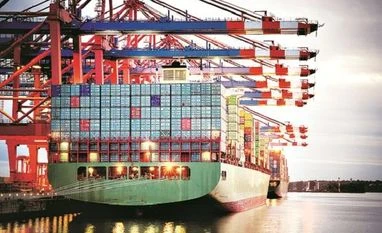 "Economic self-harm")












 Connect with us on WhatsApp