If farm loan waivers were a solution to agrarian distress, India’s farmers would have achieved prosperity long ago. In reality, loan waivers are just an easy palliative, with plenty of good optics, for a political economy that has shied away from fundamental structural reform. Truth be told, the solution for agrarian distress does not lie in agriculture. It lies in industry. But as long as politics sees the requirements of industry, whether cheap land and power, plentiful labour and affordable capital as antithetical to the interests of India’s poor, it is bound to condemn those very people to continued poverty.
The surest way to solve the problem of agrarian distress is to defy political correctness
Almost three decades after liberalisation, India seems to have been captured by its own myth that it is possible to leapfrog the manufacturing/industry stage and become a services-led economy even at a low per capita income level. The changing nature of services, particularly their tradeability (think IT services), may make a services-led strategy sustainable at a macroeconomic level. But it seems to have fallen short in terms of generating enough well-paying jobs for a majority. The skill-bias inherent in services means that it will never be able absorb the excess labour force in agriculture. The only place for such labour to go is to the informal, unorganised sector in industry which pays little with no benefits. In comparsion, agricultural labour may seem no worse.
Evidence from history around the world suggests that it is only manufacturing and it associated activities such as mining and quarrying that are able to absorb low-skilled labour from agriculture into decent paying jobs. It isn’t that policymakers have always ignored manufacturing. The current government launched a Make in India programme which has now been supplemented by an ambitious goal of achieving a $1 trillion manufacturing sector by 2025. Still, manufacturing’s share as a percentage of GDP hasn’t budged much from around 15 per cent of GDP since the early 1990s (the share was higher pre-liberalisation).
Of course, the government has made strides in the Ease of Doing Business. It has even raised tariffs for a range of sectors. But while necessary these may not be sufficient to boost manufacturing and industry at the scale required and in the labour-intensity required. In a globalised world, industry needs a level playing field to compete without becoming inefficient (via protection). None of the East Asian tiger economies, and China can be added to the list, grew manufacturing without the availability of cheap land in the right geographical location. The availability of cheap (and often subsidised) power was another critical component of making industry competitive. And finally, flexible labour laws which made the proposition of hiring thousands of workers attractive is what enabled these economies to grow rapidly while providing decent jobs to the maximum number of people.

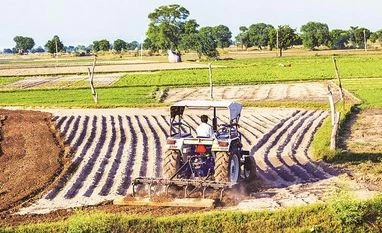 "For agrarian distress, farm industry")












 Connect with us on WhatsApp