Fuel of the future*

So, what is the world waiting for? Hydrogen as fuel is a win-win. It's an energy elixir, it's the panacea
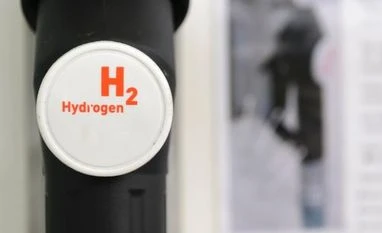
Hydrogen auto fuel
Hydrogen auto fuel
Kumar Abishek
5 min read Last Updated : Aug 20 2021 | 11:37 PM IST
For many, hydrogen is the fuel of the future: When ignited, it leaves behind only water, and not carbon dioxide (CO2). Thus, using this most abundant element for our energy needs may help tackle greenhouse gas emission. Also, the energy produced by 1 kg of hydrogen gas, according to the US Department of Energy, is about the same as the energy in 2.8 kg of gasoline.

Keeping these benefits in mind, Prime Minister Narendra Modi during his Independence Day speech announced the National Hydrogen Mission in a bid to make India energy independent by 2047 and also meet its climate targets.

So, what is the world waiting for? Hydrogen as fuel is a win-win. It’s an energy elixir, it’s the panacea.

Not exactly. All the aforementioned benefits depend on how we extract hydr­o­gen molecules and whether the process of extraction is clean. Not all hydrogen mo­­l­e­cules are created equal — they are black, brown, grey, blue, green, pink, yellow, white, and turquoise (and a few more, possibly).

In the hydrogen kaleidoscope, black and brown are the most environmentally damaging as they are produced using anthracite (black coal) or lignite (brown coal) via gasification, leaving by-products like CO2, carbon monoxide, methane, and ethane. Then comes grey, which is created from natural gas using a route called “steam methane reforming”, without capturing greenhouse gases made in the process; it is the most common way to produce hydrogen (95-96 per cent).
 
According to International Energy Agency (IEA), the production of hydrogen is responsible for CO2 emissions of around 830 mt per year, equivalent to the carbon emissions of the UK and Indonesia combined.

Then there’s the “relatively clean” blue hydrogen: Basically, grey hydrogen but in production, CO2 is sequestered via carbon capture and storages. A recent study by Cornell and Stanford University researchers, however, showed the carbon footprint to create blue hydrogen is 20 per cent greater than using either natural gas or coal directly for heat, or about 60 per cent greater than using diesel for heat.

Thankfully, environment-friendly gre­en hydrogen exists but it has not been co­m­­­m­ercially realised. Green hydrogen is ex­­t­racted when water goes through elect­r­olysis (with electricity supplied by solar, wind, or hydroelectric power), splitting in­to hydrogen and oxygen. India’s Nat­ional Hydrogen Mission is all about green hyd­r­ogen as Mr Modi targets to evolve the co­u­­ntry into a hub for the same. Also, renewable energy-focused ACME Group has re­­cently commissioned the world’s first in­tegrated commercial-scale pilot plant for green hydrogen production in Rajasthan.

Pink hydrogen, too, is created via electrolysis but using nuclear energy, while yellow is made using solar power only.

“With declining costs for renewable electricity, in particular from solar PV and wind, interest is growing in electrolytic hydrogen and there have been several demonstration projects in recent years. Producing all of today’s dedicated hydrogen output from electricity would result in electricity demand of 3,600 TWh, more than the total annual electricity generation of the European Union,” stated a 2019 IEA report.

Turquoise hydrogen is made using a process called methane pyrolysis that leaves behind solid carbon. And, white is naturally occurring hydrogen found in underground deposits.

Besides ensuring that hydrogen extraction is clean, there is another envir­o­nmental concern while using it as fuel — the emission of water vapour, an­o­ther greenhouse gas. But this worry may be unfounded — for the atmosphere to ho­ld more water vapour, it needs to be wa­rmer (hotter the air, the more water va­pour it can hold). But the upper atm­o­s­phere — which is responsible for maintaining Earth’s radiation balance — is very cold and can’t hold excess water vapour; it will eventually precipitate.   

But for hydrogen to replace non-rene­wable fuel, technology must evolve much faster. At present, it is far from an ideal automobile fuel. Hydrogen promoters point out this gas has an energy density of around 33kWh/kg, far greater than pet­rol (13kWh/kg) and diesel (12.6kWh/kg). But when compressed to 300 bars, accor­d­ing to studies, its energy density is only a fifth of petrol and diesel. Such low ene­rgy density means fuel storage takes up a lot of room in a hydrogen-powered car; oth­erwise, the fuel tank is modest-size, rest­ricting the vehicle’s range. Besides, the process to compress hydrogen is energy-consuming.

What’s also required is framing codes and standards for hydrogen storage systems and interface technologies to ensure safety because it is an extremely flammable gas (remember the defining photograph of the hydrogen-filled Hindenburg descending in flames on May 6, 1937). Also, there is lack of analyses of the life-cycle cost and efficiency for hydrogen storage systems.

To push the use of green hydrogen across the world, governments must formulate long-term energy strategies, address investment risks of early movers, support R&D to help bring down costs, stimulate commercial demand, and also engage internationally. For a sea change in people’s fuel habits, ambitious and targeted actions are needed to overcome barriers and reduce costs.
 
Indeed, hydrogen is the fuel of the future.
*Conditions apply

One subscription. Two world-class reads.

Already subscribed? Log in

Subscribe to read the full story →
*Subscribe to Business Standard digital and get complimentary access to The New York Times

Smart Quarterly

₹900

3 Months

₹300/Month

SAVE 25%

Smart Essential

₹2,700

1 Year

₹225/Month

SAVE 46%
*Complimentary New York Times access for the 2nd year will be given after 12 months

Super Saver

₹3,900

2 Years

₹162/Month

Subscribe

Renews automatically, cancel anytime

Here’s what’s included in our digital subscription plans

Exclusive premium stories online

  • Over 30 premium stories daily, handpicked by our editors

Complimentary Access to The New York Times

  • News, Games, Cooking, Audio, Wirecutter & The Athletic

Business Standard Epaper

  • Digital replica of our daily newspaper — with options to read, save, and share

Curated Newsletters

  • Insights on markets, finance, politics, tech, and more delivered to your inbox

Market Analysis & Investment Insights

  • In-depth market analysis & insights with access to The Smart Investor

Archives

  • Repository of articles and publications dating back to 1997

Ad-free Reading

  • Uninterrupted reading experience with no advertisements

Seamless Access Across All Devices

  • Access Business Standard across devices — mobile, tablet, or PC, via web or app

More From This Section

Disclaimer: These are personal views of the writer. They do not necessarily reflect the opinion of www.business-standard.com or the Business Standard newspaper

Topics :hydrogenhydrogen fuelBS Opinion

Next Story



