Home / Opinion / Columns / He Rocked Us: Freddie Mercury took the stage like an uncaged Bengal tiger
He Rocked Us: Freddie Mercury took the stage like an uncaged Bengal tiger
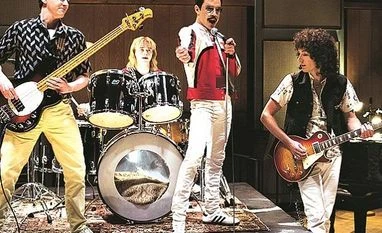
In Bohemian Rhapsody, Rami Malek has played Mercury, who had the courage to take centre stage time and again before tens of thousands, never so memorably than at Live Aid
Sunday night in Los Angeles will mark that rare occasion when someone of Indian origin is up for an Oscar. This is a declaration many will contest, but a biopic, by definition, is a tribute or a trashing of the person it is about – in this case of a man born Farrokh Bulsara to Parsi parents in the British protectorate of Zanzibar. This is perhaps truer still of Bohemian Rhapsody, the film about Freddie Mercury, because Rami Malek was practically unknown. Meryl Streep playing Margaret Thatcher (The Iron Lady) or Isak Dinesen (Out of Africa) was also winning or being nominated because she is Meryl Streep, spectacular accents and all. If Malek wins, he will win because he inhabited Mercury so naturally that it felt like witnessing a televised séance with the singer, who died aged 45 in 1991 of complications from AIDS. From the fake additional incisor teeth that Malek wore to play Mercury that he plans to recast in gold because he thinks it is the sort of thing the flamboyant singer would have approved of to Mercury’s strut, Malek got the details and the big picture right.
The film has been celebrated for its riotous rendition of Mercury leading Queen as they take the stage for a little over 20 minutes in July 1985. Contrary to the film’s melodramatisation of the events leading to that concert, there appear not to have been a trail of unanswered phone calls to Mercury asking him to perform. Nor was the band, which did struggle with working together on occasion because unusually all four members of Queen wrote hit songs, in different places. They were merely tired after a tour of Australia and New Zealand. Despite being pariahs for having performed in Sun City in South Africa the year before, Bob Geldof, who came up with the idea of the fund-raising concert to raise money for Ethiopia, reached out to them and the band agreed.
Queen had hit a low point and its members were thinking about not touring again for a few years, but the foursome took on the training for the concert as if it were, well, the biggest event on earth. Hard to believe in today’s era of splintered television audiences except for the pomp and parody of British royal weddings, but Live Aid would be watched by 1.5 billion people worldwide. Queen practiced solidly for three days whereas many of the other performers saw the concert as a series of cameos and just showed up. And, the band’s sound engineers had scoped out the venue and the sound systems and cleverly cranked up the volume to levels higher than what the other bands used.
Mercury took the stage like an uncaged Bengal tiger that had not eaten for days. He roared, he strutted. His hypnotic hold on the crowd was unparalleled. He deserved an Oscar; predator on stage one moment, he was camp pussycat the next. Wearing a vest and jeans and seizing that long steel rod that held the microphone, Mercury turned it into an air guitar, then a magician’s stick in a circus act, interspersed as the whim carried him with some decidedly phallic symbolism. Most of all, he conducted the crowd as if they were a choir, having them sing along to perfectly pitched triumphalist anthems such as We are the Champions. No crowd anywhere has mastered the double clap in Radio Ga Ga so resoundingly that it sounded like the medieval drums of an army going to war or shouted “DAAAY-O” quite as lustily. I have watched the YouTube recording so many times that in my more paranoid moments, I worried that if Malek could copy him, so perhaps could the roll call of dictators and hyper-nationalistic politicians who dominate the world currently. More likely, though, empty rhetoric is all they have and thankfully none can sing and dance. (Mercury looks eerily like the late Pakistani dictator Zia ul Haq in one of the photos of Live Aid).
Mostly, I felt an unexplainable and more than slightly illogical nationalistic sense of pride that Mercury had somehow transcended the strictures of Indian diaspora middle-class life to become this utterly unique entertainer. The disruptions of his parents escaping from Zanzibar to Britain during a revolution when he was a teenager, after he had been sent to a boarding school in Panchgani in Maharashtra at the age of eight, would have crushed the spirit of many young people.
Instead, Mercury had the courage to take centre stage time and again before tens of thousands, never so memorably than at Live Aid. "Queen was absolutely the best band of the day. They understood that it was a global jukebox... they just went and smashed one hit after another,” Geldof would recall. “It was the perfect stage for Freddie — the whole world.” Malek collecting that Oscar statuette this weekend on behalf of Freddie Mercury would be a nice homage, but in Montreux in Switzerland, there already is a ten-foot-high statue of the singer that commands the lake. The symbolism is simple; Mercury was a giant.
Disclaimer: These are personal views of the writer. They do not necessarily reflect the opinion of www.business-standard.com or the Business Standard newspaper


 "He Rocked Us: Freddie Mercury took the stage like an uncaged Bengal tiger")









