By 1955, politics in the USSR had started becoming more normal. When Khrushchev won a power struggle against Molotov, the loser was sent as ambassador to Mongolia: There were no agencies or imprisonment in the picture. The USSR seemed to be coming out of its more radical stage, it seemed to become a normal country. For many in the world, it was a time to normalise the relationship with the USSR, to look for areas of fruitful trade and collaboration, and thus encourage the path of the country towards normalcy.
Two milestones reshaped events. In 1983, a Soviet fighter plane shot down Korean Air Lines flight 007 killing 269 people. In 1986, there was a nuclear accident at Chernobyl. In both the cases, the regime responded with lies and a cover-up. These events highlighted the problems of the authoritarian regime and helped set the stage for the end of the USSR in 1989.
The lab-leak hypothesis has some similarities to these events. It consists of the idea that sloppy and risky research, conducted at the Wuhan Institute of Virology (WIV), gave birth to Sars-Cov-2 which has harmed the world.
We do not know if this hypothesis is true. At first, serious people concluded it must be false because it was espoused by Donald Trump. Tinpot leaders are remarkably powerful; they can persuade people that the truth is the opposite of what they say. The Chinese state has operated by the playbook of the USSR in 1983 or 1986. Sceptics argue that the Chinese government has something to hide. Optimists feel that lying and crushing dissent is the everyday behaviour of authoritarian governments.
In the coming weeks, the full facts known to Western intelligence agencies, and the Western researchers who were collaborating with WIV, will become known. But it may well be the case that decisive evidence will remain elusive. Many puzzles of history were solved only after the Soviet archives were accessed after 1989. In a similar fashion, until the Chinese archives are opened, a decisive answer may not be obtained on whether the lab-leak hypothesis is true or false. It is interesting to ask: What might the consequences of the revelations of 2021 be?
In 1978, politics in China started becoming more normal. Handover of power took place without agencies or jail time. Many people worldwide supported the normalisation of relationship with China. It was felt that China could be connected to globalisation, and this would help the country to become normal. This process changed significantly in 2012 when Xi Jinping took the country back on an authoritarian and nationalist path.
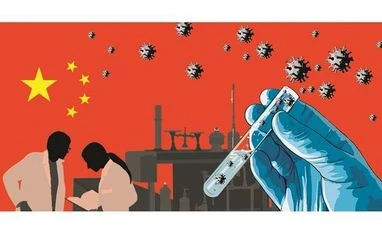
Illustration: Ajay Mohanty
The lab-leak hypothesis will influence the way decision makers, in government and in private firms, see engagement with China. It helps clarify the mind, that China is not a normal country, and that there are harmful consequences worldwide of nationalism and concentrated power in China.
Millions of people have died in the pandemic and many more have experienced health crises. For a billion people worldwide, there will be a shard of anger against all the people who were responsible. The Chinese state will feature in opinion polls about who is to be blamed.
Chinese soft power will decline. There will be less interest in the China model. As an example, there will be less interest in India in emulating Chinese methods in politics and economics. There was a time when crushing dissent and controlling the populace gave the full ability to do bad things in secret. Open-source intelligence was able to ferret out the lab-leak hypothesis despite the cover-up.
The Chinese state has done a lot to get a seat on the table in international affairs. Their representatives are now less likely to persuade others. Working with other countries requires a certain level of respect and trust, it takes decades of sophisticated behaviour to nurture this, and it is undermined by the lab leak hypothesis. Alongside this, major powers are likely to collaborate to reduce Chinese hard power in international organisations like the World Health Organization.
The boards of many global corporations have been reassessing the importance of China in their businesses. A process of diversification has begun, where there is a systematic attempt at reducing the importance of China. This work will gain momentum.
Some thinkers have long worried about the adverse consequences of scientific research in fields such as genetic engineering, nanotechnology and nuclear science. The world is likely to adopt greater safeguards and approach such research with more caution. Global researchers will worry more about collaborations with China, and about the benefits of giving out contracts for cheap Chinese research. Collaborations are more likely to favour countries with high levels of democracy. Countries that aspire to scientific excellence will find that the enabling conditions for science policy include freedom and dissent at home.
From 1972 onwards, there have been two views on engaging China. On one hand, being a democracy matters to people who matter. On the other hand, there have been people who have been content to do business, to argue that more engagement with the world will help in the process of China becoming a normal country. The lab-leak hypothesis undermines these optimists. It is also likely to increase the cost of Chinese-style behaviour by any country.
None of this is black and white. The lab-leak hypothesis alone does not change the picture on all these fronts from 0 to 1. From 2012 onwards, many events have taken place, which have questioned the happy idea that China was becoming normal, or that there was a “China Model” which was worthy of emulation. The phenomena sketched above were all brewing. For practical people who did not decipher abstract ideas like nationalism or dictatorship, the lab-leak hypothesis shows their tangible manifestation. In the years to come, perhaps we might see 2020 for China as being like 1983 or 1986 for the USSR.

 "How might lab-leak hypothesis matter?")












 Connect with us on WhatsApp