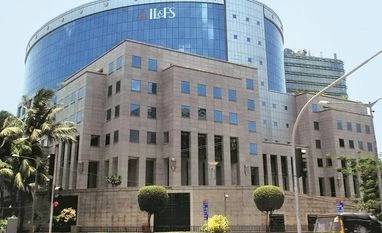
IL&FS, which is a non-banking finance company (NBFC, also called shadow bank) with 169 group companies (of which only three are listed), is engaged in financing infrastructure projects. Major shareholders of the company are: LIC (25.3 per cent), Orix Corp, Japan (23.5 per cent), Abu Dhabi Investment Authority (12.6 per cent), IL&FS Employee Welfare Trust (12 per cent), HDFC (9 per cent), Central Bank of India (7.7 per cent), and SBI( 6.4 per cent). All the major shareholders have had their nominee directors on the board with the exception of HDFC.
The company is sitting on a debt of Rs 910 billion. The debt-equity ratio of the company is quite high at 13. Of the total debt, Rs 600 billion is at the project level, including road, power and water projects. It owns long-term infrastructure financed with short-term funding because long-term (tenure of more than 10 years) debt is not available in India. Therefore, there is asset-liability mismatch.
In June this year, Transportation Networks Ltd, a group subsidiary, defaulted on its debt obligations. More defaults in other parts of the company followed in August and September. This triggered the panic button in the financial market. More defaults would have contagion effects. In order to contain that, the government swiftly moved the National Company Law Tribunal (NCLT), Mumbai, under Section 241 of the Companies Act, 2013, to supersede the board of the company with six new directors. The NCLT passed the order in favour of the government. The government also committed to arranging adequate liquidity for the company to obviate future defaults and ensure smooth implementation of infrastructure projects. In a way, the government has provided sovereign guarantee to lenders to IL&FS. This was the best option available to the government to contain the contagion effect.
The crisis in IL&FS reveals various corporate governance issues. Independent directors of IL&FS included R C Bhargava, chairman of Maruti, Michael Pinto, a former secretary for Shipping, Sunil B Mathur, former LIC chairman, Jaithirth Rao, formerly from Citibank, and Rina Kamath, a legal practitioner, who all are well-known professionals. Unfortunately, they lacked experience in managing a complex NBFC, engaged in financing infrastructure project. Induction of individuals of high stature does not make the board. A board is effective only if it has independent directors who have expertise in the industry in which the company operates. Therefore, it is no surprise that the board failed to manage the crisis that was brewing over the last three-four years.
It is difficult to assume that independent directors with long industry experience do not appreciate the need for risk management, particularly in the finance sector. Unfortunately, the Risk Management Committee, constituted mostly of independent directors, never met after July 2015, even as the company's finances kept tumbling. This must be construed as a dereliction of duty by independent directors. Therefore, they are equally responsible for the crisis at IL&FS.
In a family business, we often assume that the controlling shareholder/promoter has skin in the business and therefore, independent directors should support the promoter. IL&FS is not a family business. Yet there is a thing to learn from the IL&FS crisis. It is reported that an offer by Ajay Piramal, who was ready to pay Rs 600-650 a share to buy IL&FS, was rejected by LIC, which is the largest shareholder, because its independent valuation pegged it at Rs 1,200,a proposal for an IPO was also not followed up, and monetisation of assets was not pursued quickly. LIC did not accept an alternative suggested by the others to come out of the financial crisis. One may wonder whether independent directors requested for independent valuation, whether they effectively monitored monetisation of assets, and whether they recorded dissent. If they did not do all those, they failed in their responsibilities.
The role of credit rating agencies in the crisis cannot be undermined. They had to wait for default to downgrade debt instruments of IL&FS by a few notches. This suggests that the original ratings were not correct. Credit rating agencies are paid by the management. Therefore, they are under pressure not act independently. The government should think about creating an independent regulator for credit rating agencies. In this case, the Serious Fraud Investigation Office (SFIO) should bring in its ambit investigation into how ratings were awarded to debt instruments issued by the company.
It is established that the board has fiduciary responsibilities towards the shareholders. The IL&FS case demonstrates that in order to benefit the company, the board should act as if it has fiduciary responsibilities towards other stakeholders too. In this case, the board has failed in fiduciary responsibilities towards debt holders and has put the company in crisis.
Thewiriter is director, Institute of Management Technology Ghaziabad
Mail id: asish.bhattacharyya@gmail.com

 "IL&FS crisis: Learnings in corporate governance")












 Connect with us on WhatsApp