Indian Problem League?
IPL's poor management is showing in its finances and its quality
Business Standard New Delhi As the sixth edition of the Indian Premier League gets underway, there are frissons of concern over its financial health. Nothing major, but its organisers should be worried when the brand valuation of a tournament franchise drops even before it has played out its sixth season.
According to UK Brand Finance, a brand valuation agency, IPL's value has fallen sharply, from $4.1 billion in 2010 to $2.9 billion (approximately Rs 15,900 crore at the current exchange rate) in 2012, which is almost near its base value when the tournament started in 2008. The chief reasons, Brand Finance said, are poor governance and lack of financial stability.
The fact is that these weaknesses were in evidence with dismaying swiftness soon after the inaugural season, making it a poor imitator of the English Premier League (EPL), the football tournament on which it is modelled. First, the tournament's architect, Lalit Modi, was suspended, accused of "alleged acts of individual misdemeanours". Within the next few seasons, two teams were dropped - the Kochi Tuskers (over opaque ownership issues that cost junior minister Shashi Tharoor his job) and the Deccan Chargers (owing to the bankruptcy of its owners, Deccan Chronicle Holdings).
A third franchise, Rajasthan Royals, was briefly suspended from the tournament in 2010, again over ownership controversies, which makes you wonder at the Indian cricket board's vetting procedures. In 2012, the tournament found itself at the centre of yet another "spot-fixing" scandal that plagues the sport these days. This scandal was alleged to have involved franchisees but was subsequently hushed up.
Worse, television ratings also dropped - last season's opening six matches recorded a nearly 19 per cent fall. This could be attributed to the poor design of the tournament - 70-odd matches crammed into about six weeks, a sure way of inducing viewer fatigue once the novelty wears off - but that too represents an ominous pointer to future problems. To be sure, little of this was evident in the massive Rs 397 crore that Pepsi has paid for a five-year title sponsorship deal, significantly higher than the Rs 250 crore that troubled realtor DLF had paid for the 2008-12 seasons. Pepsi's senior executives insist they will get lots of bang for this buck. This, it can be assumed, will come from soft drink sales at the stadiums, since IPL is played at the start of the hot season.
Now comes the revelation that few team-owners actually make a profit. This is actually the least worrying of the problems, since people rarely own sports teams for profit. Infrastructure company GMR, which owns Delhi Daredevils, admitted as much in the first season, with senior executives saying they were looking at the franchise as a brand-building exercise. Indeed, only about a quarter of the 20 teams of the English Premier League, the world's most popular sporting league, made profits last year. But the critical difference between the IPL and the EPL is in the quality of the latter's management. That is why the tournament - and all the major European football league tournaments - record steadily growing revenues despite the economic turmoil in that part of the world. This is not to say that EPL in particular or European football in general is squeaky clean - quite the contrary, as any football analyst will attest. But the general level of professionalism with which sports is managed in Europe or in the US means that its signature tournaments rest on a more solid foundation - including access to the formal financial system of banks and stock markets - than the IPL can only hope to aspire to in its current form. These are elements that the administrators of the cricketing board may want to address urgently. It would certainly be a pity if the IPL were to go down in a welter of scams. After all, whatever its detractors may say, IPL has transformed the economics of cricket as a career mostly for the better.

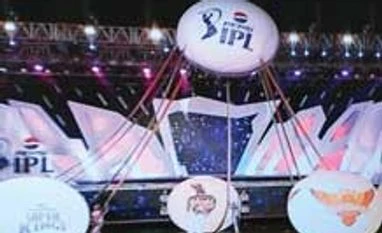 "Indian Problem League?")


 Connect with us on WhatsApp