Infra sector urgently requires a DFI

A Developmental Financial Institution is imperative if India is to achive the Rs 100 trillion investment target in infrastructure
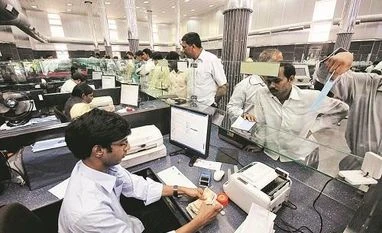
A merger of India’s existing infrastructure financial institutions to shape a new apex financial institution is the need of the hour
Vinayak Chatterjee
5 min read Last Updated : Oct 03 2019 | 7:44 PM IST
The Prime Minister’s clarion call for a Rs 100 trillion target for infrastructure investments from 2019 to 2024 has not come a day too soon. India clearly needs this level of investment; and this figure is consistent when also seen through the GCFI lens (gross capital formation in infrastructure as a percentage of GDP). But given the current situation in the infrastructure sector, coupled with the diminishing headroom for more public expenditure, achieving this target will be daunting without an impactful and dedicated DFI.

In an INFRATALK article in Business Standard in June 2017, I had argued for reshaping the India Infrastructure Finance Company Ltd to enable it to play a more effective role. Since then, the need for a larger and much more impactful DFI has only increased.

The year 2019 will be seen as a landmark year for public sector banking reform with the government merging public sector banks in a big way. But there is another possible reform in infrastructure financing, which if it succeeds, has the potential to usher in long-overdue changes to the way this sector is financed in this country.

That is being proposed is a merger of India’s existing infrastructure financial institutions — the Indian Infrastructure Finance Company, the Housing and Urban Development Corporation, the Power Finance Corporation (now enlarged with the acquisition of Rural Electrification Corporation), and the Indian Railway Finance Corporation — to shape a new apex financial institution that should emerge as the “mother” infrastructure financing entity for India. It should be created by an Act of Parliament and insulated from being regulated by multiple agencies. 

Such an institution is sorely needed and the entity should strive for a balance-sheet size of Rs 20 trillion in a three-stage process with Rs 2 trillion of equity capital and debt leveraging of nine times. It should be mandated to garner cheap international long-term capital by smartly monetising the international goodwill of the current government. Such an ability has already been demonstrated with the government of Japan agreeing to give a soft loan for the Bullet Train project for about Rs 90,000 crores at a lip-smacking interest rate of 0.1 per cent over 50 years — with the repayment of the loan to begin after 15 years from receipt. 

A merger of India’s existing infrastructure financial institutions to shape a new apex financial institution is the need of the hour

Public sector banks, still attempting to recover from non-performing assets in the sector, are in no position to pick up the slack. In any case, the asset-liability mismatch mistake should not be repeated again. And while foreign infrastructure funds have clearly evinced interest in the sector in recent years, they are largely targeting lower-risk brownfield operating assets. And now, with the fiscal deficit set to touch 4 per cent, direct government financing cannot be relied on to the extent required. 

DFIs have made a remarkable contribution to Indian project finance, and to creating a class of entrepreneurs in the decades following independence. A set of institutions were set up specifically for the task of funding projects in industry, which commercial banks at the time could not. These DFIs of yore — the Industrial Development Bank of India, Industrial Finance Corporation of India and Industrial Credit & Investment Corporation of India — were set up in an era when there was hardly any private sector capital available for indigenous industry, and yet there was an urgent need to develop Indian entrepreneurship and industrial self-sufficiency. Over  time, however, they came to be seen as relics of a pre-reform era. The golden age of such DFIs, both in India and across the world, was between the 1950s and the 1970s. By the 1980s, however, many had begun to be privatised, shut down or morphed into conventional commercial banks (for instance, ICICI, IDBI). A new set, namely, Infrastructure Leasing & Financial Services (IL&FS) and Infrastructure Development Finance Company (IDFC) did not quite see their mandate to be sectoral DFIs, and anyway ultimately went their own ways. The newly-minted National Investment and Infrastructure Fund (NIIF) sees itself as a “platform-driven” equity investor. 

Yet these so-called national development banks (NDBs), as opposed to “multilateral development banks” such as the World Bank and Asian Development Bank (which have always played a prominent role in infra finance), never really went away. In fact, as Rogerio Studart and Kevin P Gallagher of Boston University pointed out in a study in 2016, NDBs have seen a renewal of interest, in part because they were seen to have played an important role in the economic success of countries such as Korea and China. Many new industrialised countries saw NDBs as a better bet than multilateral institutions when it came to financing infrastructure and industry because they had a greater voice and say over how the funds of such institutions could be deployed. 

The study points out that there are 250 NDBs across the world holding at least $5 trillion in assets, far dwarfing the much higher-profile multilateral financing institutions in scale and scope.

The case of the Brazilian Development Bank (BNDES) exemplifies the role that NDBs play. While it too was set up in the 1950s, it has continued to play its DFI role unlike its Indian counterparts. This is because Brazil’s financial markets have historically been underdeveloped with interest rates remaining high and commercial banks focused on short- to medium-term lending. Long-term loans remain the domain of the BNDES. In the credit crunch following the financial crisis in 2008, the Brazilian government actively encouraged BNDES to continue lending as other commercial banks cut back.

It is time again for a 21st Century DFI for India — this time to fund infrastructure.
The author is chairman of Feedback Infra

One subscription. Two world-class reads.

Already subscribed? Log in

Subscribe to read the full story →
*Subscribe to Business Standard digital and get complimentary access to The New York Times

Smart Quarterly

₹900

3 Months

₹300/Month

SAVE 25%

Smart Essential

₹2,700

1 Year

₹225/Month

SAVE 46%
*Complimentary New York Times access for the 2nd year will be given after 12 months

Super Saver

₹3,900

2 Years

₹162/Month

Subscribe

Renews automatically, cancel anytime

Here’s what’s included in our digital subscription plans

Exclusive premium stories online

  • Over 30 premium stories daily, handpicked by our editors

Complimentary Access to The New York Times

  • News, Games, Cooking, Audio, Wirecutter & The Athletic

Business Standard Epaper

  • Digital replica of our daily newspaper — with options to read, save, and share

Curated Newsletters

  • Insights on markets, finance, politics, tech, and more delivered to your inbox

Market Analysis & Investment Insights

  • In-depth market analysis & insights with access to The Smart Investor

Archives

  • Repository of articles and publications dating back to 1997

Ad-free Reading

  • Uninterrupted reading experience with no advertisements

Seamless Access Across All Devices

  • Access Business Standard across devices — mobile, tablet, or PC, via web or app

More From This Section

Disclaimer: These are personal views of the writer. They do not necessarily reflect the opinion of www.business-standard.com or the Business Standard newspaper

Topics :infrastructureInfrastructure investment

Next Story



