It's not about social justice for all

Why the government's decision to amend the Constitution to permit 10 per cent reservation for economically backward upper castes smacks of desperation
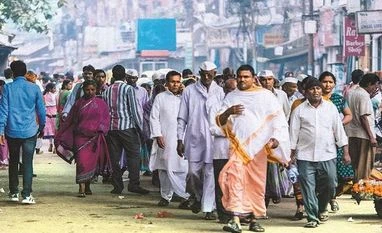
quota, quota for general poor
Karan Thapar New Delhi
Last Updated : Jan 14 2019 | 2:14 AM IST
What does the government’s decision to amend the Constitution to permit 10 per cent reservation in educational institutions and government jobs for economically weak persons from the section of the population presently not benefitting from reservations tell us about the Prime Minister and the Bharatiya Janata Party? Their supporters will claim it is proof of an abiding commitment to the poor and to social justice for all. However, to leave it at that would be facile and gullible. For it is also true this move reveals a sense of panic as the PM and his party view their electoral prospects. 

Let me, therefore, first address the claim this move is not primarily intended to enhance social justice. If it had been, the government would have initiated it at the outset of its tenure and not barely 90 days before the elections. Equally, it would have made strenuous efforts to convince all political parties rather than spring a surprise and hope their delay tactics fail in the Rajya Sabha. Third, if reports that the Constitutional Amendment Bill was prepared in haste and secrecy are true, they would corroborate the view the measure was initiated as an electoral ploy rather than an ideological commitment.


Why the BJP is apprehensive of its election prospects is easy to establish. After losing Chhattisgarh, Madhya Pradesh and Rajasthan, the party could see its Lok Sabha tally decline by up to 44 seats. Perhaps more significantly, after the Samajwadi and Bahujan Samaj parties have so convincingly agreed on an alliance the BJP could lose another 30 or 40 seats in UP. And after the state election outcomes in Gujarat and Karnataka it is hard to see the BJP winning as many seats again in these two states. Finally, making up for these losses will be difficult when it is losing allies in Bihar, upsetting them in UP and the North-east and possibly fighting against them in Maharashtra. 

On top of this, there is rural distress and the government’s failure to create the promised two crore jobs a year. In fact, the Centre for Monitoring Indian Economy believes 84 per cent of the 11 million jobs lost last year were rural jobs. No wonder Naresh Gujral, an Akali Dal MP and ally, has publicly predicted the BJP cannot get more than 150 seats. 

Now that these new reservations have been passed by Parliament will they stand up to judicial scrutiny? There are key issues that the Supreme Court will want to study. First, can the Constitution be legitimately amended to permit reservations for the economically weak? 


There are two concerns here. A nine-judge constitutional bench in the Indra Sawhney case of 1992 ruled that “a backward class cannot be determined only and exclusively with reference to economic criterion”. This Amendment is trying to do just that. Equally importantly, it also changes the very character of reservations. Hitherto they were intended to tackle the historical depravation of those who for generations have been socially and educationally backward. Now they’re also being used as a way of undertaking poverty alleviation. Will this be acceptable to the Supreme Court?

A second issue is the view these reservations breach the 50 per cent cap placed by the Court in the Indra Sawhney judgment. Despite Finance Minister Arun Jaitley’s argument that the cap does not impinge upon the new category of reservations for the economically weak, former chief justice A M Ahmadi, who was part of the nine-judge bench that delivered the judgement, has said these reservations are “directly in conflict” with the Supreme Court’s position. “The judgement clearly mentions that reservations should not exceed 50 per cent”, he has said. “The Supreme Court had put a cap so that reservations are not introduced, and the limit increased, only for election purposes.”


I assume the BJP is hoping the majority of the intended beneficiaries will not be aware of these potential legal infirmities or will give the party credit for taking a step others have merely promised but never implemented. In other words, the BJP is hoping to gain by making the attempt rather than by its success. That, again, suggests the tactical and opportunistic nature of this initiative. It’s to win electoral support rather than deliver actual results.

One subscription. Two world-class reads.

Already subscribed? Log in

Subscribe to read the full story →
*Subscribe to Business Standard digital and get complimentary access to The New York Times

Smart Quarterly

₹900

3 Months

₹300/Month

SAVE 25%

Smart Essential

₹2,700

1 Year

₹225/Month

SAVE 46%
*Complimentary New York Times access for the 2nd year will be given after 12 months

Super Saver

₹3,900

2 Years

₹162/Month

Subscribe

Renews automatically, cancel anytime

Here’s what’s included in our digital subscription plans

Exclusive premium stories online

  • Over 30 premium stories daily, handpicked by our editors

Complimentary Access to The New York Times

  • News, Games, Cooking, Audio, Wirecutter & The Athletic

Business Standard Epaper

  • Digital replica of our daily newspaper — with options to read, save, and share

Curated Newsletters

  • Insights on markets, finance, politics, tech, and more delivered to your inbox

Market Analysis & Investment Insights

  • In-depth market analysis & insights with access to The Smart Investor

Archives

  • Repository of articles and publications dating back to 1997

Ad-free Reading

  • Uninterrupted reading experience with no advertisements

Seamless Access Across All Devices

  • Access Business Standard across devices — mobile, tablet, or PC, via web or app

More From This Section

Disclaimer: These are personal views of the writer. They do not necessarily reflect the opinion of www.business-standard.com or the Business Standard newspaper
Next Story



