Joe Biden victory unlikely to heal deep political wounds afflicting US

How much will a change at the White House herald an opportunity for the US to overcome the deeply conflicted American polity?
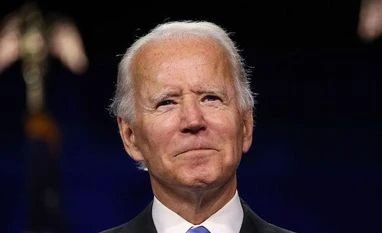
Biden,
Joe Biden | Photo: Bloomberg
Shyam Saran
6 min read Last Updated : Nov 08 2020 | 10:39 PM IST
Joe Biden has now secured the requisite number of electoral college votes to emerge as the winner in the US presidential elections.
 
How much will a change at the White House herald an opportunity for the US to overcome the deeply conflicted American polity? Was Trump one of a kind aberration whose impact will begin to fade away as a new Democratic administration takes charge? Or was he merely good at exploiting the ingrained societal faultlines which have surfaced in an era of declining economic opportunity and rising inequalities? How much political agency will a new President have if the US Senate continues to be dominated by the Republicans and a Supreme Court stacked with ultra-conservative justices? What will a change in administration mean for US foreign policy, particularly in relation to China? For India that will be the significant marker as its own geopolitical space narrows relentlessly. What will be a change in the White House mean for American ability to bring the raging pandemic under control without which economic recovery will remain an ephemeral expectation.
 
Trump is a political aberration in his total disinterest in governance. Institutions have been important as instruments of personal and political patronage. His administration has seen some of highest turnover in senior-level positions. Arbitrariness and whimsicality in both appointments and policies have been the hallmark of this Presidency. It has hard to imagine that this style and character of un-governance will linger on in his absence. There will be a welcome sense of return to normal processes of governance, a picking up of the pieces and getting down to work again. The highly disruptive Trumpian overlay will recede.
 
What will not change is a political landscape that mirrors the deep racial, ideological, and economic divisions which triggered a civil war in America a century and a half ago. Its echoes are still heard across the US. These divisions have simmered under the surface, erupting into violence and angry confrontations in times of stress. These tensions have been building up for some time, exacerbated by economic distress, demographic transition, and a diminishing stature in a rapidly transforming geopolitical terrain. Trump did not unleash these forces but he was masterly in exploiting them to his political advantage. It will take extraordinary political leadership to begin the long walk back from the precipice.
 
Joe Biden’s speech on November 6 was presidential, preaching reconciliation and national solidarity. He has already introduced a much-needed tone of civility and politeness in political discourse without which the healing of a lacerated society cannot begin. But true reconciliation can only be pursued with an ambitious agenda of economic and social reform, a change in attitudes of law enforcement and judicial authorities and a broad consensus over America’s future as a vibrant and plural society. This is a New Deal of Rooseveltian proportions and Biden faces heavier odds in pushing this agenda through.


Republican control of the Senate may remain intact and stymie any legislative endeavour to shift towards a more egalitarian agenda. One of the ironies in America, as indeed in other democracies, is how an economically distressed community, in this case of the middle and lower middle class whites, is complicit with a politics which worsens their situation but enables the privileged among their ranks to retain and further accumulate their immense wealth. Would the prospects of enhanced economic opportunities help transcend the acute racial and ethnic divisions that have riven America apart? 
 
A new President may be able to tinker at the edges, for example, in overhauling the country's rickety infrastructure, using funds currently available at historically low interest rates. Or in investing in US education and science and technology using the fear of China acquiring a dominating edge. The Republicans may well acquiesce in such critical policy departures. And this may bring on the green shoots of bipartisanship.
 
It is on the foreign policy front that we may see more significant changes both in style and substance. Confronted with a more challenging domestic polity, there will be an inevitable preference to be more active on the external front where a President is less constrained by Congress and Court. Biden has extensive diplomatic experience and will be more surefooted in the international arena. Expect him to return to the Paris Climate agreement with the US playing more of a leading role on a looming global threat. US may suspend its exit from the World Health Organization though restoring US funding for it may be more difficult. US may even return as active participant in the Iran nuclear deal which will be good news for India both in terms of energy security and pursuing infrastructure projects like the Chahbahar port and the North-South transport corridor. The Gulf kingdoms will be disappointed and the Israelis wary. Biden will work hard to restore strong ties with the European Union and its NATO allies and with Japan and Australia. On China, confrontation is likely to continue though on a lower key. After the dust settles, high level engagement with China may resume, seeking a better balance between competition and the need to seek mutual accommodation on certain critical global challenges such as Climate Change. Not much may change on the trade front though reform of the WTO may return on the active agenda.
 
For India, a Biden administration will be a more predictable and steady partner, rooted in an overall convergence of strategic interests. India will continue to matter to the US in its geopolitical contestation with China and in dealing with a whole set of global challenges like Climate Change, Cyber Security, Space Security and International Terrorism. What the Modi government may not be able to count on is transactional spin-offs available on occasion with Trump.
 
Bi-partisan support for India in the Congress will continue but there will be greater scrutiny of its record on human rights, Kashmir and deteriorating environment for exercise of press freedom. Overall, there should be more propitious and sustainable basis for a stronger India-US partnership rooted in shared interests with diminished salience of shared political values. An early reaching out to the new incumbent in the White House and strong engagement with the transition team must be pursued to ensure there are no surprises in what is now the most important bilateral relationship for India. (The writer is a former foreign secretary and senior fellow, CPR)

One subscription. Two world-class reads.

Already subscribed? Log in

Subscribe to read the full story →
*Subscribe to Business Standard digital and get complimentary access to The New York Times

Smart Quarterly

₹900

3 Months

₹300/Month

SAVE 25%

Smart Essential

₹2,700

1 Year

₹225/Month

SAVE 46%
*Complimentary New York Times access for the 2nd year will be given after 12 months

Super Saver

₹3,900

2 Years

₹162/Month

Subscribe

Renews automatically, cancel anytime

Here’s what’s included in our digital subscription plans

Exclusive premium stories online

  • Over 30 premium stories daily, handpicked by our editors

Complimentary Access to The New York Times

  • News, Games, Cooking, Audio, Wirecutter & The Athletic

Business Standard Epaper

  • Digital replica of our daily newspaper — with options to read, save, and share

Curated Newsletters

  • Insights on markets, finance, politics, tech, and more delivered to your inbox

Market Analysis & Investment Insights

  • In-depth market analysis & insights with access to The Smart Investor

Archives

  • Repository of articles and publications dating back to 1997

Ad-free Reading

  • Uninterrupted reading experience with no advertisements

Seamless Access Across All Devices

  • Access Business Standard across devices — mobile, tablet, or PC, via web or app

More From This Section

Disclaimer: These are personal views of the writer. They do not necessarily reflect the opinion of www.business-standard.com or the Business Standard newspaper

Topics :Joe BidenUS Presidential elections 2020Donald Trump

Next Story



