Kiran Mazumdar-Shaw: e-health push can build 'Swastha Bharat'

In 2017 govt should push for increased adoption of technology to transform public health care system
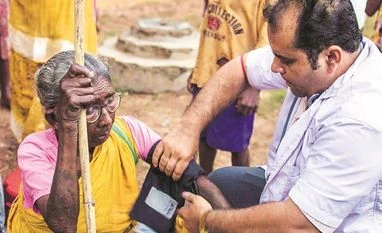
Public health
Public health
Kiran Mazumdar Shaw
Last Updated : Jan 02 2017 | 10:43 PM IST
2016 was a landmark year for India as demonetisation nudged the country towards an inclusive, less-cash dependent digital future. In 2017, the government should push for the increased adoption of technology to transform the country’s public health care system and ensure a healthy future for all Indians.

The low priority accorded to health care in India over the years has resulted in a vicious cycle of disease, death and destitution in the country. Over 63 million Indians slip into poverty every year as high health care costs drain them of their financial resources. In fact, poverty caused by expenditure on health has doubled in India in the past 15 years. Surprisingly, this has happened in a period when India’s economy has grown at an average rate of almost seven per cent annually.

The dual burden of communicable and non-communicable diseases (NCDs) poses a grave socio-economic challenge for the future. It is estimated that NCDs alone will cost India USD 6.2 trillion by 2030.

Encouragingly, however, there are clear signals that the Indian government is intent on pushing the health care agenda. The NITI Aayog recently launched a “Performance on Health Outcomes” index to rank various states on their performance on measurable health indicators. 2017 could be the year when the government implements far-reaching measures to build a “Swastha Bharat”.

Leveraging information and communication technologies 

India has a vast population and thus myriad health care challenges. Resource shortages, however, result in the unavailability of quality health care that is affordable and easily accessible. To tackle resource limitations the adoption of information and communication technologies (ICTs) can provide policymakers in India with a very effective tool for improving health care delivery.


A modern ICT-based universal health care system will help leverage modern diagnostics in primary health care for early detection and treatment, and telemedicine to bridge the deficit of specialists at the primary care level. They can also be used for cloud-based data collection to collate epidemiological and patient-centric data to profile and map the disease burden at the level of the smallest administrative unit.

Comprehensive databases and disease registries will enable better evaluation of the incidence and diversity of diseases at an epidemiological level and thereby allow for more effective health care interventions. This can, in turn, ensure equitable access to health care services of assured quality, safety, efficacy and cost effectiveness to all sections of the society.

An ICT-based health delivery model will need strong integration between primary and tertiary care providers. Also, linkages need to be established between health research and national health programmes to ensure research findings are leveraged in decision making in public health.

In this context it is heartening to know that the Indian government is in the process of giving final shape to the proposed National eHealth Authority, which will be the nodal authority responsible for development of an Integrated Health Information System (including telemedicine and mHealth) in India.

This authority has been envisaged to support the formulation and management of all health informatics standards for India, laying down data management, policies, standards and guidelines in accordance with statutory provisions, promote setting up of state health records repositories and health information exchanges, and to deal with privacy and confidentiality aspects of electronic health records.

The health ministry is already collecting Aadhaar numbers of patients and linking the unique identity numbers to patient records in a few states, according to media reports. The ministry has also notified the standards for electronic medical records and electronic health records in India. India has already implemented a Health Management Information System to capture public health data across the country.

Ensuring affordable health care

Several studies have shown that strategic investment in health systems and the ability to innovate and adapt to resource limitations are among the key attributes that have helped some countries or regions achieve substantially better health outcomes than others at similar levels of development. It is in this context that the adoption of ICTs can provide policymakers in India with a very effective tool for improving health care delivery.

Utilising the power of ICT and medical technology into the public health care sector government can bring in more transparency, efficiency and accountability that can enable a more effective health care system.

Biocon Foundation, the CSR arm of Biocon, has already leveraged the power of technology to take health care services to rural and remote areas. It has implemented the unique eLAJ project to deliver evidence-based health care for the benefit of communities with poor access to quality health care in Karnataka and Rajasthan. Patient-specific health data are captured on the eLAJ electronic medical record system and linked to an individual’s Aadhaar number.

The foundation has also implemented a mobile phone-based health (mHealth) platform for early detection, prevention and treatment of oral cancer. This comprehensive, evidence-based oral cancer screening programme facilitates early detection at the doorstep. By empowering the frontline health worker to conduct cancer screening in a low-resource setting, this programme has ensured that health care reaches remote pockets in a cost-effective manner. By linking oral cancer specialists with the rural population through telemedicine, the mHealth platform has created an opportunity for diagnosis, follow-up and referral.

I truly believe that technology can solve many of the daunting health care challenges that we face as a country.
The author is CMD, Biocon

One subscription. Two world-class reads.

Already subscribed? Log in

Subscribe to read the full story →
*Subscribe to Business Standard digital and get complimentary access to The New York Times

Smart Quarterly

₹900

3 Months

₹300/Month

SAVE 25%

Smart Essential

₹2,700

1 Year

₹225/Month

SAVE 46%
*Complimentary New York Times access for the 2nd year will be given after 12 months

Super Saver

₹3,900

2 Years

₹162/Month

Subscribe

Renews automatically, cancel anytime

Here’s what’s included in our digital subscription plans

Exclusive premium stories online

  • Over 30 premium stories daily, handpicked by our editors

Complimentary Access to The New York Times

  • News, Games, Cooking, Audio, Wirecutter & The Athletic

Business Standard Epaper

  • Digital replica of our daily newspaper — with options to read, save, and share

Curated Newsletters

  • Insights on markets, finance, politics, tech, and more delivered to your inbox

Market Analysis & Investment Insights

  • In-depth market analysis & insights with access to The Smart Investor

Archives

  • Repository of articles and publications dating back to 1997

Ad-free Reading

  • Uninterrupted reading experience with no advertisements

Seamless Access Across All Devices

  • Access Business Standard across devices — mobile, tablet, or PC, via web or app

More From This Section

Disclaimer: These are personal views of the writer. They do not necessarily reflect the opinion of www.business-standard.com or the Business Standard newspaper
Next Story



