Maintain credibility

MPC should not ignore inflation risks
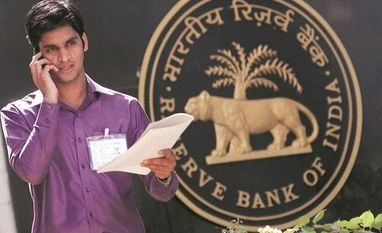
RBI, reserve bank of india
In a likely no-action policy, RBI Governor Shaktikanta Das’s challenge will be assuring the market players that even though the central bank is on an unwinding mode, they have nothing to worry about
Business Standard Editorial Comment Mumbai
3 min read Last Updated : Aug 24 2021 | 1:36 AM IST
It is important for the Monetary Policy Committee (MPC) to maintain credibility to attain longer-term objectives of price stability and higher growth. The comments made by Jayanth Varma, an external member of the MPC, in the last policy meeting and an interview to this newspaper on Monday highlighted important issues regarding the conduct of the monetary policy and they need to be widely debated. Mr Varma had expressed his reservations on maintaining the accommodative stance and argued that the current reverse repo rate was too low and needed to be raised. Interestingly, the MPC of the Reserve Bank of India (RBI) is legally not in a position to adjust the reverse repo rate — the only instrument it has is the repo rate. The reverse repo rate can be changed by the RBI.

In the current circumstance, where the banking system has significant excess liquidity, the reverse repo rate has become the operating rate. In fact, the abundance of liquidity in the system has pushed short-term market rates below the reverse repo rate and has effectively made the policy repo rate redundant. The reverse repo rate was seen to be connected to the repo rate until the RBI reduced it disproportionately in March 2020 to make the policy corridor asymmetric, which surprised many observers because it effectively undermined the MPC. Arguably, if the RBI was of the view that interest rates needed to go down, it could have been done through the MPC by reducing the policy rate. A disproportionate reduction in the reverse repo rate, along with the infusion of liquidity into the system, has pushed short-term market rates significantly below the policy repo rate of 4 per cent. 
 
Mr Varma notes that an interest rate close to the reverse repo rate of 3.35 per cent is lower than what is now desirable. An interest rate close to the 4 per cent mark would be more appropriate. Thus, increasing the reverse repo rate would help narrow the policy corridor and increase market rates.

The RBI, however, has maintained it would continue to focus on reviving growth. The inflation rate has surprised the central bank on the upside and the RBI expects it to average 5.7 per cent in the current year. Since the rate was above the tolerance band in the last fiscal year, there is a risk that sustained higher inflation can affect expectations. As Mr Varma noted in the MPC, by creating the perception that the committee was focused on growth and not concerned about inflation, it might be increasing the risk of inflationary expectations getting dis-anchored. This would also increase risk premium and push up long-term rates. The RBI must avoid such an outcome. It is also worth pointing out that these are still early days for the inflation-targeting framework in India and it’s important for the RBI to not risk credibility.

Therefore, the MPC should convince the market that it is not ignoring inflation risks. In this context, even before raising the reverse repo rate, the RBI can adjust the liquidity position and bring the short-term market rates within the policy corridor. This itself will send a signal to the market. It would also create conditions for reversing the disproportionate reduction in the reverse repo rate later in the year. General confidence in the MPC’s ability to contain inflation will allow it to keep the policy rate at a lower level for a longer period.

One subscription. Two world-class reads.

Already subscribed? Log in

Subscribe to read the full story →
*Subscribe to Business Standard digital and get complimentary access to The New York Times

Smart Quarterly

₹900

3 Months

₹300/Month

SAVE 25%

Smart Essential

₹2,700

1 Year

₹225/Month

SAVE 46%
*Complimentary New York Times access for the 2nd year will be given after 12 months

Super Saver

₹3,900

2 Years

₹162/Month

Subscribe

Renews automatically, cancel anytime

Here’s what’s included in our digital subscription plans

Exclusive premium stories online

  • Over 30 premium stories daily, handpicked by our editors

Complimentary Access to The New York Times

  • News, Games, Cooking, Audio, Wirecutter & The Athletic

Business Standard Epaper

  • Digital replica of our daily newspaper — with options to read, save, and share

Curated Newsletters

  • Insights on markets, finance, politics, tech, and more delivered to your inbox

Market Analysis & Investment Insights

  • In-depth market analysis & insights with access to The Smart Investor

Archives

  • Repository of articles and publications dating back to 1997

Ad-free Reading

  • Uninterrupted reading experience with no advertisements

Seamless Access Across All Devices

  • Access Business Standard across devices — mobile, tablet, or PC, via web or app

Topics :Reverse Repo RateRBI PolicyRBI monetary policymonetary policy committeeBusiness Standard Editorial CommentMPC

Next Story



