"I miss them,” sighs Rita Devi, gazing into her now empty cowshed. We are in her house in Kandhbari, a sleepy hamlet in Kangra, Himachal Pradesh. “There was a time when many people kept cows in the village,” she says. Today, most of us find it easier and cheaper to buy milk at Rs 25 per litre from a local dairy. She runs the village Anganwadi but spends her mornings in her fields, where her family grows onions, garlic, corn and wheat. “It’s a hobby, not a necessity,” she says. “Farming gives me something constructive to do when I’m back from the Anganwadi.” However, this “hobby” too may not last long. Under National Food Security Act, 2013, up to 75 per cent of village population can be identified as eligible for food security. Consequently, with wheat being available in the government ration shop for less than Rs 6 or less per kilo; rice at Rs 8 or less (depending on the household’s level of poverty) — it seems to have become cheaper for people like her to buy, than to grow their own food here.
Later, while out on a walk in the village, I realise that many locals have already done the math. Many of the fields look like they’ve been lying fallow for a while. This is the first year when the pre-monsoon rains have been very poor, so water scarcity is on top of everyone’s mind. Most people I chat with while walking tell me that farming has now become too labour intensive. “My patch of beans is already half dead in this uncharacteristically hot and dry weather,” says an old lady, who is watering her plants with a bucket. “Perhaps next year, I’ll simply buy them from the local shop.”
Education and the consequent rise in aspirations has also resulted in many veering away from agriculture. Villagers are now looking outward for jobs, and bemoan the lack of available farm labour to manage their fields. “Most people who used to work in the fields earlier have found other more lucrative jobs mostly in the tourism sector,” explains Hans Raj, who runs the local photography shop. He reminisces about the time when his family’s fields used to be cultivated by farmers from a neighbouring village. “My grandfather, like everyone else in the village, had little money,” he says. “So he would pay their wages in potatoes.” The barter system worked perfectly until the ration shop opened. “We also started buying our food grain from there and today, we plant green vegetables, onion, garlic and maize for our own consumption only in a portion of our land,” he says.

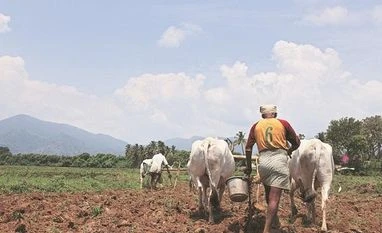 "PDS and the decline of farming")












 Connect with us on WhatsApp