The fraud at Punjab National Bank (PNB) has aroused a lot of indignation and angst. The amount in question is Rs 130 billion, a measly sum compared to banks’ non-performing assets (NPAs) of Rs 8.5 trillion. Of the NPAs, the top 12 stressed assets account for Rs 2.5 trillion while 488 defaulting companies make up the rest.
Then, why are these loan-defaulting companies’ promoters not being called fraudsters? In our eyes, these are shown simply as loan defaults or NPAs. In the PNB case, everyone—from the government to the Reserve Bank of India (RBI) to the PNB management—is indulging in the blame game and the company’s management is denying any wrongdoing.
As it has been in the past, this time too, the employees will be made the scapegoat while the promoters escape. Considering the slowness of the legal system, it would be a surprise if they are punished.
Why do public sector banks (PSBs) have most of the bad loans? Does the government not intervene in their functioning? Why are proper processes not followed before loans are sanctioned? Why is the liquidation value of these assets very low compared to net asset values? Why do bank managements ignore the red flag raised by statutory auditors and the rating agencies? Questions are many but no concrete answers are available.
Typically, a bank goes through several audits such as statutory audit, internal audit, concurrent audit, Reserve Bank audit, stock audit, and so on. Why can’t auditors spot lapses? It is surprising that despite half-a-dozen auditors and surveillance agencies and the IT system, fraudulent activities continue for years on end.
Why do our chief financial officers (CFOs) not act in the way their job demands? A few instances bring shame to the profession. It’s high time CFOs pulled up their socks and performed fearlessly. Their performance in a financial control mechanism should be such that while the management sweats, the organisation runs seamlessly.
It is surprising that internal control was missing in the PNB case. Didn’t we learn from the global slump due to the Lehman Brothers fallout in 2008? If the US and other developed countries can tighten their financial control systems by implementing the Sarbanes-Oxley Act, why can’t our corporate governance system work? Had it been effective, we may not have had so many financial frauds like those in PNB, Rotomac, Fortis Healthcare, and RP Info System. Most importantly, we may not have bad loans in such large numbers and of such large magnitudes.
We have had several futile attempts at resolutions of bad loans. Finally, the government and the RBI simplified the debt resolution process through the Insolvency and Bankruptcy Code. The bad loan resolution process is very active now.
It seems everyone is happy with the bad loan resolution process, from the lenders to the RBI to the government and, of course, the promoters. Do we need to rejoice? At whose cost? At the cost of taxpayers of the salaried class?
We would be lucky if we could recover 40-50 per cent of the bad loans. During 2015-17, the average recovery ratio of Indian banks was 26.4 per cent, wherein the recovery rate for private banks was at 41 per cent while it was 25.1 per cent for PSBs. Moreover, this 26.4 per cent recovery is based on the current prices of the loans taken in the past (say, five years). If we factor in the WPI inflation rate of an average of 5.68 per cent per annum, the effective estimated recovery is just 21.91 per cent.
If this turmoil continues in banking, we are headed for a financial crisis. Thanks to our finance minister, a series of measures has been taken, the prominent of those being bringing in legislation to punish economic offenders with retrospective effect. The Fugitive Economic Offenders Bill, once signed into law, will provide for attaching properties of fraudsters both in India and outside.
We need to wait to see how effective the Bill becomes. And its effectiveness will be an eye-opener for the next corporate borrowers and hopefully we will be able to streamline our lending system. The author is the founder & managing partner of MSQUARE Management Consulting Services LLP. The views are personal

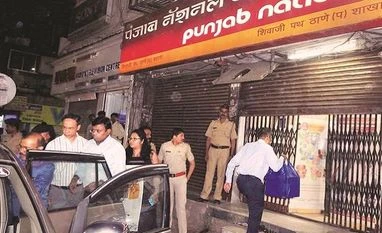 "PNB scam: Why do we not talk about the whopping bank loan defaults?")












 Connect with us on WhatsApp