Reform defence budgeting

Both allocations as well as expenditure flows need attention
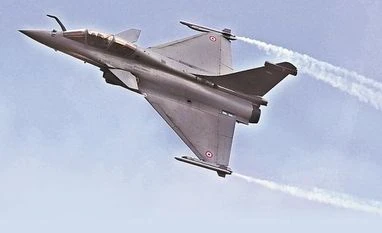
Rafale, Rafale jet
Business Standard Editorial Comment New Delhi
Last Updated : Jan 24 2019 | 7:57 AM IST
Recent reports that Hindustan Aeronautics Ltd (HAL) was forced to take a bank loan of Rs 781 crore to pay its employees’ December salaries reflect the government’s strange approach to defence budgeting and spending. As this newspaper reported, the government currently owes HAL Rs 15,700 crore for products and services already delivered, of which Rs 7,000 crore is outstanding from the preceding year. With more bills likely to arise over the coming three months and no money to pay them, outstanding dues will swell to Rs 20,000 crore by the end of the financial year. HAL has asked the defence ministry to make some payments so that ongoing development projects, manufacture and the maintenance of the Indian Air Force’s (IAF’s) aircraft fleet are not severely impacted. But, given the government’s financial pressure with an election looming, HAL does not expect relief in the revised Budget estimates. Nor is HAL the only defence public sector undertaking (DPSU) that finds itself in these straits. The military also owes Bharat Electronics Ltd (BEL) thousands of crores in unpaid bills. It was one thing to defer payments when HAL and BEL were wholly owned defence ministry enterprises. But, after their part-disinvestment, there are also interests of private shareholders, which will be adversely affected by non-payment of bills.


Things have come to this pass for a simple reason: The government has not allocated the capital budget needed for payments that were falling due this year. The navy projected to the defence ministry a capital requirement of Rs 30,358 crore, but was allocated only Rs 19,083 crore, a shortfall of 37 per cent. The army asked for Rs 37,122 crore, but was given Rs 21,338 crore, short by 43 per cent. The IAF, with instalments due for the Rafale fighter and Apache and Chinook helicopters, asked for a whopping Rs 72,482 crore but was allocated Rs 33,100 crore, short by 54 per cent. Further, of the amount allocated for capital expenditure, about 90 per cent was pre-committed towards instalments on previous years’ purchases. In the circumstances, it was almost inevitable the military would be left short of money.


Framing any budget is a competitive exercise in resource allocation. It is for the Union Cabinet to decide how much it can spare for defence from pressing competitive requirements like education and health care. This year, 16.6 per cent of central government expenditure went to defence. Next, this amount must be divided between the three services. Overseeing realistic budgeting is one task of the Defence Planning Committee (DPC), established in April with fanfare under the National Security Advisor. It is not clear how the DPC could fail to anticipate the current crisis in HAL. Beyond allocation, there are other issues as well. In several previous years, including twice in the first three years of this government, thousands of crores of military capital budget allocation lapsed because it could not be spent in time. This needs to change, given the feast-or-famine nature of procurement spending, where one year could see little expenditure because of hitches in finalising some contracts, while the subsequent year sees a glut of contracts, with multiple payments falling due. Successive governments have promised to institute a “roll-on capital fund” — to insulate against the lumpy nature of defence capital expenditure and smoothen the cash flows — but none has done so.

One subscription. Two world-class reads.

Already subscribed? Log in

Subscribe to read the full story →
*Subscribe to Business Standard digital and get complimentary access to The New York Times

Smart Quarterly

₹900

3 Months

₹300/Month

SAVE 25%

Smart Essential

₹2,700

1 Year

₹225/Month

SAVE 46%
*Complimentary New York Times access for the 2nd year will be given after 12 months

Super Saver

₹3,900

2 Years

₹162/Month

Subscribe

Renews automatically, cancel anytime

Here’s what’s included in our digital subscription plans

Exclusive premium stories online

  • Over 30 premium stories daily, handpicked by our editors

Complimentary Access to The New York Times

  • News, Games, Cooking, Audio, Wirecutter & The Athletic

Business Standard Epaper

  • Digital replica of our daily newspaper — with options to read, save, and share

Curated Newsletters

  • Insights on markets, finance, politics, tech, and more delivered to your inbox

Market Analysis & Investment Insights

  • In-depth market analysis & insights with access to The Smart Investor

Archives

  • Repository of articles and publications dating back to 1997

Ad-free Reading

  • Uninterrupted reading experience with no advertisements

Seamless Access Across All Devices

  • Access Business Standard across devices — mobile, tablet, or PC, via web or app

Next Story



