In this era of renewed nationalism, can and should globalisation be saved? As country after country has turned inward, putting up increased trade barriers or cracking down on migration, there are several theories as to why, but few are asking how, coherently, this turn to nationalism — in fact, towards nativism — can be countered. But first, is it in fact necessary to reverse this trend? As Nitin Desai, a Business Standard columnist, argued in his recent Pochhammer Address in New Delhi, the world continues to face global problems that require if not global solutions then at least some form of co-ordinated action. An approach to, say, climate change, which simply consists of countries negotiating on the basis of their own national interests is clearly sub-optimal — as can be seen from the relative disappointment that is the Paris Agreement on climate change and the fact that even that underwhelming treaty is not being followed by countries like the US. Mr Desai argues that such negotiation can help when the question is the division of benefits, such as happens in the case of trade negotiations, but is less useful when the question is sharing costs, as in climate change.
The reasons why politics, including in democracies, has turned against globalisation is also easy to understand. The fortunes of trade as a political subject depend on how the state and the establishment feel it affects their well-being. In the days of mercantilism, foreign engagement was needed to build up a stock of treasure; in more recent times, as Mr Desai points out, trade was not questioned by establishments because it was a solid source of revenue. But as the gains from trade have both grown and become more diffuse, it is harder, especially in democracies, to create a pro-trade constituency that can overwhelm the statist instincts of politicians and bureaucrats. The inability to address questions of inequality and revenue in the age of globalisation have also not helped.
So how can the march of regressive nationalism and nativism be stopped? Clearly, there will be no world government anytime soon, nor are multilateral organisations increasing in effectiveness and power. How then can citizens of one country be given a voice and a stake in decisions taken by the governments of another country — the next best approach towards global co-operation? One possible answer is particularly intriguing. It is possible to “increase the engagement and impact of those whose global concerns are centred around issues rather than national interest”. In other words, if you raise the power and position of international coalitions of solidarity, or of non-governmental organisations that have grassroots representation and endeavour to address a particular problem, then the inward turn of the past decades might be partially addressed. Mr Desai points out that “this has happened to some extent in areas like environmental management, women’s rights, children’s rights and so on”. Issue-based lobbies can transcend borders, and create new networks of sympathy and empathy. It is such issue-based alliances that perhaps represent the best hope for a future in which humanity does not live in a world with walls everywhere.

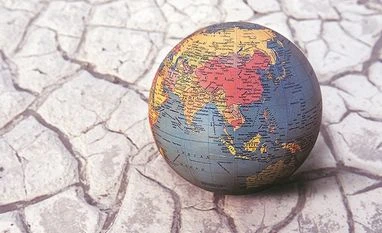 "Reversal of globalisation")












 Connect with us on WhatsApp