Over the last few years, India has reversed its policy of tariff reduction to one favouring protectionism. The fact is that import substitution is regularly spoken of — including as recently as last week — as a priority for the government on the illogical argument that India’s “infant” domestic industries need to be protected. The protectionist moves are obvious even in the recent step to restrict the purchase of duty-free liquor at airports and the proposed import restrictions on a host of products in the “others” category. Recent Union Budgets have also reversed a quarter century of increasing openness by raising tariffs on imports across the board. The Budget for 2019-20, for example, continued the tradition of having a long section in which import tariffs were arbitrarily changed. It raised tariffs on a variety of imports — from cashews to marble slabs to furniture parts to auto components. But raising tariffs purely to protect industries merely leads to high-cost and uncompetitive production, and depresses the broader standard of living.
In an age of global value chains, increasing tariffs and staying out of trade agreements only disadvantage Indian exporters, depress export potential, and lower growth. It is obvious that a country that shifts its trade policy arbitrarily, or shows itself vulnerable to sudden tariff impositions, thanks to domestic lobbying, will not be able to embed itself in such value chains. A protectionist policy and the associated uncertainty in tariff rates are likely to discourage foreign companies from establishing part of their manufacturing chains in India. Such decisions also end up hurting Indian industry because tariff increases in any one industry can often affect user firms in another industry, and invite retaliatory action from trading partners.
Worse, this attitude of the government has been combined with an unfortunate air of hostility to foreign investors. While the prime minister himself cannot be faulted for any lack of energy in selling the India story, the rest of the government has not worked together to follow up on this narrative. Loss-making foreign-owned e-commerce companies were recently termed “predatory”. This negative attitude to investment in e-commerce risks forgoing the logistics infrastructure and job creation such investment enables. The government has said on several occasions that it is always trying to make India more investment-friendly and has noted its attempts to ease regulations, improve governance, and showcase infrastructure projects worldwide. Yet it is clear that regulations which are changed after investments have been made are hardly likely to give the impression that India is investment-friendly.
Overall, it is clear that the government will have to speedily change track if India is to recover from the prolonged slowdown it is going through. This slowdown was driven originally by low private investment and proximately by a collapse in demand. The only solution to either problem that has any hope of permanence or sustainability is greater openness — tapping global markets for both capital and goods. Protectionism such as the government seems to have now openly espoused will drive the India story backward, not forward. Instead of giving in to such lobbies, policy-makers should focus on creating conditions that prompt domestic firms across industries to become globally competitive. The Union Budget is a good opportunity to reverse this protectionist momentum.
Read this article for free
Register to continue reading premium journalism and analysis from Business Standard.

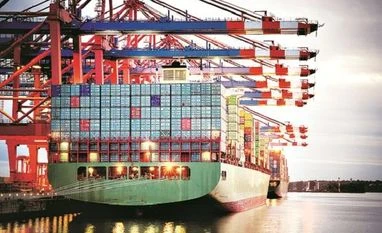 "Stop the protectionist trend")












 Connect with us on WhatsApp