Sheikh Hasina: Having won the political war, now she must win the peace

Hasina's pragmatic policies has delivered an economic boom in Bangladesh; on the cusp of a record fourth term, she must now develop the institutions of democracy
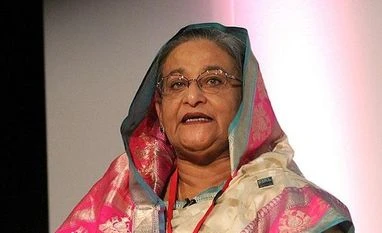
Bangladesh PM Sheikh Hasina | Wikimedia Commons
Sunanda K Datta-Ray Kolkata
Last Updated : Jan 03 2019 | 9:00 PM IST
At 71, Sheikh Hasina Wazed looks like a comfortable zamindari ginni (Bengali matriarch) who rules her extended family with an iron hand. But only the iron hand – some say fist -- is real. The Sheikh title, her pinned and brooched saree in the style of 19th century Calcutta’s anglicised Bengali memsahibs, the dangling handbag and ever-genial smile are part of the carefully tailored image of a political fighter of indomitable courage who has risen from 30th to 26th place in the Forbes’ list of the world’s 100 most powerful women.

Hussain Muhammad Ershad, the former army chief and president, used to mock her political aspirations. “A Muslim country’s president must lead the nation in prayers,” he said. “A woman can’t do that.” Kamal Hossain, now her principal critic as head of the vanquished Jatiya Oikya Front, but then her ardent ally, sneered that Ershad hadn’t heard of Delhi’s 13th century empress, Raziya, who insisted on being called sultan instead of sultana. Hasina lived up to that precedent by being the longest serving prime minister of the world’s third most populous Muslim country.

M A Wazed Miah, the British-educated nuclear scientist whom she married in 1968, might have had something pithy to say now that she has swept the polls a fourth time. Ten years before his death in 2009, Miah, who had just retired as head of Bangladesh's Atomic Energy Commission, reportedly kicked in the headlights of his wife's sports utility vehicle, confiscated its log book and stormed out of Gono Bhavan, the prime minister's official residence, all because he was refused a ride. The international press quoted him as saying that his wife was "half-educated and simply not fit to govern". Reports of his tantrums recalled Indira Gandhi’s rueful comment that "to hurt the male ego is the biggest sin in marriage". Alas, that wisdom dawned on her only after her own estranged husband, Feroze, died.

Sheikh Hasina | Illustration: Binay Sinha
Hasina’s run-ins with Nobel laureate Muhammad Yunus and the chief justice, Surendra Kumar Sinha, bear out tales of arrogance.  In March 2011, she sacked the globally respected Yunus from the Grameen Bank he had founded, claiming that at 72 he was long past retirement age. In November 2017, she forced Sinha, the first Hindu chief justice, to resign. Both episodes highlighted the “Development minus democracy” tag attached to her reign. According to Dhaka wits, the title of her book, Democracy in Distress, says it all.

Nevertheless, Narendra Modi, who was the first to congratulate her on her landslide victory, isn’t the first Indian leader to see Bangladesh’s authoritarian premier as the best bet for the world’s largest democracy. She is as “secular” as any Bangladeshi politician can be without alienating the majority. Whether or not Bangladesh’s 16 million Hindus are safer under Hasina, she has promised India transit rights to the north-east, refuses sanctuary to fugitive Indian rebel groups, and welcomes Indian economic and strategic cooperation. Her coolness towards Pakistan buttresses the enemy’s enemy doctrine, especially since her arch enemy, Khaleda Zia, 73, was allied to the now banned Jamaat-e-Islami, and has been accused of links with Pakistan’s ISI. 

In many respects, the two battling begums mirror each other. Both suffered grievous personal loss at the hands of assassins – Hasina more than Khaleda – and claim to be fighting for justice which others might call vengeance. Both rejected elections unless held by a neutral caretaker regime. Each denounces the other’s victory in almost identical language. Both have sons abroad but Hasina’s is the more cosmopolitan family with a daughter in Canada, and a Britain-based sister and niece, Tulip Siddiq, a rising Labour politician who represents fashionable Hampstead in Parliament. Tulip’s Cambridge-educated English husband is a strategy consultant. 

If Khaleda is serving a 17-year jail sentence for corruption, Hasina, too, has been accused of graft, extortion and even murder. Although a Canadian court dismissed bribery charges in the $2.9 billion Padma Bridge project, the World Bank cited corruption concerns to cancel a $1.2 billion credit for it. Other charges include masterminding the killing in October 2006 of four political rivals. But luck is on Hasina’s side. She and her sister escaped the massacre of the rest of her family because they were holidaying in Germany. She survived criticism for participating in an election held under martial law, remained Awami League chief even when two of the three constituencies from which she stood rejected her, and ate her political cake and had it too by boycotting Parliament while continuing to enjoy all the perks of opposition leader. 

She now faces the toughest challenge of her career. The wounds of a bitterly divided nation must be healed even to maintain the economic boom achieved by Hasina’s pragmatic planning, investment in infrastructure and encouragement of private entrepreneurs. Having won the war, she must rise above ancient enmities to win the peace.

One subscription. Two world-class reads.

Already subscribed? Log in

Subscribe to read the full story →
*Subscribe to Business Standard digital and get complimentary access to The New York Times

Smart Quarterly

₹900

3 Months

₹300/Month

SAVE 25%

Smart Essential

₹2,700

1 Year

₹225/Month

SAVE 46%
*Complimentary New York Times access for the 2nd year will be given after 12 months

Super Saver

₹3,900

2 Years

₹162/Month

Subscribe

Renews automatically, cancel anytime

Here’s what’s included in our digital subscription plans

Exclusive premium stories online

  • Over 30 premium stories daily, handpicked by our editors

Complimentary Access to The New York Times

  • News, Games, Cooking, Audio, Wirecutter & The Athletic

Business Standard Epaper

  • Digital replica of our daily newspaper — with options to read, save, and share

Curated Newsletters

  • Insights on markets, finance, politics, tech, and more delivered to your inbox

Market Analysis & Investment Insights

  • In-depth market analysis & insights with access to The Smart Investor

Archives

  • Repository of articles and publications dating back to 1997

Ad-free Reading

  • Uninterrupted reading experience with no advertisements

Seamless Access Across All Devices

  • Access Business Standard across devices — mobile, tablet, or PC, via web or app

More From This Section

Disclaimer: These are personal views of the writer. They do not necessarily reflect the opinion of www.business-standard.com or the Business Standard newspaper
Next Story



