The government and its universities: Ensuring teachers' accountability

Ensuring attendance is important but the govt must not curb voices from the teaching community that are critical of the govt
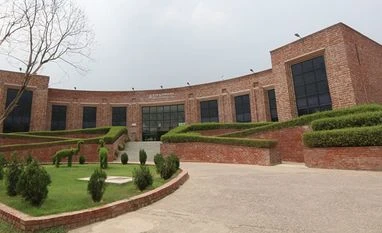
Photo of Jawaharlal Nehru University campus.
T C A Srinivasa-Raghavan
Last Updated : Oct 28 2018 | 8:53 AM IST
Recently I was witness to a discussion amongst some members of the JNU faculty. They were discussing a directive from the university’s administration, now a few months old, that henceforth marking attendance would be compulsory for everyone, students as well as teachers.

There was a lot indignation and even anger. The general refrain was ‘how dare they’ and the inevitable conclusion was that this was a BJP/RSS plot to ‘destroy’ the university.

At one point I asked whether they were genuinely satisfied that they were giving their 100 per cent. All said yes. 

So, foolishly, I asked how they were evaluated. That brought down a storm on my head. I withdrew, retired hurt. 

But it is worth noting that the JNU faculty makes the classic error of logical induction: because some members of the faculty are hardworking, all must be hardworking. Maybe they are, too. But how do we check? What about the other universities?

Viral infection

Actually, this problem is not confined to the universities alone. It applies to the entire government and its various arms like the whole public sector. 

I am reminded, in this context, of what members of various UPSC boards have been saying. If you hear even a tenth of the stories, you will understand why our governance has become so poor. 

The government sector as a whole is employing far too many persons who not only lack the skills to do the job but also view their jobs as an instrument of power rather than public service. Government employment has become a means not just to upward social mobility, which is good, but also a way to exercise control and take bribes.

This malady, for long confined to the lower echelons, has now affected the Class One Services also. Even they have been affected by our foolish recruitment policies which devalue merit.

Indeed, if you dig deeper, however, it is not just the recruitment policies that are to blame. The very pools from which everyone recruits, whether the government or the private sector, has been infected with low quality.

In the case of education, it is not just the genuine degree holders whose quality is suspect. Fake qualifications also abound, as we recently saw in Delhi University, which was once a premier institution.

Which brings me to the issue I started with, that of attendance for teachers in the universities: will it ensure quality? I think so. Even if it doesn’t lead to massive improvements, the change will be positive.

This is because on top of faculty recruitment being flawed for a variety of reasons, the quality of their inputs is also below par. That is, not only have we been recruiting low quality academic staff in schools and colleges, we have not been bothering to ensure that they turn up and teach.

Thus, while we want everyone else to be accountable, so far, we have not insisted on such accountability from teachers. They have been getting away scot free with poor quality instruction or often none at all. 

In any other country these people would have been sacked or at least severely disciplined. In India we have done the opposite by raising the retirement age from 60 to 65 so that they can go on for five years more because we are like that only.

Conduct rules

The UGC has also told the universities that their teaching staff will be covered by the conduct rules that apply to civil servants. This means they cannot criticise the government on the grounds that no one should bite the hand that feeds him or her.

The academic community has been shocked out of its wits by this because it never thought of itself as civil servants. But as long the members of that community receive their salaries and other benefits from the government, there is some justification for the UGC directive.

Yet, if you don’t allow teachers to be critical, who will provide the critical analysis of policies? Can you tell thinkers to stop thinking critically and only think nice things about what the government does? Are we the USSR or China?

Indeed, does the fact that it is the government that pays you constitute sufficient reason to curb the freedom of expression?

There is only one way to find out: ask the Supreme Court.
The writer tweets @tca_tca

One subscription. Two world-class reads.

Already subscribed? Log in

Subscribe to read the full story →
*Subscribe to Business Standard digital and get complimentary access to The New York Times

Smart Quarterly

₹900

3 Months

₹300/Month

SAVE 25%

Smart Essential

₹2,700

1 Year

₹225/Month

SAVE 46%
*Complimentary New York Times access for the 2nd year will be given after 12 months

Super Saver

₹3,900

2 Years

₹162/Month

Subscribe

Renews automatically, cancel anytime

Here’s what’s included in our digital subscription plans

Exclusive premium stories online

  • Over 30 premium stories daily, handpicked by our editors

Complimentary Access to The New York Times

  • News, Games, Cooking, Audio, Wirecutter & The Athletic

Business Standard Epaper

  • Digital replica of our daily newspaper — with options to read, save, and share

Curated Newsletters

  • Insights on markets, finance, politics, tech, and more delivered to your inbox

Market Analysis & Investment Insights

  • In-depth market analysis & insights with access to The Smart Investor

Archives

  • Repository of articles and publications dating back to 1997

Ad-free Reading

  • Uninterrupted reading experience with no advertisements

Seamless Access Across All Devices

  • Access Business Standard across devices — mobile, tablet, or PC, via web or app

More From This Section

Disclaimer: These are personal views of the writer. They do not necessarily reflect the opinion of www.business-standard.com or the Business Standard newspaper
Next Story



