Three cheers for a weak coalition

Policy is made by politicians working in tandem with favoured bureaucrats
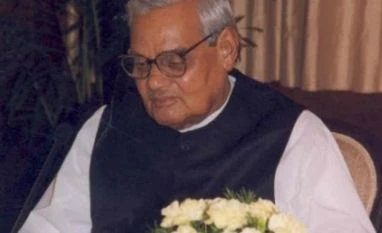
Atal Bihari Vajpayee
Atal Bihari Vajpayee | Photo: Wikipedia
Devangshu Datta
4 min read Last Updated : Apr 13 2019 | 12:19 AM IST
If we examine economic policy down the years, the first great burst of reform and liberalisation came between 1991 and 1994. The second phase came in 1999. The third was between 2002 and 2005. 

The first was driven by necessity with India’s Balance of Payments perilously close to default, and economic growth down to near-zero. It was carried through by a minority government at the mercy of strange bedfellows like the Left Front and the Jharkhand Mukti Morcha. That government was led by one of India’s least charismatic politicians, P V Narasimha Rao. Policy was re-conceptualised in its detail by a career bureaucrat turned finance minister, who later became another uncharismatic prime minister.

The second phase of reform in 1999 was ca­rried through by a lame-duck governm­e­nt, which had actually lost a Vote of Con­f­idence and started serving out its six-mo­n­th tenure before it got started on reform. That government was also under economic pressure because it had carried out nu­clear tests and been hit by sanctions that severely affected trade. It was admittedly led by a man with some claims to charisma — Atal Behari Vajpayee. But he consciously took a back seat as PM and let his friends, allies and party apparatchiks get on with policy-making and management.
 

Vajpayee’s government also led the third b­urst of reforms in 2002-05. In that stint, his government was supported by a bunch of regional allies, with their own pushes and pulls. The NDA included George Fernandes of the Samata Party, the Trinamool Con­g­r­e­ss, the AIADMK, the BSP, the TDP, the BJD, and sundry other examples of alphabet soup.

Each of these three phases of reforms pr­o­ved to be sustainable. India turned a co­rner in the early 1990s. Nobody has yet tr­ied to reverse the broad thrust of the re­f­o­rms that started with the Rao government and continued through the Vajpayee years.

The longest, most sustained phase of gr­o­wth came during the UPA years (2004-2013) when an uncharismatic PM led a co­a­lition that was, to put it mildly, rainbow. In retrospect, Manmohan Singh did a fair job of guiding the economy through a global economic crisis of monstrous dimens­i­o­ns and tackling insanely high energy pr­ices into the bargain. Growth never faltered through that period while many other economies were derailed, first by the subprime affair and then by the Greek crisis that turned into the pan-European mess.

At first glance, it may seem paradoxical that tottering rag-tag coalitions led by uncharismatic individuals contributed so much. However, this is a feature, rather than a bug. Weak coalitions led by uncharismatic people are the ideal form of government for India.

One reason is that insecurity in itself sparks reform. Policy is made by politicians working in tandem with favoured bureaucrats (who may be retired and running so-called independent bodies, such as Sebi, or Trai, or CERC, or the RBI). The desi definition of liberalisation is all about the Babu-Neta nexus ceding control. If this nexus is insecure, it is more likely to ease controls (and probably take its cut), whereas if it believes it will be comfortably in charge for five years, it is more inclined to retain control and milk the economy. A rag-tag coalition is more insecure and hence, more inclined to reform.

Re­form also involves taking sane, pragmatic decisions that require careful implementation after a diligent review of pro­c­e­­sses. Uncharismatic individuals are by t­e­m­perament, more likely to think their way through situations, rather than relying on oratory and appeals to emotion. Char­i­s­­matic individuals are more likely to make up meaningless but catchy acronyms, and t­a­lk stirring nonsense about “cashless” wi­t­­h­out thinking about either processes, or co­nsequences.  

Finally, coalitions that include a vast spread of regional parties actually represent India far better. Given India’s socio-religious heterogeneity and vast differences in per capita across states, reforms carried out through coalition consensus appear more likely to be sustainable.

Ideally, this election will throw up a weak coalition and the individual leading it will be as uncharismatic and useful as a drain cleaner. 
Twitter: @devangshudatta

One subscription. Two world-class reads.

Already subscribed? Log in

Subscribe to read the full story →
*Subscribe to Business Standard digital and get complimentary access to The New York Times

Smart Quarterly

₹900

3 Months

₹300/Month

SAVE 25%

Smart Essential

₹2,700

1 Year

₹225/Month

SAVE 46%
*Complimentary New York Times access for the 2nd year will be given after 12 months

Super Saver

₹3,900

2 Years

₹162/Month

Subscribe

Renews automatically, cancel anytime

Here’s what’s included in our digital subscription plans

Exclusive premium stories online

  • Over 30 premium stories daily, handpicked by our editors

Complimentary Access to The New York Times

  • News, Games, Cooking, Audio, Wirecutter & The Athletic

Business Standard Epaper

  • Digital replica of our daily newspaper — with options to read, save, and share

Curated Newsletters

  • Insights on markets, finance, politics, tech, and more delivered to your inbox

Market Analysis & Investment Insights

  • In-depth market analysis & insights with access to The Smart Investor

Archives

  • Repository of articles and publications dating back to 1997

Ad-free Reading

  • Uninterrupted reading experience with no advertisements

Seamless Access Across All Devices

  • Access Business Standard across devices — mobile, tablet, or PC, via web or app

More From This Section

Disclaimer: These are personal views of the writer. They do not necessarily reflect the opinion of www.business-standard.com or the Business Standard newspaper
Next Story



