Watch out for the Cobra Effect

Government should weigh the pros and cons of a solution before putting it into effect to ensure it does not end up creating even bigger problems down the line
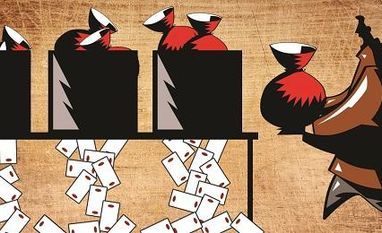
Illustration by Binay Sinha
Ajay Chhibber
Last Updated : Aug 22 2018 | 1:14 AM IST
As we enter our 72nd year of Independence from the British we must remember the Cobra Effect, where the solution is worse than the problem. It gets its name from India’s colonial period when the British tried to solve Lutyens Delhi’s serious cobra problem by offering a cash incentive for every dead cobra skin brought in. But despite many dead Cobra’s brought in for cash under the scheme, Delhi’s cobra problem was not improved. Cobra farms had sprung up around Delhi and were being used to breed cobras for the cash offered. When the British discovered this and ended the incentive, the cobra breeders released all the now worthless cobras further swelling the city’s cobra population and making the problem much worse than before. 

Solutions to some of our problems have a Cobra Effect feel to them. 

The decision to use the Insurance Corporation (LIC) to bail out the worst performing state bank, IDBI, thereby putting in jeopardy life insurance for millions of policy holders, has a Cobra Effect feel to it. How can we now expect a life insurance company with no expertise to run a bank to turn around a bank with a culture of incompetence and a third of its loans in NPA status?

As if the use of LIC to rescue IDBI were not enough, a more egregious Cobra Effect is the use of LIC to bailout a private company, IL&FS, which has Japan’s Orix Corporation (23.5 per cent) and Abu Dhabi Investment Fund (12.6 per cent) as shareholders, along with HDFC (9 per cent), SBI (6 per cent) and Central Bank (3 per cent). Here we have an inexplicable and unheard of bailout of a private company by a public company with LIC also taking over Rs 650 billion of the company’s debt, bailing out foreign investors and becoming the majority shareholder. It is not clear why putting more good money after bad instead of accepting the losses is in anyone’s interest — certainly not that of the hapless LIC policyholder. 

The Cobra Effect can also be seen in our trade policy. A surge in imports and sluggish exports has led to a widening trade deficit. Instead of addressing the underlying reasons, and finding ways to encourage exports while improving our competitiveness including through a less appreciated exchange rate, India appears to be going back to its bad old autarchic days. These autarchic policies cost India hugely and kept it down to the  “Hindu growth rate” of three to four per cent for almost four decades until a major foreign exchange crisis forced us to liberalise our economy, which then unleashed private enterprise and moved our growth into the seven to eight per cent range. “Make in India” has become “Make in India for India”. An economy which should be striving to become more open and take a bigger share of global markets is turning inwards — the surest path back towards the Hindu growth rate. 

Illustration by Binay Sinha

Our agriculture policy is following another Cobra Effect. By announcing MSP at 50 per cent over cost we are not freeing the farmer to produce the most lucrative crops; instead, we are locking him into a cost-plus socialistic pricing scheme and cropping patterns that end up producing crops that are not needed, are then stored at enormous cost in FCI godowns paid for by the taxpayer. The correct solution has been laid out in the Shanta Kumar Committee report commissioned by the government but subsequently ignored. It would involve reducing the role of the FCI, freeing up agricultural markets and paying small farmers direct benefit income support. Instead we have a solution that will make farmers even more dependent on costly price supports for crops for which there is no market. 

Even the inflation-targeting framework has a Cobra Effect feel to it. India’s inflation is largely driven by international commodity prices and supply-side factors over which monetary policy has limited effect. Yet we have now set up an elaborate monetary framework to fight inflation with an MPC that always errs on keeping interest rates too high, which lowers growth and helps keep the rupee overvalued and hurts competitiveness. The MPC objectives must at least give equal weight to growth and inflation. 

The most egregious Cobra Effect was of course demonetisation. To get at black wealth an ill-advised and poorly implemented solution, demonetisation, was unleashed on the economy from which it is just about recovering after a huge cost to growth and welfare, especially in farming and the unorganised sector, with no verifiable signs of any dent in black wealth. 

There are positive steps no doubt —the GST, the IBC are long-term reforms that will have high payoff. The expansion of DBT is also in the right direction —with or without Aadhaar. These were all started during the UPA or the previous NDA regimes and have multi-party support. The Ayushman Bharat scheme, which builds on the Rashtriya Swasthya Bima Yojana, if well designed and implemented, also has high potential to save millions of people from falling into poverty due to illness. We need more of these types of solutions and not those that end up creating even bigger problems down the line. 

As Independent India moves forward in finding solutions to its myriad problems it must avoid the Cobra Effect with — just as the British found while dealing with poisonous vipers of Lutyens Delhi — solutions that leave us worse off than the problem itself.
The author is chief economic advisor, FICCI

One subscription. Two world-class reads.

Already subscribed? Log in

Subscribe to read the full story →
*Subscribe to Business Standard digital and get complimentary access to The New York Times

Smart Quarterly

₹900

3 Months

₹300/Month

SAVE 25%

Smart Essential

₹2,700

1 Year

₹225/Month

SAVE 46%
*Complimentary New York Times access for the 2nd year will be given after 12 months

Super Saver

₹3,900

2 Years

₹162/Month

Subscribe

Renews automatically, cancel anytime

Here’s what’s included in our digital subscription plans

Exclusive premium stories online

  • Over 30 premium stories daily, handpicked by our editors

Complimentary Access to The New York Times

  • News, Games, Cooking, Audio, Wirecutter & The Athletic

Business Standard Epaper

  • Digital replica of our daily newspaper — with options to read, save, and share

Curated Newsletters

  • Insights on markets, finance, politics, tech, and more delivered to your inbox

Market Analysis & Investment Insights

  • In-depth market analysis & insights with access to The Smart Investor

Archives

  • Repository of articles and publications dating back to 1997

Ad-free Reading

  • Uninterrupted reading experience with no advertisements

Seamless Access Across All Devices

  • Access Business Standard across devices — mobile, tablet, or PC, via web or app

More From This Section

Disclaimer: These are personal views of the writer. They do not necessarily reflect the opinion of www.business-standard.com or the Business Standard newspaper
Next Story



