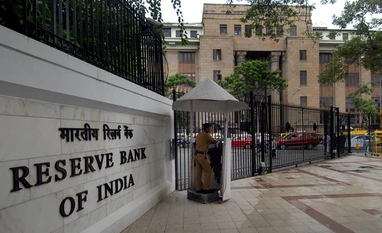
The Reserve Bank of India (RBI) has started an internal review of the monetary policy framework and will hold a roundtable with experts later this year. The RBI Act was amended through the Finance Act, 2016, which brought in the current monetary policy framework. It provided the institutional framework for the monetary policy committee (MPC) to maintain price stability, while keeping the objective of growth in mind. The government, in consultation with the central bank, notified the inflation target of 4 per cent with a band of 2 per cent on either side in August 2016. The target will be binding till March 31, 2021. Therefore, the RBI has done well to initiate the review process. As a result, policymakers will probably have a technical report on the subject, which will help in decision making. While the law mandates a review of the inflation target, it makes sense to broaden the assessment. Since these are still early days for the flexible inflation-targeting regime in India, a broader review will provide an opportunity to strengthen the framework, which will help maintain price stability and boost growth. In this context, there are several issues that are worth bearing in mind.
First is the composition of the MPC. Does the present system give enough space to external members or the balance is in favour of internal members? Would it make more sense to have full-time external members, as was also suggested by the Urjit Patel committee? It can be argued that full-time members with access to RBI research would be in a better position to make decisions. Second, it is important to find ways to address the conflict in the objectives of the MPC and the central bank. The objective of the MPC is price stability, but the RBI also manages government debt. In the last policy, for example, while the MPC decided to leave the policy rates unchanged, the RBI announced measures that would increase liquidity and enable the government to borrow at lower rates. It is also vital to assess where the currency management fits in the framework. The RBI may have to intervene in the market to avoid currency appreciation, as it has rightly been doing, but this again increases liquidity, which can affect the MPC’s objective of price stability. Third, the effectiveness of the framework is being undermined by poor transmission of policy rates. While the RBI on its part has taken several steps, this requires broader policy reforms. The MPC will be in a better position to attain the objective of price stability without losing sight of growth if the financial system responds to its decisions in time.

 "Welcome review")












 Connect with us on WhatsApp