Home / Opinion / Columns / When Wall Street rules: The real culprits of the global financial crisis
When Wall Street rules: The real culprits of the global financial crisis
Wall Street's unmoderated greed and policymakers' shortsightedness encouraged banks to take risks they did not understand and created the network effects that led to contagion in 2008, writes TN Ninan
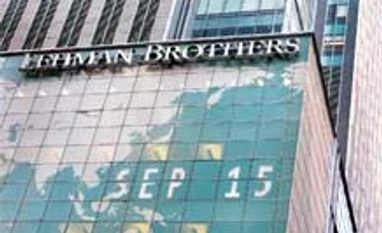
When did the western financial meltdown of 2008 happen? Most people date it to the collapse of Lehman Brothers on September 15, 2008. But Europeans mark the start of the crisis more than a year earlier, to August 2007, when BNP Paribas froze three of its investment funds — setting off ripples that led to the collapse a month later of Northern Rock, Britain’s fourth-biggest bank. If you listen further to Europeans, they uniformly blame Americans for the crisis. Italy’s finance minister at the time argued that his system was stable because “it did not speak English”.
More seriously, Adam Tooze (in the 700-page tome, Crashed, and in the latest issue of Foreign Affairs) does some counter-finger-pointing, arguing that European financial entities accounted for two-thirds of the financial paper issued in the US in 2008, and that the real estate markets in many European countries experienced an even bigger bubble than in the US. As the whole thing began to unravel, European banks needed more dollars than they could get hold of. It was the US Federal Reserve that went beyond its remit and became a lender of last resort for European banks, to prevent a collapse.
The popular view of the crisis, so to speak, is the one put out by Michael Lewis in two typically entertaining books, The Big Short (now also a movie) and Boomerang. Lewis does devastating take-downs of Wall Street’s suicidal herd instinct and other sins. When he writes about peripheral markets like Greece, Wall Street fares no better: Goldman Sachs, he says, helped the Greek government cook its books and took away $300 million as fees.
But were bankers more to blame than regulators? More than two decades before the crisis, the economist Hyman Minsky, in Stabilizing an Unstable Economy, had pointed to the financial system’s tendency to create speculative bubbles in deregulated markets. Neither Bill Clinton nor his treasury secretary Larry Summers seems to have paid attention because in 1999 they repealed key sections of the Glass-Steagall Act. This removed the wall between commercial and investment banking, encouraged banks to undertake risks they did not understand, and created the network effects that would lead to contagion in 2008. Given the influence that Wall Street had acquired over policy-making and on economic thinking, an important factor behind the deregulation would certainly have been the financial system’s unmoderated greed.
Raghuram Rajan, writing Fault Lines in 2010, took the broader political economy view and pointed to the same underlying factor that many see as the cause of the Trump phenomenon: growing inequality in the US. The political system responded by keeping credit cheap, to encourage both continued consumption and asset ownership, leading in turn to the sub-prime housing market bubble. Cheap credit also flowed from failures of understanding. China’s entry into the world trading system (following its membership of the World Trade Organization in 2001) had flooded western markets with low-priced goods and caused inflation to moderate. Policy-makers patted themselves on the book for this, crediting low inflation to their own inflation-fighting policies. Interest rates were cut to their lowest level in decades, prompting financial players to look for better returns through greater leveraging (thus increasing risk) and by playing in areas and with instruments they did not understand.
Salomon Brothers’ former head of risk wrote an enlightening book a year before the crisis (Richard Bookstaber: A Demon of Our Own Design) on how no one in the firm understood the risk that came with new financial instruments. Another person who saw trouble coming was Y V Reddy, who as governor of the Reserve Bank of India repeatedly warned about the mispricing of risk. Wall Street was deaf to such warnings from far and near. As early as 2005, Peter Schiff (a financial player and commentator) had begun warning of a meltdown, arguing that the financial firms were worth nothing because they would have no earnings to show.
Could the meltdown have been avoided? Yes, says the former administrative head of Lehman Brothers. Writing this week in the Financial Times, Scott Freidheim recounts that from June of 2008 his firm had been asking for permission to convert itself into a bank holding company. Tim Geithner, then head of the New York Federal Reserve, refused permission on the ground that it would send the wrong message. But one week after Lehman filed for bankruptcy, Goldman Sachs and Morgan Stanley were allowed to become bank holding companies. If Lehman had been similarly saved, perhaps the entire carnage could have been prevented. The conspiracy theorist would say the bigger Wall Street firms wanted the smaller ones to fail, leaving the field to them.
Finally, the question: why has no banker been prosecuted for 2008, when hundreds of bankers went to jail following the US savings and loan scandal of the 1980s? The answer is simple: In December 2008, the US Justice Department issued new guidelines that built on earlier guidelines dating back to 1999, and allowed prosecutors to take a “softer approach” to corporate crimes. The guidelines, known as deferred prosecution agreements, helped avoid indictments on certain conditions. Wall Street celebrated.
Disclaimer: These are personal views of the writer. They do not necessarily reflect the opinion of www.business-standard.com or the Business Standard newspaper


 "When Wall Street rules: The real culprits of the global financial crisis")











