Will the Indian tail ever wag?
Gone are the days when bowlers were expected to just make up the numbers when it came to batting. The Indian tail must start taking its batting seriously
Dhruv Munjal When I played cricket in school, every player on our team was an all-rounder. The fastest bowler on the team would come in at five down and play with the same ease and flourish as the batsmen who had preceded him. The wily off-spinner who would get us a bagful of wickets on the slow and low pitches of school cricket would sometimes come out and open, and show us the full mastery he had over the major two disciplines of the game. The team did have proper batsmen who took it upon themselves to do the bulk of the scoring, but there wasn’t one player I played with who was utterly abject with the bat.
When a player makes the transition from school cricket to club cricket and eventually to playing for his domestic side, he has to make a choice. He is either a batsman or a bowler, or if he’s blessed with enough talent to be exceptional at both, an all-rounder. (In Indian cricket, though, that is akin to spotting a snow leopard in the Thar Desert.)
So if you opt to be a bowler, how bad can you be with the bat? Well, turns out that if you’re a specialist bowler playing for India, then you’re abysmal. Expecting you to add a few runs to the total is like expecting Sourav Ganguly to hook Joel Garner for six at the WACA in Perth. What that means is that it’s never going to happen. Mohammed Shami would have hit the mightiest sixes for his club side. Not anymore. Yes, the oppositions he played against probably would not have had Mitchell Johnson and Ryan Harris in their ranks, but no one is asking Shami to hit lofty sixes any longer. All he needs to do is lend some support to the set batsman at the other end.
Against Australia in Melbourne on Monday, the last two wickets for India put on three runs. They’re numbers 9, 10 and 11, what do you expect, some would say. Australia definitely expects differently from its tail-enders. Harris scored 74 in the first innings in Melbourne, helping the Aussies get past the 500-mark. In the second match at the Gabba, Johnson, in his knock of 81, played shots that would have put some top-order batsmen to shame. His fellow fast bowlers, Mitchell Starc and Josh Hazlewood, scored 52 and 32 respectively in the same innings. The Indian tail, meanwhile, has been struggling to put bat to ball Down Under. The highest score by an Indian lower-order batsman (not including Ravichandran Ashwin here) in this series has been a paltry 34. So often in close Test matches, the runs added by the tail make a telling difference. A couple of 30s and 40s here and there can sway the game in your team’s favour.
At the Gabba, India had Australia tottering at 122 for 6 in the fourth innings. The only problem for the visitors was that Australia had to chase down only 128. Hence, the result was never in doubt. However, if it had not been for the Australian tail that put on 107 runs for the last two wickets on day three -- partly due to India’s lax bowling -- the outcome could have been vastly different.
Gone are the days when bowlers were expected to just make up the numbers when it came to batting. In the modern game, all the big teams have tail-enders who can bat. Australia has Johnson, Stuart Broad plays that role for England and Dale Steyn is more than capable of some lusty blows while batting at the end for South Africa. If you’re a bowler, you can no longer bat like a Courtney Walsh or Chris Martin. It’s high time the Indian tail starts taking its batting seriously.

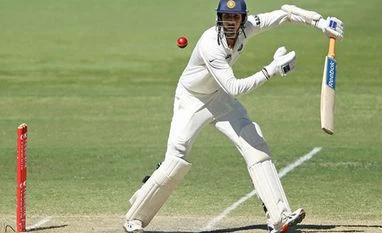 "Will the Indian tail ever wag?")


 Connect with us on WhatsApp