Generally, when the highest military dignitaries take the public platform, they tend to be somewhat forceful in their articulations and the increasingly verbose media adds to the rhetoric. It was, therefore, a pleasant surprise to hear the interview given by the Navy Chief, Admiral Sunil Lanba, to a TV news channel some days ago. Even though his candid and understated exposition of issues related to his own service and came as a breath of fresh air in the otherwise noisy medium that TV has now become, these issues need to be viewed in a larger context.
Briefly, Admiral Lanba made six points. First, India’s security interests were becoming increasingly focused on the sea. Two, in the context of possible adversaries, the Indian Navy was prepared to respond immediately to any misadventures by Pakistan, including incidents of the type that took place in the terrorist attack in Mumbai on November 26, 2008 through the coastal route; he also stressed the asymmetry in strength between the two navies. Three, he pointed out that the Navy was keeping a careful watch on the activities of Chinese naval units in the Indian Ocean Region (IOR) while at the same time stressing the advantages that our Navy enjoyed in the area. Four, in the South China Sea (SCS), due to proximity and numbers, the Chinese were obviously better placed. Five, the Indian Navy had increased its deployments in the Indo-Pacific. Finally, he admitted that the acquisition of certain platforms had got delayed and hoped that steps would be taken to remedy the situation. Let us critically analyse each one of these assertions.
Yes, India’s interests are becoming more focused on the sea in the Indo Pacific region and the IOR is the major theatre for us. The fact that at every conference or meeting this issue takes centre-stage bears witness to this fact. Both at the heads of government meeting with Asean leaders in January and with the French president recently, maritime security figured highest on the agenda. The same is true of our interface with the US, Japan and Australia. It can be asked why this enhancement of security interests is not reflected in defence budget allocations; the answer lies in our inability to crystallise a holistic national security strategy that can identify what our interests are and how they can be best safeguarded or enhanced.
At sea, our superiority over the Pakistan navy needs no elaboration. But vigilance along the long coastline is important and it is satisfying to hear the Navy Chief say that the situation is far different from what it was a decade ago. China merits a more detailed discussion. Its forays into the IOR are well known, but our ability to locate and track its ships and submarines in these waters is also quite substantial. It is often not recognised that on its two coasts and in southern India, there are dozens of airfields from which the largest surveillance and attack aircraft can be operated; add to this the airfields in the Andaman and Nicobar Islands and reconnaissance satellites. These together can allow India to keep the northern Indian Ocean under watch. Our interfaces with countries like Oman, Seychelles and France further extend this reach. Our ability to interdict Chinese energy lifelines is not something that can be easily scoffed at. So, both operationally and logistically, the Chinese will be hard put to match us in the IOR — subject to the caveat that we invest in a navy that can exploit these several advantages.
However, in this balance sheet there are also weaknesses. The most serious of these is the poor availability of submarines. With the first Scorpene submarine built at Mazagon Docks now delivered after a delay of several years, the total number stands at just over a dozen, but all are more than 20 years old. Some have undergone modernisation but that does not equip them for current needs. The plan to continue beyond the Scorpenes, termed P75I, continues to languish. To this should be added urgently needed replacements for multi-role helicopters. The decision-making process is slow and no improvement has been visible in the past four years. The Navy is ahead of the other two services in Make in India, but the submarine scenario has been damaging. There is urgent need to make up for lost time as the Navy Chief has, himself, acknowledged.
But for the military to modernise in keeping with the challenges faced, resources are needed. Amid the frequent cries that the defence budget falls well short of what is needed, we tend to ignore the reality that any great enhancement in the allocation is just not possible, given competing needs, and the armed forces have no option but to operate within this constraint. So, unless several of its segments are revisited and deadwood — especially manpower — is identified and eliminated, we simply cannot have a modern military of the type that India needs. Its existing 15 per cent share of the budget is not going to get the Navy anywhere. Similarly, the Air Force needs more resources. Unless the Army revisits its present strength, it will continue to operate with nearly 68 per cent of its equipment being “vintage”, as bemoaned by its vice-chief recently, with only eight per cent of it suited to the needs of today.
The last several decades have seen little effort on the part of the political leadership of all hues, strong or mild, to bite this distasteful bullet; it leaves it to the chiefs of staff to take that jump, if at all. This is not going to happen and so we will continue to see the services going before parliamentary committees every year and complaining about their inadequacies. Unless determined steps are taken at the highest level to have our security concerns reviewed critically and a more viable and balanced force structure formulated for the armed forces, the status quo will continue and, in fact, further deteriorate to our disadvantage. With the domestic environment being as fractious as it is, this is easier said than done. The writer is a former Commander-in-Chief of the Eastern Naval Command. He has also served as Director General, Defence Planning Staff, and as a member of the National Security Advisory Board

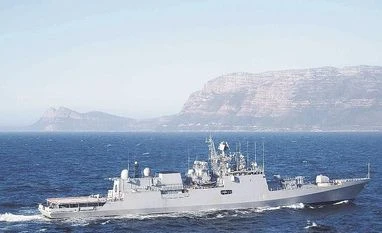 "Without defence reforms, inadequacies in military capability will continue")












 Connect with us on WhatsApp