Often price is the first and last determinant of what to buy. However, one must assess the filtration system, which is the very core of a purifier. Several kinds of filtration are available in the market. One is where ultraviolet light uses electromagnetic radiation to destroy bacteria, viruses and mold. However, this variant does not remove dust, allergens or particles in the air. In another, activated carbon filters react chemically with pollutants to clear smoke, odours and gases from the air, but are unable to filter out very fine particles that can be very harmful. In a third variant, air ionisers work by sending out a stream of charged ions to attract dust and allergens. However, they can produce ozone as a by-product. Ozone is a respiratory irritant and a component of smog. Then you have HEPA (high-efficiency particulate air) purifiers, which work by trapping pollutants and fine particles across a range of different sizes. These include pollen, bacteria, mold, dust mite debris and pet dander. They do not, however, remove volatile organic compounds such as formaldehyde, benzene or nitrogen dioxide. It is also worth noting that not all HEPA filters are equally efficient. Some are able to capture ultrafine particles, while others aren't.

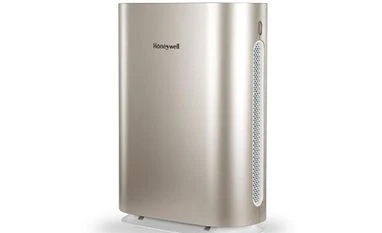 "Air purifier: An investment in health where price point takes a backseat")











