NCR's emerging affordable housing investment hub
Santhosh Kumar As real estate prices in Gurgaon move steadily northwards, many companies and industrialists are looking for viable options beyond the national capital region (NCR). As a result, areas such as Dharuhera, Bawal and Jhajjar in Haryana have come up as alternative real estate destinations.
To know the dynamics governing Jhajjar's realty market, we first need to understand the basic concept of uncontrolled zones. These are pockets with virtually no economic or commercial activity. The government strategically brings such areas into the purview of economic and infrastructural development, based on its mandate to uplift these comparatively lagging areas.
Thanks to such initiatives, Jhajjar is gathering pace and emerging as a major freight and logistics hub. Many big companies are planning to have their warehousing facilities in this belt. A number of leading firms are also targeting the region for manufacturing facilities. The Jhajjar special economic zone (SEZ) alone is estimated to result in the creation of around 1.5 million jobs. In other words, things are looking bright in Jhajjar in terms of employment generation, with the bulk of the jobs catering to the rising demand for workers in warehousing and manufacturing plants.
Gurgaon became what it is today because of a large influx of companies, including multi-national ones, which created millions of high-paying white-collar jobs. This increased the financial appetite of the local population employed in Gurgaon, resulting in the unique development of Gurgaon real estate in terms of residential and commercial properties, including offices and malls. Owing to its proximity to Delhi, Gurgaon worked as a perfect alternative option for companies, as well as the educated high-end working population originally based in Delhi.
The dynamics driving Jhajjar's realty market are entirely different. The recent spike in real estate development has been primarily because many companies chose to acquire land there for warehousing and manufacturing needs at competitive rates. The demand in Jhajjar comes from the current and prospective local population there and is decisively skewed towards affordable housing.
Therefore, residential property investors with a long-term horizon can take strategic decisions to capitalise on Jhajjar's growing potential. It is a known fact that affordable housing in corridors involving significant job creation appreciates faster than other real estate asset classes. However, care should be taken in ensuring all documentation is available from the developer for a project of potential investment.
The author is CEO (Operations), Jones Lang LaSalle India

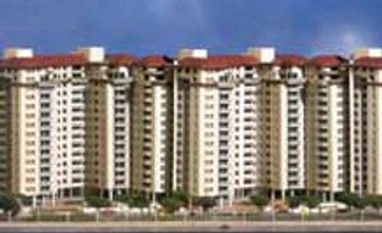 "NCR's emerging affordable housing investment hub")


 Connect with us on WhatsApp