People need to re-think lifestyle: Noel Maye
Interview with Global CEO, FPSB
Priya Nair Mumbai
With over 150,000 professionals spread over 25 countries, the FPSB is looking to grow in new territories. How to facilitate cross border practice, while simultaneously complying with local regulations and maintaining standards is one of the challenges for the organisation, says
Noel Maye, Global CEO, FPSB, in an interview with Priya Nair.
The markets regulator in India, Sebi wants financial advisors to separate their advisory and distribution services in India and has issued guidelines for this last year. But is this truly achievable? What are your views on this? This is a big debate worldwide in the countries where CFPB’s has its 150,000 professionals. The impetus is around consumer protection. The advice should be unbiased and in the interest of consumers. For instance, in USA the debate is around suitability v/s fiduciary. It is good for customers. But the question is how it is implemented. The regulator has traditionally been sector focused and product driven. Now there is a demand for how to protect the client. How do you fit the two? We think that is where regulation can define the space.
Are there enough products for Indian investors to plan for retirement? What are some of the common mistakes people make when it comes to retirement planning? The vague notion of retirement is dangerous. Earlier, the function of retirement was work all your life hard till you almost died. It used to be that you would accumulate in your work life and after retirement you start withdrawing. So an appropriate mix of bond and stock is being re-thought.
More than just products, the focus needs to be on spending, saving and lifestyle. So, people need to re-think lifestyle.
In India there is the challenge of society being family based and children were thought of as retirement strategy. But now that has changed with many families seeing children moving abroad. So, if you expect children to take care of you, you have to talk to them.
Why is it important is it to have a financial plan in one’s life? It is important to have a plan. Some can be rigid and some can be flexible. A financial planner should know if his or her client is one who will stick to the plan or someone who will need a flexible plan. The job of planning is not to regiment someone’s life but to enable the person to fulfil his goals. For instance, if you want to study pastry making in France, then you may to work a year or two longer. So, when you choose something you are giving up something else.
Also, investors need to know whether a particular product is needed and what model will work for them. You are going to see an increase in complexity of products. So, consumers need someone they can trust, who can advice them.
Indian investors have traditionally been savers and not investors. How will this change? It is traditional that investors want to have something tangible. It is important for them to want to see and touch their wealth. But inflation is a big danger. So, saving below the rate of inflation means you will fall behind.
The flip side is that you need to trust and you need people to feel secure. That takes education and also markets to perform.
The common concept is that money in the bank is no risk. But if you are earning lower than inflation then the risk is that you are not going to be able to retire. So, you need to create a portfolio that meets your risk tolerance. Sometimes people don’t know their risk tolerance and that is the change between the life you want after retirement.

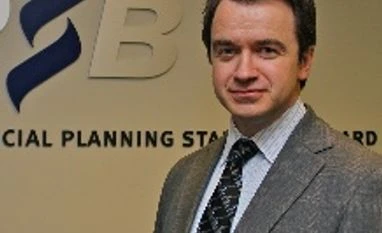 "People need to re-think lifestyle: Noel Maye")


 Connect with us on WhatsApp