The dissolution of the Jammu and Kashmir assembly on November 21, buttressed by the claim that it was done to prevent horse-trading and preserve the security environment, has triggered a nationalism versus anti-nationalism debate in the sensitive state.
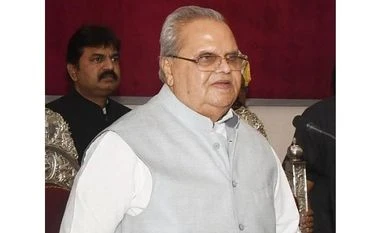
Governor Satya Pal Malik, the first political person to occupy Raj Bhavan in the state, cited four reasons for doing what he did, and the most serious among them was that parties with serious ideological differences could not have provided a stable government.
The other was that “the fragile security situation in the State of Jammu and Kashmir where there is a need to have a stable and supportive environment for security forces which are engaged in extensive anti-militancy operations and are gaining control over the security situation”.
National Conference Vice-President and former chief minister Omar Abdullah posed a question to the governor. “There could have been no other alliance as ideologically opposed to each other as that of PDP-BJP that ruled the state for over three years, so how can the alliance of our three parties — the National Conference, Congress and PDP — who have many things in common in their ideologies like safeguarding the special status of the state be an odd one,” he asked at a press conference in Srinagar on November 22.
Regarding the security situation, the fact is that there were intensive anti-militancy operations during National Conference-Congress rule (2009-14) and also during PDP-BJP rule (March 2015 to June 2018). So saying that the two parties could have interfered in the ongoing anti-militancy operations in Kashmir does not hold water. “It is to undermine and insult the sacrifices that our workers have made during the militancy,” Omar retorted.
BJP General Secretary Ram Madhav’s tweet added fuel to the fire. “PDP & NC boycotted local body polls last month because they had instructions from across the border. Probably, they had fresh instructions from across the border to come together and form government. What they did prompted Governor to look into the whole issue.”
It was a clear attempt to charge the National Conference, the PDP and the Congress with working at the behest of Pakistan. An infuriated Mehbooba Mufti responded, “How does one define a party’s nationalistic credentials - Nationalistic and patriotic only if you are with the Centre and Pakistan sponsored and anti-nationalistic otherwise.”
PDP leader Altaf Hussain Bukhari, who was chosen by the three parties to lead the government they wanted to put in place, told Business Standard: “This is a sad state of affairs. The whole political system in Kashmir is being stigmatised.”
Elections in Kashmir are seen as a contest between mainstream parties, on the one hand, and the separatists who call for secession from India, on the other. The elections since 1996, which were held under the shadow of militancy, have been analysed with this as the reference point. The thinking and the reality are changing now. More and more people are rejecting elections not because they sympathise with the militants but because they feel the elections have not given them even basic governance.
Such thinking has cast doubts on the prospects and participation of the people in elections. “We are not interested in elections, but the government of like-minded parties could have been good for us” — this was the refrain in Lal Chowk of Srinagar. Those hopes have now been dashed.
Political scientist Noor Mohammad Baba said this decision of the governor would recoil on the BJP, which was seeking to make inroads into the Valley. “This trend will come to a halt now,” said Baba, who heads the political science department at the Central University of Kashmir.
“The BJP was desperately trying to play an innings in Kashmir politics, directly and indirectly, but now this has united the Kashmir-centric parties and the secular forces and it will be the beginning of tough times for the saffron party,” he observed.
Some sections of the youth are more pained by the questioning of their individual and collective identity as Kashmiri. This section that had been voting for pro-election and mainstream parties, risking their lives and braving the threats of militants and separatists, feels that now when they are being labelled anti-national, they have no choice but to stay away from polls.
The governor, who had promised to “bring back the youth to mainstream by ending their alienation”, will now find his efforts at opening up opportunities a more difficult proposition. He may have to start afresh to dispel the misgivings of the alienated youth in the state.