Return of Aaya Ram, Gaya Ram: How the anti-defection law is misinterpreted

Parliament needs to review the Tenth Schedule and amend the anti-defection law to restore the sanctity of the legislature
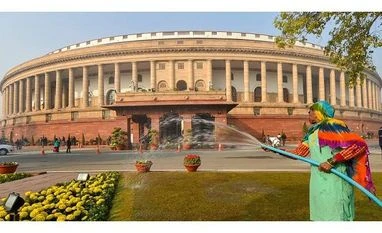
parliament
Ankur Bhardwaj New Delhi
8 min read Last Updated : Jul 04 2019 | 7:55 AM IST
In the year 1967, the MLA from Hassanpur, Haryana, Gaya Lal defected from the Congress party to the United Front. He then returned to the Congress within days and nine hours later he defected to United Front once again. This frenetic action happened within a fortnight. On his return to the Grand Old Party, state Congress leader Rao Birendra Singh addressed the press and said, “Gaya Ram is now Aaya Ram.”

Thus was coined one of Indian politics’ most infamous phrases: Aaya Ram, Gaya Ram. Loosely translated, it means Mr Come, Mr Go. Gaya Lal’s was not a one-off case at the time. According to the book, Anti-Defection Law in India and the Commonwealth (Lok Sabha Secretariat, 2005): 
 
Out of roughly 542 cases in the entire two-decade period between the First and the Fourth General Elections, at least 438 defections occurred between March 1967 and February, 1968

Parliament did move to end the menace of defections in 1973 and 1978. The Constitution (Thirty-second Amendment) Bill, 1973 was sent to a Joint Parliamentary Committee, but became defunct upon dissolution of the Lok Sabha in 1977. The Constitution (Forty-eighth Amendment) Bill, 1978 was then moved but later withdrawn by the minister due to stiff political opposition.

Eventually the government introduced the Constitution (Fifty-second Amendment) Bill in the Lok Sabha on 24 January 1985. This came into force from 1 March, 1985 and added the Tenth Schedule to the Constitution.

Parliament responded to demands for strengthening the anti-defection law further, the government introduced in the Lok Sabha on 5 May 2003, the Constitution (Ninety-seventh) Amendment Bill, 2003.

What changed?

The 1985 Act had provisions for when a member would not be disqualified. These were applicable in the case of a split or merger of a legislature party. Para 3 (later omitted by the Ninety First amendment, 2003) stated that: no disqualification would be incurred in cases where split in a legislature party or merger of a legislature party with another is claimed provided that in the event of a split in the legislature party not less than one-third of its members decide to quit the party and in case of a merger the decision is supported by not less than two-thirds of the members of the legislature party concerned.

This held that if one-third of a legislature party split and joined another party in the house, they would not be disqualified. The 2003 amendment fundamentally changed this and the provision regarding split in legislature party was dropped. It meant that a legislature party couldn’t split and its part/s couldn’t then merge into another party.

The 2003 amendment had this to say about disqualification in case of a merger: A member of a House shall not be disqualified where his original political party merges with another political party and (a) he has become a member of the said political party or (b) has not accepted this merger and has chosen to operate as a separate group.

The amendment states that the merger of the original political party will be deemed to have taken place if, and only if not less than two-thirds of the members of the legislature party concerned have agreed to such merger. The term agreeing to the merger indicates that the legislature party can only agree to a merger and not drive the merger on its own. 

According to the book, Anti-Defection Law in India and the Commonwealth, “The provision relating to split was severely criticized in India on the ground that while individual defection was punished, collective defection was condoned.” 

The Act also laid down the total number of ministers in the council of ministers (both Union and State) shall not exceed 15 per cent of the total number of members of the Lower House (Lok Sabha in case of the Union), provided the number of ministers in a state shall not be less than 12.

Why the anti-defection law is in the news once again?

The law is once again in the news thanks to certain political events that have transpired in the Telangana Assembly and in the Rajya Sabha since the result of the General Election 2019 was declared.

The TDP-BJP Rajya Sabha entangle

Four Rajya Sabha members (out of a total of six) of the Telugu Desam Party ‘merged’ with the BJP and this ‘merger’ was ‘approved’ by the Chairman of the House, the Vice President of India, M Venkaiah Naidu. 

Congress MLAs ‘merge’ with TRS

In Telangana, 12 (out of 18) Congress MLAs in the assembly ‘merged’ with the ruling Telangana Rastra Samithi. The Speaker ‘acceded’ to their request considering that they constituted two-thirds of the Congress Legislature Party in the house.

In both the cases, the Speaker decided that since two-thirds of the legislature strength had decided to ‘merge’ with another party, this did not fall foul of the Anti-Defection Law (or the Tenth Schedule)

This however is not correct as per experts. Business Standard spoke to P D T Achary, former Secretary General of the Lok Sabha and this is what he had to say: Paragraph four of the Tenth Schedule gives protection to legislators when two conditions are fulfilled. One, the original party merges with another party. Two, two-thirds of the legislature party then agrees to this merger. This means that the merger must happen between political parties first and then be agreed to by the legislature party (for the purpose of invoking protection under para 4). The words make it clear that mere agreement of two-thirds of legislators to a merger does not help unless the original parties merge. The 'merger' cases of of TDP Rajya Sabha MPs and the Congress MLAs in Telangana don't seem to be in accordance with the Tenth Schedule.

Who decides disqualification?

The original law held that the Speaker was the Presiding Officer in such cases or he could send the matter to a Committee of Privileges and the decision of the Presiding Officer would be final with no judicial review allowed. However, in 1992, the SC struck down this condition and held that the decision of the Presiding Officer would be subject to judicial review.

There is a catch though

The Court also held that this judicial review couldn’t happen till the time the Presiding Officer gives his order. There have been cases where Speakers have not passed any orders regarding such disqualification for a long time, thereby making judicial review impossible. 

In December, 2017, Vice President Venkaiah Naidu disqualified JDU’s Sharad Yadav and Ali Anwar Ansari from the Rajya Sabha. The case was not sent to a committee of privileges and was decided in around three months. The VP said that all Presiding Officers should decide such cases within three months thereby setting a benchmark. It remains to be seen if this benchmark will be adhered to in all cases now.

Business Standard also spoke to constitutional scholar, Gautam Bhatia about this. Bhatia points to a petition in the Supreme Court that seeks directions to Speakers to decide these cases in a time-bound manner. However, the petition has been pending for hearing for some time.

A more philosophical question

The Tenth Schedule ensures that a member of the legislature is bound by the directions of his or her party. When parties issue a whip, they compel the legislators to vote in accordance with their views. However, this also prevents conscientious dissent. Does the Tenth Schedule throttle individual dissent then for the sake of political stability?

According to Bhatia, “The legislature attempted to draw a balance between two values: the representative's accountability to the constituency, and combating the evils of floor-crossing and horse-trading, which were basically reducing the popular will to a farce. Whether you believe that the Tenth Schedule, in its present form, accomplishes that balance, depends on how you will answer a number of other questions: what is the importance of the party - as a vehicle for representation - in a parliamentary democracy? To what extent does party affiliation affect an individual's vote, meaning, is an individual voting primarily for a candidate, or for their party? And so on. How you answer these questions will determine what stand you take on the Tenth Schedule.”

While the philosophical question may continue to be debated, it wouldn’t take long to see that the law is being misinterpreted and it is time Parliament intervened to make suitable changes to the Tenth Schedule to preserve the legislature’s sanctity. With Indian politics turning more and more unipolar, the anti-defection law needs to be reviewed or we may see the return of Aaya Ram, Gaya Ram.
Twitter: @bhayankur

One subscription. Two world-class reads.

Already subscribed? Log in

Subscribe to read the full story →
*Subscribe to Business Standard digital and get complimentary access to The New York Times

Smart Quarterly

₹900

3 Months

₹300/Month

SAVE 25%

Smart Essential

₹2,700

1 Year

₹225/Month

SAVE 46%
*Complimentary New York Times access for the 2nd year will be given after 12 months

Super Saver

₹3,900

2 Years

₹162/Month

Subscribe

Renews automatically, cancel anytime

Here’s what’s included in our digital subscription plans

Exclusive premium stories online

  • Over 30 premium stories daily, handpicked by our editors

Complimentary Access to The New York Times

  • News, Games, Cooking, Audio, Wirecutter & The Athletic

Business Standard Epaper

  • Digital replica of our daily newspaper — with options to read, save, and share

Curated Newsletters

  • Insights on markets, finance, politics, tech, and more delivered to your inbox

Market Analysis & Investment Insights

  • In-depth market analysis & insights with access to The Smart Investor

Archives

  • Repository of articles and publications dating back to 1997

Ad-free Reading

  • Uninterrupted reading experience with no advertisements

Seamless Access Across All Devices

  • Access Business Standard across devices — mobile, tablet, or PC, via web or app

Topics :anti-defection law

Next Story



